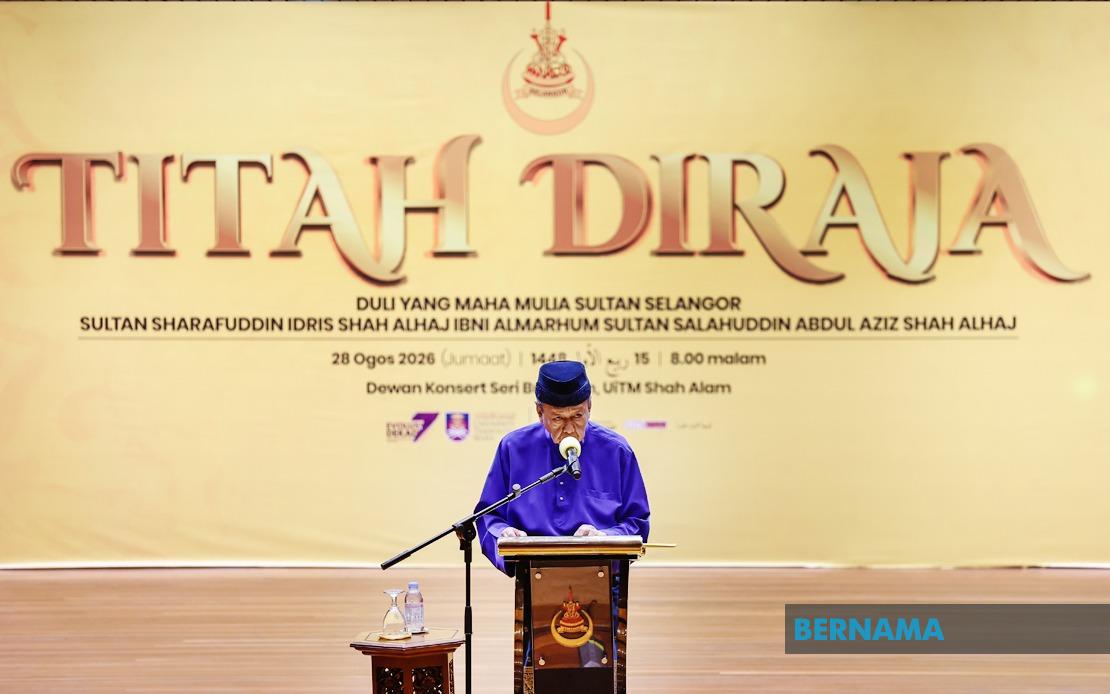
The Sultan of Selangor Sultan Sharafuddin Idris Shah has reiterated the critical importance of maintaining Universiti Teknologi MARA (UiTM) as an institution fundamentally committed to lifting Malay and Bumiputera youths from economically disadvantaged backgrounds into higher education. Addressing an audience at the UiTM 2026 Royal Address in Shah Alam on August 28, His Royal Highness emphasised that as the university expands and modernises, the core constituency it was established to serve—children from humble circumstances across urban and rural communities—must never be marginalised or denied opportunity.
The Sultan's intervention comes at a time when Malaysian higher education is under scrutiny regarding equitable access and the preservation of institutional missions. He articulated a fundamental concern: that growth and institutional prestige should not create distance between UiTM and the students for whom the university was originally conceived. The children of farmers, fishermen, transport workers, factory labourers, and families struggling financially in remote areas must continue to regard UiTM as a realistic pathway to social advancement, provided they possess aptitude and determination to pursue their studies.
Reflecting on UiTM's trajectory since its establishment in 1965, Sultan Sharafuddin highlighted a remarkable transformation. The institution began modestly with approximately 219 students and a teaching complement of just 11 lecturers—modest numbers that nonetheless represented a revolutionary opening of educational opportunity for communities historically excluded from tertiary education. Within a single decade, this foundation expanded dramatically to accommodate nearly 7,000 students whilst academic staff grew to around 1,000 personnel, and the curriculum expanded to encompass approximately 60 distinct academic programmes with campuses established across multiple states.
Today, UiTM has evolved into one of Southeast Asia's largest higher learning institutions, annually conferring degrees upon more than 40,000 graduates and maintaining an alumni network exceeding one million individuals globally. This extraordinary scale presents both opportunity and responsibility. The Sultan argued that the university's phenomenal expansion and the subsequent success of its graduates across virtually every professional sector—from accounting and engineering to medicine, law, architecture, academia, entrepreneurship, and civil service—demonstrates the institution's transformative capacity, particularly for communities that would otherwise lack such opportunities.
Yet numbers alone, the Sultan cautioned, do not measure UiTM's true achievement. The authentic benchmark for institutional success lies not in enrolment statistics or alumni counts, but in the tangible improvement of lives and the measurable contribution to national development. The presence of UiTM graduates in leadership positions across major organisations, in business creation and employment generation, and in professional roles that drive the nation's progress represents the institution's genuine legacy and validates its foundational mission.
Cognisant of the financial pressures facing many students and the resources required to expand support programmes, Sultan Sharafuddin proposed an innovative alumni contribution framework designed to mobilise the university's vast graduate network. He advocated for establishing a system whereby each alumnus would commit to contributing either RM10 monthly or RM100 annually as a token gesture honouring UiTM's role in their education and professional formation. The Sultan emphasised that this amount represents a modest commitment—neither burdensome nor unrealistic for the broad spectrum of UiTM graduates now established in stable employment across multiple sectors and income levels.
Projecting the potential financial impact of widespread alumni participation, Sultan Sharafuddin noted that such a scheme could generate approximately RM100 million annually—resources that would meaningfully expand institutional capacity to support existing students and newly enrolled cohorts confronting financial adversity. This approach transforms the alumni relationship from passive memory into active stewardship, enabling graduates to reciprocate the institution's investment in their futures whilst directly addressing the contemporary challenge of financing access for disadvantaged students.
The Sultan reframed this contribution initiative through the lens of UiTM's own student motto and cultural values. The phrase "UiTM Dihatiku"—UiTM in my heart—frequently articulated by students, faculty, and alumni represents more than sentimental attachment; it constitutes a call to substantive action and commitment. When translated into concrete terms through financial participation, the motto's meaning becomes tangible and transformative. The Sultan argued that genuine commitment to the institution demands demonstration beyond rhetoric or nostalgia, instead requiring ongoing engagement with its mission.
Implications for Malaysia's higher education landscape extend beyond UiTM itself. The Sultan's intervention signals that Malaysia's flagship institutions serving disadvantaged communities remain central to national equity and social mobility objectives. As the country navigates economic pressures and competes for talent and research excellence in a globalised environment, the tension between pursuing world-class status and maintaining inclusive access for underprivileged cohorts demands careful management. UiTM's experience—demonstrating that an institution can simultaneously achieve excellence and serve society's most marginalised members—provides a model relevant to policymakers across Southeast Asia grappling with similar challenges.
The Sultan's emphasis on alumni contribution also recognises a reality increasingly evident in higher education funding globally: government resources alone cannot sustain expanding access and support alongside quality improvements. By mobilising the substantial wealth and influence accumulated across the university's one-million-strong alumni network, UiTM can supplement public funding with internally generated resources whilst deepening alumni connection to institutional mission. This collaborative approach positions UiTM as an evolving community rather than a static bureaucracy, encouraging graduates to view their university relationship as a lifelong engagement rather than a concluded chapter.
Higher Education Minister Datuk Seri Dr Zambry Abd Kadir's presence at the address, alongside Tengku Permaisuri of Selangor Tengku Permaisuri Norashikin, underscored the political and institutional weight attached to these discussions. The Sultan's remarks, delivered through the Adiwangsa Empowerment Office and the Chair of the Malay Rulers Institution, represent coordinated messaging from Malaysia's traditional leadership structures regarding higher education priorities and societal obligations towards underprivileged communities.
Moving forward, the challenge for UiTM leadership will involve implementing the alumni contribution framework whilst maintaining institutional accountability and transparency regarding fund utilisation. Success requires effective communication with a geographically dispersed alumni base, technological infrastructure enabling convenient participation, and demonstrated commitment to deploying generated resources toward supporting disadvantaged students. The proposal also invites broader reflection on sustainability models for higher education institutions serving equity mandates—a question increasingly urgent as Malaysian universities compete internationally whilst maintaining commitment to national social objectives.

