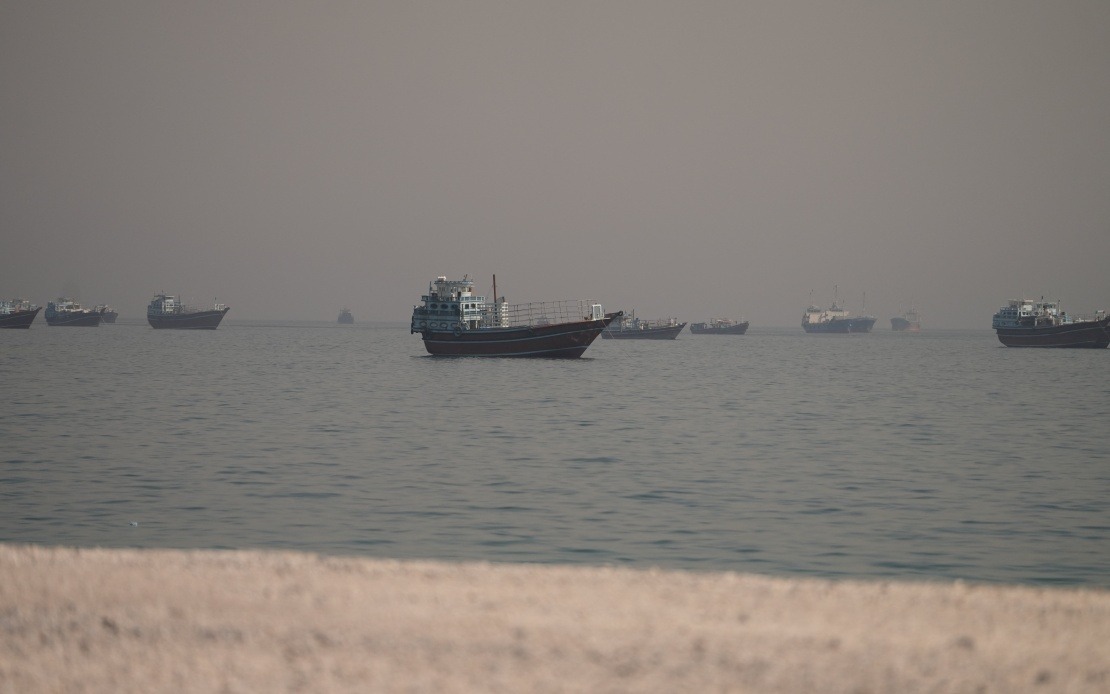
Britain and France have signalled their determination to launch a coordinated multinational military deployment designed to protect shipping traffic through the Strait of Hormuz, one of the world's most strategically important maritime passages. The announcement, delivered jointly by British Prime Minister Keir Starmer and French President Emmanuel Macron on Friday, represents a significant show of Western resolve to maintain freedom of navigation in the waterway despite persistent objections from Tehran, which views external military involvement as an unwarranted intrusion into its sphere of influence.
The Strait of Hormuz functions as an irreplaceable conduit for global commerce, with roughly one-fifth of the world's traded oil transiting through its narrow channels annually. For Malaysian businesses and the broader Southeast Asian economy, disruptions to this critical shipping route would reverberate immediately through fuel costs, supply chain stability, and regional trade patterns. The Franco-British initiative therefore carries implications that extend well beyond European strategic interests, affecting energy security and commercial predictability across Asia-Pacific markets where consumption of Gulf oil remains substantial.
Central to the European powers' plan is cooperation with Oman, which controls territorial waters adjacent to the strait and has traditionally maintained a more neutral diplomatic posture relative to other regional actors. By securing Omani agreement to coordinate operations, London and Paris have cleverly anchored their initiative in local sovereignty rather than presenting it as purely external intervention. This arrangement potentially provides the multinational force with operational legitimacy that might otherwise be questioned, though it also obligates the European partners to respect Omani interests and red lines throughout any actual deployment.
The joint statement emphasises that both nations remain committed to upholding international law, regional stability, and the sovereign rights of all states—language carefully crafted to distinguish this effort from more aggressive military posturing. Starmer and Macron position their proposed force as fundamentally defensive, aimed at guaranteeing that merchant vessels can traverse established shipping lanes without interference or harassment. This framing attempts to occupy the moral and legal high ground, presenting the mission as protection of existing norms rather than imposition of new ones.
Iran has consistently rejected such characterisations, arguing that the Strait of Hormuz's security architecture should rest entirely with littoral states—principally Iran, Oman, and the United Arab Emirates. Iranian officials view external military presence as neo-colonial overreach and a threat to their nation's strategic autonomy in its own backyard. The repeated warnings from Tehran against foreign naval operations reflect deeper anxieties about encirclement and diminished influence, anxieties that resonate with security concerns across several developing nations wary of great-power military activism in their regions.
The timing of this announcement reflects cumulative frustrations among Western powers regarding Iranian behaviour in regional waters. Over recent years, there have been incidents involving Iranian harassment of commercial shipping, drone attacks on vessels, and what Western governments characterise as destabilising military exercises. From the perspective of maritime insurers, shipping companies, and energy traders, these episodes have created genuine uncertainty about passage safety, making the prospect of an organised multinational patrol force potentially attractive from purely commercial risk-management standpoints.
Southeast Asian nations have particular stakes in these developments. The region's energy dependence on Gulf oil, combined with the centrality of the Strait of Hormuz to Asian trade flows, means that security breaches there impose real economic costs across the region. Malaysian policymakers and business leaders have reason to monitor this situation closely, as any escalation could ripple through regional fuel prices and maritime insurance premiums, affecting everything from shipping costs to manufacturing competitiveness. Additionally, Southeast Asian shipping companies operating in the area would benefit from clearer security guarantees and reduced piracy or interception risks.
The broader geopolitical context matters considerably here. The Franco-British initiative occurs against a backdrop of American strategic rebalancing, Chinese rising influence, and international disagreement over how to manage maritime commons responsibly. Some regional observers worry that competitive great-power positioning in sensitive waterways risks inadvertently triggering unintended escalations. Others contend that clear international naval presence actually stabilises situations by reducing ambiguity and establishing norms that all parties can navigate predictably.
What remains unclear is whether Iran will tolerate this arrangement or whether it will perceive the multinational force as sufficiently provocative to warrant countermeasures. The distinction between defensive freedom-of-navigation operations and what Tehran might view as chokepoint control could prove the critical fault line. If Iranian policymakers conclude they face coordinated Western encirclement of a vital strategic asset, they might feel compelled to demonstrate resolve through actions that further destabilise the waterway—creating precisely the chaos such missions ostensibly aim to prevent.
Implementing such a multinational deployment also requires sustained political commitment and practical coordination among participating nations, a challenge that has historically proven difficult even among close allies. Different countries maintain different rules of engagement, threat assessments, and strategic objectives, potentially creating friction when operations commence. Malaysian and other regional states will watch carefully to see whether the UK and France can maintain unified messaging and consistent operational protocols, or whether national interests gradually fragment the coalition.
For Southeast Asia specifically, the central concern is not ideology but predictability and stability. A Strait of Hormuz where international law and freedom of navigation are robustly upheld serves regional interests better than one subject to unilateral Iranian control or repeated disruptions. Simultaneously, arrangements perceived as Western-imposed rather than legitimately negotiated risk generating backlash that ultimately undermines the norms they supposedly protect. The coming months will reveal whether this Franco-British initiative can thread that difficult needle.

