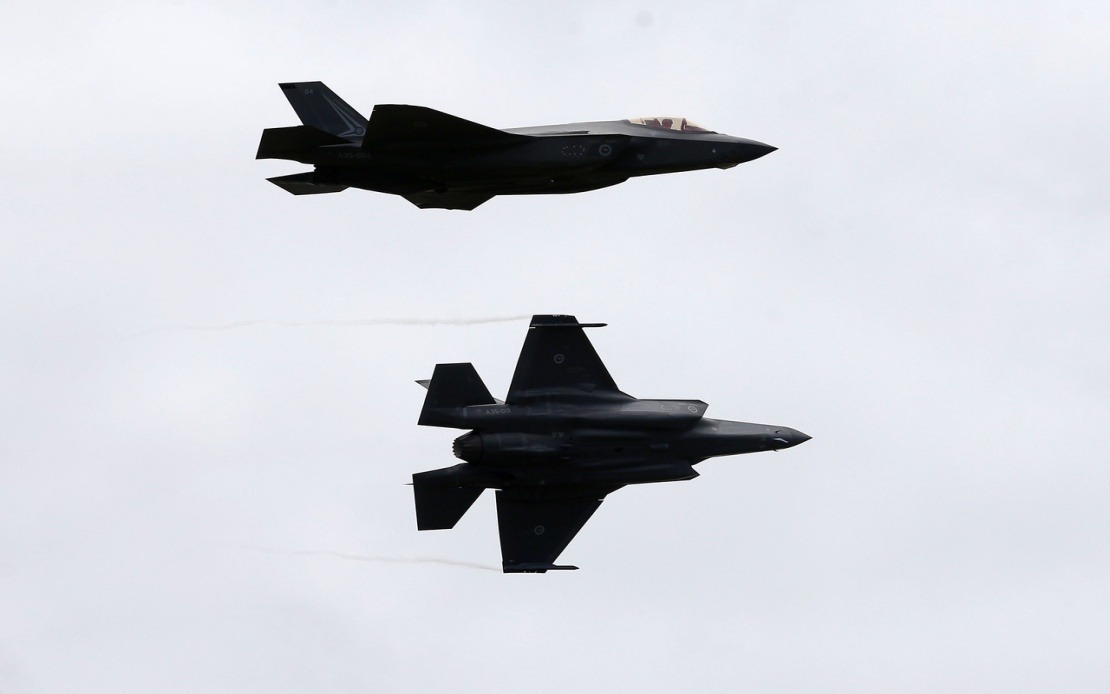
Three major Western defence powers have committed US$6.1 billion to developing a cutting-edge stealth fighter aircraft, marking a significant step forward in multinational defence collaboration. The United Kingdom, Italy, and Japan signed the £4.6 billion contract to accelerate work on the next-generation combat platform through the Global Combat Air Programme, with the agreement representing what participating governments describe as a crucial milestone in realising the ambitious project.
The deal represents a substantial financial commitment from three nations seeking to maintain technological superiority in aerial combat capabilities over the coming decades. The aircraft, scheduled to enter operational service by 2035, forms part of a broader strategic shift toward sixth-generation combat systems that integrate artificial intelligence, autonomous systems, and advanced digital technologies. For the participating nations, the investment underscores growing concerns about the pace of technological advancement in military aviation and the need to develop platforms that will remain relevant throughout the 2030s and beyond.
The British government outlined how the new fighter will complement existing air force assets, operating alongside the current Typhoon fleet and F-35 Lightning II aircraft while incorporating autonomous systems into broader air defence operations. This layered approach reflects modern military doctrine, which emphasises network-centric warfare where manned and unmanned platforms operate in integrated formations. The integration strategy suggests the new fighter represents not simply a replacement for ageing aircraft, but rather a cornerstone of a future air force architecture that distributes capabilities across multiple platforms and systems.
Technological innovation sits at the heart of the programme's ambitions. The aircraft will leverage complex digital engineering frameworks, artificial intelligence systems for enhanced decision-making, and groundbreaking technologies intended to establish it as the most advanced fighter ever operated by the Royal Air Force. These capabilities address emerging threats from peer competitors developing their own sixth-generation systems, and reflect recognition that aerial superiority now depends as much on information processing and autonomous decision-making as on kinetic performance.
Edgewing, the joint venture established in 2025 to deliver the programme, brings together three of Europe's and Asia's leading defence contractors. The consortium comprises BAE Systems of Britain, Italy's Leonardo, and Japan Aircraft Industrial Enhancement Co. Ltd., combining deep expertise in fighter development from three technologically sophisticated nations. This arrangement distributes both financial burden and technical responsibility, while enabling knowledge-sharing across defence industries and reducing individual national costs.
The contract now entered will finance the next critical phase, centring on detailed aircraft design and establishing fundamental performance requirements. This stage typically involves extensive modelling, simulation, and preliminary testing to validate design concepts before committing to full-scale development and production tooling. The emphasis on rigorous testing during this phase reflects lessons learned from previous major defence programmes, where design flaws identified late in development proved costly and time-consuming to remedy.
For Southeast Asian nations, this development carries strategic implications. The emergence of advanced fighter capabilities among Western powers continues the long-standing pattern of defence spending concentration among industrialised economies. The 2035 timeline suggests these systems will define air superiority contests for decades, influencing regional military balances and the technological gap between advanced and mid-tier air forces. Nations in this region will face decisions about whether to acquire these platforms, develop indigenous capabilities, or purchase systems from alternative suppliers.
The programme also reflects broader geopolitical alignments. Japan's participation in a major European defence initiative deepens security integration between Tokyo and Western powers, while serving Japan's own interests in developing advanced air defence capabilities amid regional security tensions. The inclusion of Japan signals how defence collaboration increasingly transcends traditional geographic boundaries, with partnerships organised around shared technological capabilities and strategic interests rather than purely geographic proximity.
Italy's role as the third partner emphasises European defence autonomy and industrial consolidation. Italian participation ensures European capability in advanced fighter development remains distributed across multiple countries rather than concentrated in a single power, maintaining diversity in the continent's defence industrial base. This approach reduces dependence on any single supplier and preserves technological knowledge across multiple national centres.
The next phase of work will prove technically demanding and financially challenging. Moving from design to prototype to production involves exponentially increasing costs and complexity, with no certainty that technical objectives can be achieved within budget parameters. Historical precedent from programmes like the F-35 demonstrates how initial cost estimates often prove optimistic, and how multinational management structures can complicate decision-making and budget discipline. The three nations will need to maintain political commitment across election cycles and shifting strategic priorities, a challenge that has derailed previous multinational defence projects.
Investment in such advanced capabilities also reflects competitive pressures from rival powers developing their own sixth-generation systems. China and Russia pursue their own next-generation fighter programmes, creating momentum for Western nations to accelerate development timelines and commit resources. This competitive dynamic, while driving technological progress, also raises costs as each side seeks incremental advantages, potentially diverting resources from other defence priorities.
The broader defence industry context matters significantly for understanding this deal's importance. Defence contractors face consolidation pressures, complexity in managing multinational programmes, and substantial investment requirements for research and development. The three-nation consortium approach distributes risk and capital requirements across multiple partners, making ambitious projects more financially sustainable. For Malaysia and regional nations, observing how these major powers organise complex defence industrial partnerships offers instructive lessons about technological capability development and international collaboration models.

