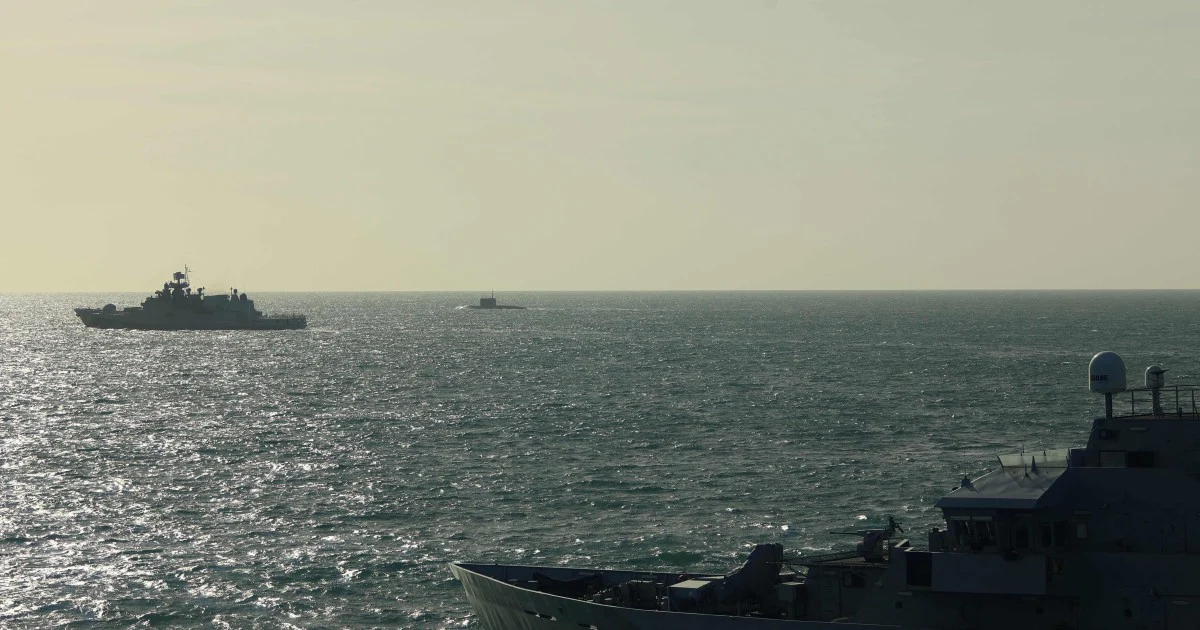
UK Prime Minister Keir Starmer on Wednesday distinguished between aggressive and deliberately threatening conduct when describing an incident involving a Russian warship firing warning shots near a civilian yacht in the English Channel, labelling the action as reckless rather than purposefully menacing.
The distinction drawn by the British leader reflects a careful diplomatic stance as maritime encounters between Russian and Western vessels continue to test the boundaries of international waters protocols. By characterizing the incident as reckless, Starmer acknowledged the genuine danger posed by such actions whilst avoiding language that might suggest Moscow was engaged in a coordinated intimidation campaign.
Warning shots represent a standard maritime practice historically used to signal vessels to alter course or cease certain activities, but their deployment in civilian waters carries significant risk. The firing of such projectiles near a commercial yacht in a heavily trafficked shipping lane like the English Channel raises serious questions about navigational safety and the application of military procedures in civilian spaces.
The English Channel remains one of the world's busiest maritime corridors, with thousands of commercial vessels and private boats transiting its waters annually. The presence of Russian naval assets in or near these waters has become increasingly common in recent years, reflecting broader geopolitical tensions between Russia and NATO-aligned nations including the United Kingdom. Each such encounter adds to a pattern of escalating risk in European waters.
For Malaysia and other Southeast Asian nations, the incident underscores the fragility of maritime order even in regions far removed from direct Russian-Western confrontation. The rules governing international waters and the protocols for warning signals between military and civilian vessels remain crucial for preserving safety across all ocean-going commerce. The precedent set by major powers in their conduct at sea can influence behaviour globally.
Starmer's measured response likely reflects consultation with military and intelligence advisers who assessed the incident's context and intent. Rather than treating the action as an intentional provocation requiring an immediate escalatory response, the Prime Minister's characterization suggests the warship's actions, whilst dangerous and unacceptable, appeared rooted in operational procedures rather than strategic intimidation.
The incident represents the latest in a series of close encounters between Russian and Western military assets, particularly in the North Atlantic and surrounding European waters. These encounters have increased significantly since Russia's full-scale invasion of Ukraine in February 2022, creating an environment where routine naval operations carry heightened tension and risk of miscalculation.
Diplomatically, Starmer's language appears designed to register strong disapproval whilst leaving room for continued engagement and de-escalation. By refusing to label the incident as sinister, the UK government avoided rhetoric that would necessitate a formal diplomatic complaint or retaliatory measures, instead emphasizing the irresponsibility of the action itself.
The yacht involved in the incident represented civilian interests with no military function, making the deployment of warning fire particularly concerning. Civilian mariners and commercial shipping companies operating in European waters must now factor in heightened military activity when planning routes and schedules, an unwelcome complication for an industry already contending with rising fuel costs and complex regulatory environments.
For broader NATO cohesion, such incidents require careful management to avoid both underreaction that appears weak and overreaction that risks unintended escalation. The UK, as a prominent NATO member and nuclear power, carries responsibility for articulating responses that neither invite further adventurism nor trigger unnecessary confrontation.
The distinction between reckless and sinister conduct, whilst seemingly semantic, carries real operational implications. A reckless action might be addressed through diplomatic channels, maritime safety protocols, and procedural clarifications. A sinister action suggesting deliberate intimidation would demand more forceful responses and potentially trigger alliance-wide security considerations.
Looking forward, incidents such as this will likely continue as long as Russia seeks to project power near NATO territories and test the resolve of Western responses. The challenge for London and its allies lies in maintaining robust defence capabilities whilst avoiding the appearance of provocation, a balance increasingly difficult to sustain as Russian military operations near European waters become normalized.
The English Channel incident serves as a reminder that even ostensibly contained regional tensions carry implications for international maritime order that extend far beyond European waters, affecting shipping lanes and naval operations across Asia-Pacific and globally.