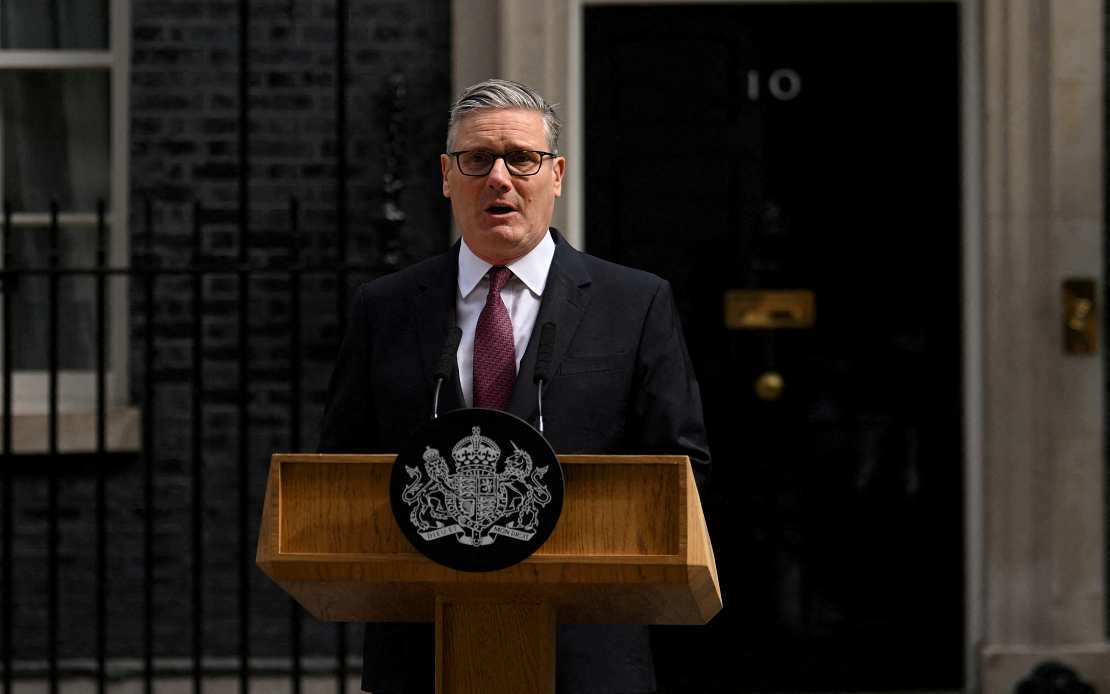
British Prime Minister Keir Starmer has called for an urgent resumption of the ceasefire between the United States and Iran, warning that the escalating standoff over the Strait of Hormuz threatens regional stability and global commerce. Speaking at a joint news conference in Paris alongside French, German, and Ukrainian leaders following a "coalition of the willing" meeting, Starmer delivered a sharp rebuke of Iranian military actions, saying there can be no tolerance for the recent attacks targeting commercial shipping and regional allies.
The timing of Starmer's intervention underscores the gravity with which Western powers now view the deteriorating situation in the Persian Gulf, a waterway through which approximately one-third of the world's traded oil passes daily. For Malaysia and other Southeast Asian economies heavily dependent on energy imports and global maritime trade, any prolonged disruption carries serious implications for inflation, fuel costs, and supply chain stability. The Strait of Hormuz's strategic importance cannot be overstated—its chokepoint geography means that disruptions reverberate across the world economy, making regional stability a matter of direct concern to distant nations.
Starmer's condemnation of Iran's maritime strikes reflects Western frustration with what they characterise as Iranian obstruction of international shipping lanes. The British leader explicitly stated that "we are ready" to commit naval and military assets to restore freedom of navigation through the waterway, a pledge that signals serious consideration of direct intervention. This readiness extends beyond rhetorical support; it suggests that Britain, alongside its European and transatlantic allies, views military deployment as a genuine option should diplomatic channels continue to fail.
The immediate backdrop to Starmer's appeal involves a dangerous cycle of tit-for-tat military actions. Over the preceding weekend, the United States and Iran had engaged in renewed strikes, with President Donald Trump declaring that America was "reinstating" a blockade on Iran and would charge vessels for safe passage through the Strait of Hormuz. Such language—framing passage through international waters as a service requiring payment—represents a significant escalation in rhetoric and signals potential shifts in how the US intends to prosecute its ongoing strategic competition with Tehran.
The underlying dispute traces its origins to the US-Israeli military campaign that commenced in late February, transforming the region into an active conflict zone. Following that escalation, Iran had effectively closed the Strait of Hormuz, a move that reverberated across global energy markets and supply chains. A glimmer of hope emerged in June when a memorandum of understanding was signed with the intention of concluding the war, creating expectations that the waterway would be fully reopened and that normalcy would return to one of the world's most critical maritime corridors.
However, that optimism now appears premature. The recent escalation suggests that neither side has fully committed to the agreements reached, or that significant disputes remain over implementation and compliance. For Southeast Asian nations like Malaysia, which have substantial maritime trade transiting through Middle Eastern waters, the failure of these agreements carries tangible consequences. Supply chain disruptions could increase logistics costs, delay critical imports, and potentially trigger inflation in sectors ranging from petrochemicals to consumer goods.
Starmer's call for "unrestricted freedom of navigation in the straits" represents a reassertion of international maritime law and the principles of open trade that underpin the global economic order. By coupling this demand with a willingness to deploy military assets, Britain signals that Western powers will not passively accept Iranian attempts to weaponise strategic geography. This posture carries implications for regional dynamics throughout Southeast Asia, where maritime security and freedom of navigation remain paramount concerns.
The diplomatic initiative launched through the Paris coalition meeting reflects recognition that military escalation, while possible, remains a last resort. By assembling French, German, and Ukrainian representatives alongside British leadership, the gathering emphasised that this is a multilateral concern transcending bilateral US-Iran relations. The inclusion of Ukraine, a nation presently engaged in conflict with Russia, suggests that Western powers view Iran's actions as part of a broader challenge to the rules-based international order that extends beyond the Middle East.
For Malaysian policymakers and business leaders, the unfolding crisis presents a cautionary reminder of the extent to which distant geopolitical tensions can translate into concrete economic consequences. Malaysia's position as a significant global trader means that any sustained disruption to critical maritime routes directly impacts import costs, export competitiveness, and inflation trajectories. The nation's energy security, while diversified, remains partially reliant on Middle Eastern oil supplies, making regional stability a legitimate national interest.
The diplomatic path forward remains unclear. Starmer's explicit call for negotiations on "remaining issues" suggests that significant sticking points persist beyond the initial ceasefire agreement. These likely include sanctions architecture, nuclear programme constraints, and the future status of proxy forces throughout the region. Without progress on these deeper questions, the ceasefire remains fragile and vulnerable to collapse at the next provocation.
The crisis also highlights the limitations of regional powers in managing their own affairs without external military intervention. The very need for British, French, and German military assets to sustain freedom of navigation in the Persian Gulf speaks to the absence of durable regional mechanisms for resolving disputes and ensuring stability. This vacuum invites continued great power involvement and elevates the risks of inadvertent escalation, particularly when multiple armed forces operate in close proximity amid high tensions.
For Southeast Asia's broader strategic landscape, the unfolding situation serves as a reminder that regional stability depends substantially on maintaining open global commerce and preventing any single actor from dominating critical chokepoints. Malaysia and its neighbours benefit from a rules-based maritime order and have every interest in seeing the Iran-US standoff resolved through negotiation rather than further military confrontation. Starmer's measured but firm call for ceasefire resumption reflects this understanding, even as it acknowledges that Western powers will not hesitate to enforce maritime freedom if diplomacy falters.

