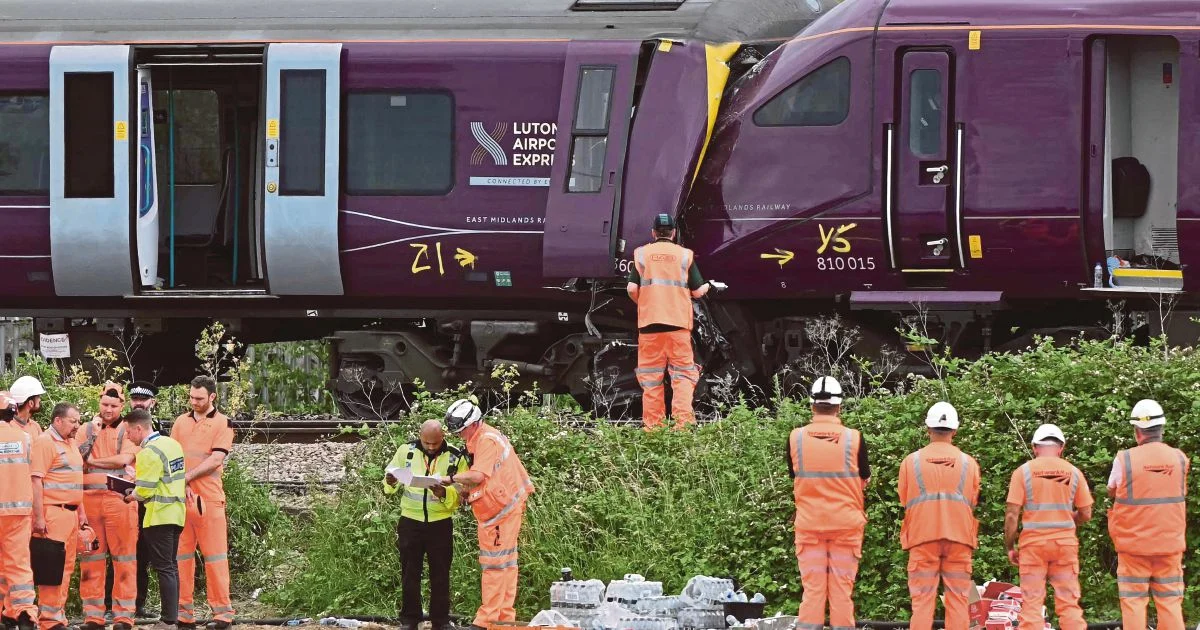
A train collision in the Bedford area, situated north of London, has resulted in the death of a driver and left 28 passengers and staff hospitalised as of Saturday, with nine of the injured in critical condition. The incident has triggered an immediate investigation by UK accident authorities seeking to establish the circumstances that led to the collision between the two services.
Accident investigators launched their probe on the day of the incident, examining multiple factors that could have contributed to the crash. The collision's severity, indicated by the large number of hospitalised individuals and the critical condition of several victims, underscores the impact of the impact and raises urgent questions about what transpired in the moments before the trains came together.
The Bedford region, part of the East Midlands network corridor that serves commuters and regional travellers between London and other major centres, experienced significant disruption following the collision. The incident occurred on a stretch of track that handles considerable daily traffic, making the collision particularly significant given the potential for passenger numbers on such services.
Among the injured, nine individuals required emergency treatment for critical injuries, suggesting varying degrees of trauma sustained during the collision. The remaining 19 hospitalised victims sustained injuries of lesser severity, though still requiring medical assessment and care. The distribution of injury severity across the casualty numbers indicates that while some passengers experienced minor injuries, others faced more serious health consequences requiring intensive medical intervention.
The death of the driver represents a particular tragedy within the broader incident, as operators maintain essential safety responsibilities during rail operations. Driver fatalities in rail accidents raise specific investigative questions regarding whether human factors, mechanical failures, signalling errors, or environmental conditions played roles in the collision. Such questions are central to understanding how modern rail safety systems either functioned or failed in this instance.
For Malaysian readers and the broader Southeast Asian context, rail safety incidents in developed nations such as the United Kingdom provide important reference points for understanding accident investigation methodologies and safety standards. The UK's approach to post-incident investigation, involving specialist accident authorities and systematic examination of all contributing factors, represents best practices that regional authorities elsewhere may reference when strengthening their own rail safety protocols.
The collision also highlights the vulnerability inherent in rail transport, regardless of infrastructure development levels or economic status. Even in mature railway systems serving densely populated corridors, accidents can occur when multiple factors converge. The incident serves as a reminder that continuous monitoring, maintenance, and adherence to safety protocols remain essential across all railway operations globally.
Investigators faced the immediate task of preserving evidence from the collision site, documenting the positioning of both trains, examining track conditions, and retrieving data from onboard systems that record speed, braking applications, and signalling information. These technical elements provide objective records that help authorities reconstruct the sequence of events leading to the collision.
The Bedford area's train collision represents the type of incident that generates wide-ranging implications for rail operators and safety authorities. Beyond the immediate human tragedy of casualties and loss of life, such events trigger comprehensive reviews of maintenance schedules, signalling system reliability, driver training protocols, and emergency response procedures. The investigation's findings will likely inform recommendations that extend across the UK rail network and potentially influence safety standards internationally.
For passengers and operators utilising UK rail services, the incident underscores both the importance of transport safety investments and the continuous nature of accident prevention efforts. Modern trains and track infrastructure incorporate numerous safety features, yet no system eliminates risk entirely. Understanding what contributed to this collision—whether operational procedures, equipment malfunction, environmental factors, or human error—becomes crucial for preventing similar occurrences.
The medical response to the collision demonstrated the capacity of UK healthcare services to manage mass casualty incidents, with 28 individuals receiving hospital treatment and appropriate triage of critical cases. However, the broader question of how such an incident occurred in the first place remains the central focus of investigative efforts, as authorities work to determine whether preventive measures existed that could have avoided the collision entirely.

