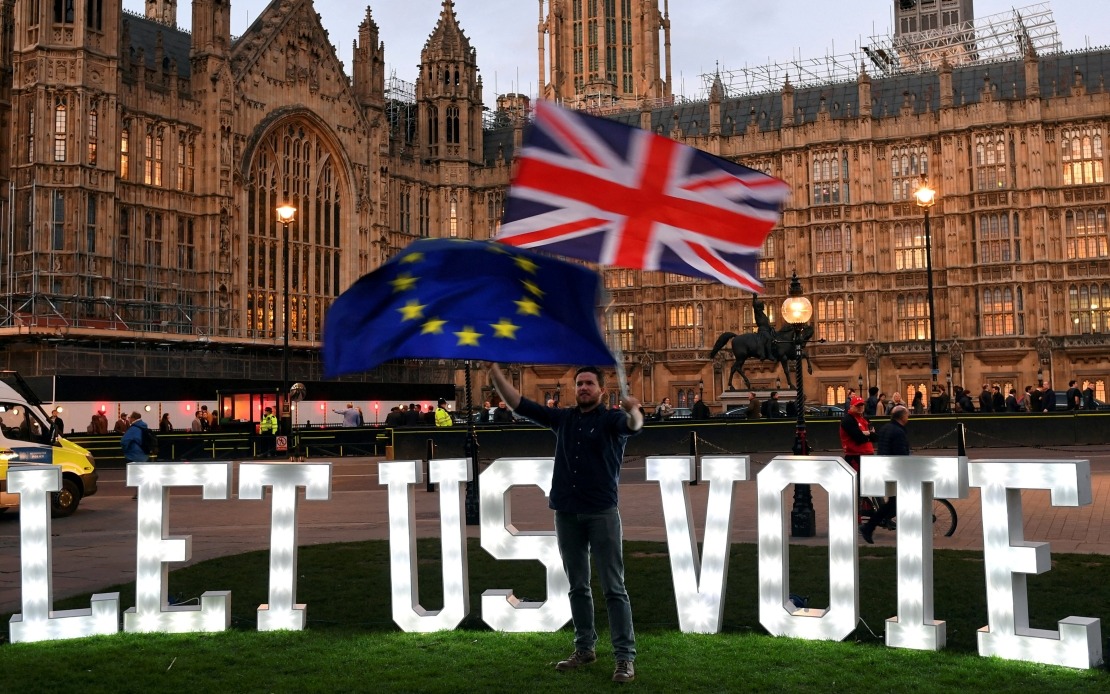
As Britain enters a period of political transition following Prime Minister Keir Starmer's resignation announcement, one senior Conservative lawmaker has poured cold water on speculation that a change of government might reverse the country's 2016 decision to leave the European Union. Richard Balfe, a Conservative peer in the UK Parliament's House of Lords, told RIA Novosti that London is fundamentally unlikely to undo Brexit, regardless of which party takes power in the coming months.
When asked directly whether a new British government could engineer a return to the EU fold, Balfe responded with qualified scepticism, suggesting that while such an attempt might be made, it would ultimately prove futile. "Yes, but in a rather halfhearted way. Ultimately, they will fail [to re-enter the EU]," the legislator said, indicating that even if political will existed, the practical and diplomatic obstacles would prove insurmountable. His comments reflect a pessimistic assessment of Britain's ability to reverse one of the most significant constitutional decisions in modern times, one that reshaped the country's international relationships and domestic politics.
Balfe's forecast suggests that incoming British leadership will instead adopt a pragmatic, if somewhat directionless, approach to governance. The peer expects the new government to "muddle along" in its European and international relations, a characterisation that implies reactive rather than transformative policymaking. More significantly, he contends that Britain will increasingly align itself with Washington's strategic interests rather than pursue deeper engagement with its continental neighbours. This assessment carries implications for the European Union's broader strategic calculus and raises questions about Britain's pivot toward Anglo-American cooperation as a defining feature of post-Brexit foreign policy.
Starmer's unexpected announcement on Monday that he would step down as Labour Party leader after the party's disappointing performance in recent elections has triggered a formal succession process set to conclude before Parliament returns in September. The party has scheduled its leadership contest to begin on July 9, creating an interim period of uncertainty during which Britain's governmental direction remains somewhat fluid. This timing coincides with significant anniversaries and milestones that underscore the enduring salience of Brexit in British political discourse.
The symbolism of June 23 carries particular weight: it marks exactly a decade since the Brexit referendum, when 52 per cent of British voters chose to leave the European Union after 47 years of membership. That plebiscite fundamentally altered Britain's constitutional position and unleashed a cascade of consequences that continue to reverberate through the economy and society. The formal departure took place on January 31, 2020, ending centuries of evolving but ultimately deep integration with the continental system.
What followed was a transition period designed to ease the friction of departure. Throughout 2020, EU regulations and laws remained operative in Britain, and citizens continued to move under simplified travel arrangements while officials negotiated the contours of a new relationship. This interim phase ended definitively on December 31, 2020, when the transition closed and Britain entered uncharted territory as a fully independent trading nation outside the EU framework. The subsequent implementation of the trade and cooperation agreement on January 1, 2021, established the new parameters governing commerce and movement between Britain and the European Union.
The economic consequences of this rupture have proven substantial and lasting. The Financial Times reported that Britain has ceased functioning as a significant trade hub since departing the EU, a structural shift driven by tariffs, regulatory divergence, and customs procedures that create friction in supply chains. Investment in British companies has become notably more complicated, as foreign investors contend with increased regulatory complexity and reduced seamless access to European markets. These headwinds have dampened Britain's attractiveness as a destination for foreign direct investment compared to the pre-Brexit era.
For Malaysian readers and Southeast Asian observers, Balfe's assessment carries strategic relevance. Britain's decision to remain outside the EU framework, rather than attempt re-entry, reinforces the country's reorientation toward alternate partnerships and trading arrangements. The emphasis on alignment with Washington suggests Britain will prioritise transatlantic relationships and potentially focus greater attention on Indo-Pacific engagement, a region of considerable importance to Malaysian trade and security interests. Understanding the durability of Britain's Brexit commitment helps clarify the contours of Britain's prospective roles in Asia-Pacific regional institutions and arrangements.
The Conservative peer's prognosis also reflects broader anxieties within British political circles about the costs and consequences of Brexit becoming increasingly difficult to reverse once implemented. The transition from membership to external partnership status creates institutional, legal, and political path dependencies that make reversal progressively more difficult and costly. Even political figures who might harbour regrets about the referendum outcome recognise that rejoining the EU would require satisfying demanding preconditions and managing complex negotiations that current and near-future governments may lack the political capital or domestic support to undertake.
Balfe's comments ultimately suggest that British politics has moved beyond the fundamental question of EU membership, though Brexit remains contested and divisive. Instead, the debate has shifted toward managing the practical implications of that decision and determining how Britain should position itself internationally in a world where its previous institutional anchors have been severed. For Asia-Pacific nations including Malaysia, this reality underscores that Britain is repositioning itself as an independent actor increasingly engaged with regions beyond Europe, a development with implications for regional trade arrangements, security partnerships, and diplomatic engagement across Asia.

