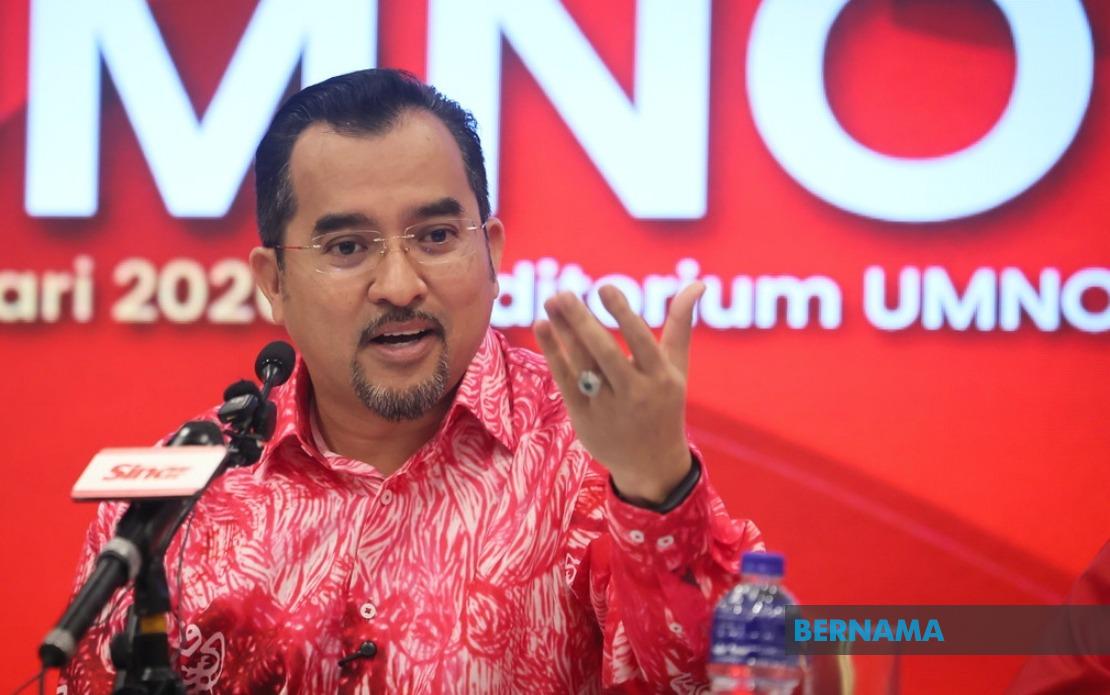
The resignation of UMNO Supreme Council member Datuk Dr Mohd Puad Zarkashi has been linked to candidate selection disagreements, according to the party's secretary-general. Datuk Dr Asyraf Wajdi Dusuki revealed through a Facebook statement that Mohd Puad's decision to exit the party stemmed from unhappiness about his son not being chosen as the candidate for the Rengit state seat, casting fresh light on the circumstances surrounding the high-profile departure announced on June 25 as the Johor state election campaign enters its final phase.
Mohd Puad had announced his immediate resignation from UMNO earlier that day, citing a desire for greater freedom to express his political views. However, Asyraf Wajdi's account provides a different narrative, suggesting that the party's candidate selection process triggered the split rather than any principled ideological disagreement. According to the secretary-general, Mohd Puad had written extensively to party leadership, making explicit threats to abandon UMNO and publicly attack the organisation unless his son received consideration for the contested Rengit position.
While acknowledging that Mohd Puad's son possesses youth and considerable potential for development as a political leader, Asyraf Wajdi emphasised that UMNO's candidate selection procedures must weigh numerous considerations beyond individual promise. He stressed that the party cannot simply accede to demands from senior members whenever their preferred candidates are not selected, pointing to what he characterised as an increasingly common pattern of pressure tactics employed within UMNO's leadership circles.
The pattern of such behaviour extends further back into UMNO's history. Asyraf Wajdi revealed that during the administration of Datuk Seri Najib Tun Razak, Mohd Puad had similarly threatened to leave the party if he was not renominated as Member of Parliament for Batu Pahat. This historical precedent underscores a troubling pattern of conditional loyalty that Asyraf Wajdi characterised as fundamentally incompatible with the values of a strong, principled political organisation.
Mohd Puad had also alleged that Johor's royal palace exercises control over the state branch of UMNO and had ordered the dissolution of the State Legislative Assembly. Asyraf Wajdi swiftly dismissed these claims as slander, rejecting suggestions that palace interests drive UMNO's decision-making in Johor. The denial highlights ongoing tensions within the party regarding the appropriate balance between institutional autonomy and respect for traditional authority structures, particularly given the special constitutional status of the Johor monarchy.
The secretary-general seized the opportunity to articulate UMNO's philosophy on leadership and succession. He insisted that UMNO operates as a meritocratic political party rather than a family-based organisation where relatives receive automatic preference for positions of power. This declaration carries particular weight given international and domestic scrutiny of how political parties in Malaysia allocate candidacies and leadership roles, with critics sometimes pointing to dynastic tendencies within various parties.
In Asyraf Wajdi's assessment, the fundamental issue lies not with UMNO's candidate selection but with the expectations of individual members who conflate party membership with guaranteed access to electoral positions. He argued that the party's historical mission—advocating for Malay-Muslim interests and national sovereignty—represents something vastly more significant than personal career advancement or family considerations. From this perspective, allowing individual disappointment to override party discipline and loyalty would represent a dangerous capitulation to self-interested behaviour.
The timing of Mohd Puad's departure carries particular significance given the electoral calendar. The Johor State Legislative Assembly was dissolved on June 1, with nomination day scheduled for June 27 and polling set for July 11. In this compressed timeframe, UMNO was finalising its candidate slate for what party strategists anticipated as a challenging campaign. The departure of a Supreme Council member just days before nominations close unavoidably shapes the narrative surrounding candidate selection, potentially emboldening others within the party who harbour grievances about their own or their relatives' electoral prospects.
The incident also reflects broader pressures within UMNO at a moment when the party confronts internal cohesion challenges. Following its electoral defeats in 2018 and the subsequent political realignments that culminated in the Perikatan Nasional government, UMNO has worked to rebuild its organisational strength and electoral appeal. Leadership transitions, changing power dynamics, and generational shifts have created an environment where ambitious senior figures and their successors compete intensely for candidacies and positions.
For Malaysian voters and political observers, this episode illustrates the sometimes opaque dynamics underlying public political statements. When high-profile politicians announce departures or organisational changes, the public rationale frequently masks complex internal disputes over resources, positions, and preferment. The Mohd Puad case demonstrates how candidate selection—a seemingly technical party function—intersects with personal ambitions, family interests, and broader questions about loyalty and organisational discipline.
Asyraf Wajdi's intervention underscores UMNO leadership's determination to prevent similar occurrences from derailing its election campaign or demoralising the broader party base. By publicly explaining and defending the candidate selection process, party leadership hoped to signal that such threats would not succeed in changing decisions already made. However, the incident also exposes vulnerabilities within UMNO's institutional cohesion, suggesting that tension between senior figures and the party hierarchy remains an ongoing concern as Malaysia's largest Malay-Muslim party navigates its current political challenges and attempts to restore its electoral competitiveness.

