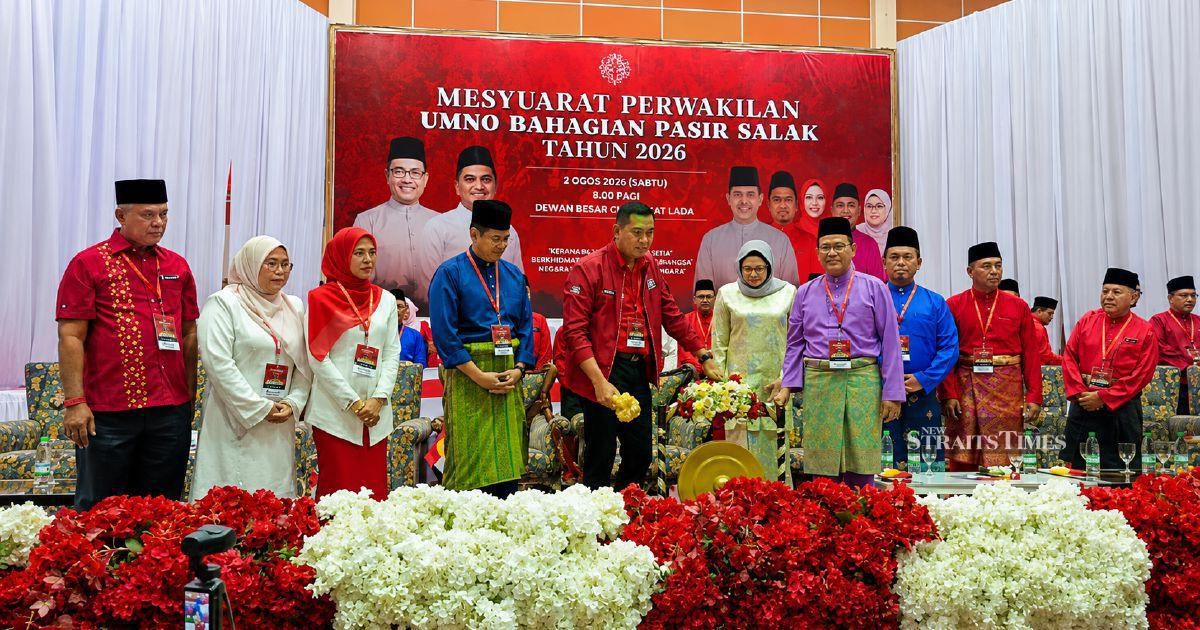
Umno's grassroots divisions deserve meaningful representation in discussions over seat allocations arising from the coalition's recent understanding with Perikatan Nasional, according to Umno Youth chief Datuk Dr Muhamad Akmal Saleh, who highlighted the importance of respecting division-level perspectives in the broader electoral strategy negotiations.
The remarks made in Pasir Salak underscore growing awareness within Umno's leadership that any seat-sharing framework cannot simply be imposed from the party's upper echelons without consulting the divisions that mobilise ground support during election campaigns. This reflects a broader tension within Malaysia's political establishment between centralized decision-making at the federal level and the need for buy-in from party structures at the state and parliamentary constituency levels.
The BN-PN understanding represents a significant realignment in peninsular Malaysian politics, bringing together Umno-led Barisan Nasional with the Islamist-leaning Perikatan Nasional in a formal cooperation framework. This development reshapes the electoral landscape substantially, as both coalitions had previously competed directly in general elections, fragmenting the non-Pakatan vote. For grassroots members and division chiefs who have built organizational networks within their constituencies over years, the sudden introduction of new seat-sharing arrangements raises concerns about candidate selection processes and the credibility of existing party hierarchies.
Akmal's intervention suggests that divisions across the peninsula—from urban centres to rural constituencies—are requesting clarity on how the BN-PN accord will affect their electoral prospects and influence. Division leaders, who typically understand local political dynamics more intimately than federal party structures, worry that premature or opaque seat allocations could alienate members and weaken campaign machinery at the critical ground level. Their concerns carry weight because Umno's electoral performance has depended heavily on the enthusiasm and organizational capacity of division and branch leaders.
The youth wing's emphasis on consulting divisions reflects the demographics and structure of Umno itself. Youth members form a crucial voting bloc within party elections and serve as the primary mobilization force during general elections. Akmal's position that division leaders' perspectives warrant respect acknowledges this reality and suggests that meaningful consultation could strengthen both the coalition arrangement and Umno's internal cohesion during what will inevitably be a complex negotiation period.
The timing of Akmal's comments is significant given that the BN-PN understanding remains relatively nascent, with specific details about seat allocations still being finalized. Different divisions command varying degrees of electoral strength—some control reliably safe seats while others represent competitive battlegrounds. Division chiefs naturally prioritize protecting their political investments and maintaining the incentive structures that keep their organizational networks intact. Without transparent communication from party leadership, divisions could interpret seat reallocation as evidence of weak leadership or poor negotiating on Umno's behalf.
Moreover, the question of seat allocations touches on fundamental issues of party democracy and internal legitimacy. If Umno's federal leadership negotiates away seats or marginalizes divisions without consultation, it risks weakening the party's internal governance structures precisely when strong organizational discipline will be essential for implementing a complex coalition strategy across multiple states and federal territories. Divisions that feel bypassed may become less cooperative during candidate selection, campaign mobilization, and fundraising efforts.
The BN-PN arrangement also creates structural complexity absent from previous electoral configurations. With Perikatan introducing component parties with their own state-level strongholds and organizational bases, divisions need assurance that Umno's negotiators secured favorable terms rather than subordinating Umno interests to broader coalition considerations. This requires transparent communication from the top, which Akmal's statement implicitly calls for by insisting that division voices be heard.
For Malaysian voters and observers, the division-level debate over seat allocations represents a testing ground for whether the BN-PN understanding will function as a genuine coalition of equal partners or devolve into internal friction. If Umno divisions feel sidelined, it could generate negative publicity and undermine the coalition's credibility as an alternative to Pakatan governance. Conversely, if the coalition successfully balances federal-level coalition interests with respect for grassroots party structures, it could demonstrate a more sophisticated approach to managing coalition politics.
The implications extend beyond Umno to Perikatan's component parties, which will face similar pressures from their own divisions regarding seat allocations. The entire coalition arrangement depends on each party managing internal expectations while pursuing broader coalition objectives. Akmal's intervention signals that at least within Umno's youth wing, there is recognition that sustainable coalition strategies require inclusive consultation rather than top-down mandate, a principle that could stabilize the BN-PN arrangement if applied consistently across all negotiating processes moving forward.

