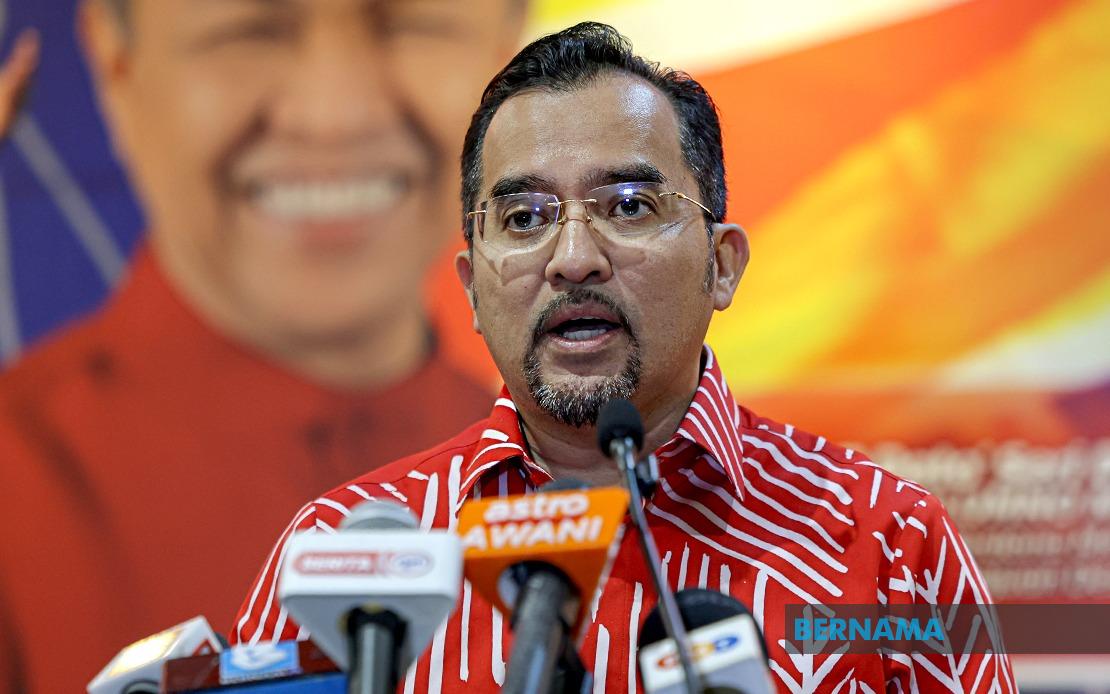
Malaysia's largest Malay-Muslim political party has taken a significant step toward reshaping its electoral strategy by granting its state-level leadership broad negotiating authority to explore potential coalitions ahead of the next national election. The decision, unveiled at UMNO's Supreme Council meeting in Kuala Lumpur on August 28, signals the party's recognition that future electoral success may depend on flexible, decentralized decision-making rather than rigid national directives.
UMNO secretary-general Datuk Dr Asyraf Wajdi Dusuki announced the resolution following the party's late-evening meeting, chaired by president Datuk Seri Dr Ahmad Zahid Hamidi, which included deputy president Datuk Seri Mohamad Hasan and other senior council members. The authorization represents a strategic shift that allows individual state chapters to pursue relationships tailored to their specific political landscapes and voter demographics, a necessary adaptation in Malaysia's increasingly fragmented party system. This departure from top-down decision-making reflects broader organizational changes within UMNO as it navigates post-Sheraton Move political realities and seeks to recover ground lost to rival coalitions.
Crucially, however, the Supreme Council attached important conditions to this newfound autonomy. Asyraf Wajdi emphasized that any negotiations must be grounded in principles of mutual sincerity and trust, explicitly rejecting coercive or threatening tactics that have sometimes characterized political engagement in Malaysia's complex coalition landscape. This stipulation appears directed at preventing state leaders from pursuing partnerships through illegitimate pressure or quid pro quo arrangements that could damage the party's standing or invite legal scrutiny. The careful framing suggests UMNO leadership recognizes the reputational risks accompanying Coalition discussions, particularly given ongoing public concerns about political stability and ethical governance.
The timing of this authorization carries particular weight given Malaysia's electoral calendar and current political configurations. By delegating negotiating power to state chapters rather than concentrating it at national headquarters, UMNO positions itself more flexibly than competitors that remain bound by rigid central mandates. State-level actors typically possess superior understanding of local political dynamics, regional competitor strengths, and community sentiments that national leaders cannot fully appreciate. This structural advantage could prove decisive in closely contested constituencies or states where the margin between victory and defeat remains razor-thin.
In a parallel development revealing UMNO's continuing outreach efforts, the Supreme Council voted to extend a formal invitation to PAS leadership to attend the party's 2026 General Assembly, scheduled for September 9-12. This gesture toward the Islamist party carries both symbolic and strategic weight in Malaysian politics, suggesting that despite past tensions and competitive friction between the two largest Malay-Muslim parties, UMNO seeks to maintain diplomatic channels and explore common ground on shared concerns. Such high-level engagement between traditional rivals can create pressure on both organizations' grassroots to moderate their rhetoric and consider alignment possibilities that party activists might otherwise resist.
Accompanying the Assembly gathering, UMNO has scheduled three substantive programs for September 8 that reveal the party's thematic priorities heading into the pre-election period. The 2026 Malay Education Convention signals UMNO's commitment to positioning itself as the guardian of Malay-Muslim educational interests, a perennial concern for the party's core constituency. The Malaysian Islamic Scholars Convention similarly emphasizes UMNO's engagement with intellectual and religious leadership across the Muslim community, while the Laman Wanita Kreatif—Creative Women's Space—indicates growing attention to women's political participation and economic empowerment. These three concurrent events suggest UMNO intends to frame the upcoming electoral cycle around comprehensive community development and cultural preservation rather than narrow partisan advantage.
Separately, the Supreme Council reaffirmed UMNO's commitment to rule-of-law principles and due process, emphasizing that no individual should face condemnation without formal charges, trial, and court conviction. This declaration appears designed to insulate the party against accusations that it protects members or leaders facing legal difficulties, a persistent criticism given historical cases involving various UMNO figures. By articulating unambiguous support for proper judicial procedures, party leadership signals that UMNO will not obstruct justice or shield wrongdoing by its own cadres, a position intended to enhance party credibility and distinguish UMNO from competitors vulnerable to similar accusations.
The emphasis on legal propriety and democratic process reflects broader challenges confronting Malaysian politics as a whole. Citizens increasingly demand that political parties demonstrate genuine commitment to institutional integrity rather than merely claiming allegiance to democratic principles while simultaneously protecting favored individuals from accountability. UMNO's explicit statement that the party will not defend misconduct or deviation by members or leaders—including senior figures—represents an attempt to distance itself from perceptions of endemic corruption that have undermined public confidence in major political institutions.
For Malaysian voters and regional observers, these developments suggest UMNO is attempting to balance organizational flexibility with ethical positioning as it prepares for electoral competition. The devolution of coalition-negotiating authority to state branches acknowledges political realities that national strategies often ignore, while the concurrent emphasis on sincerity, trust, and legal propriety indicates party leadership's recognition that electoral success in contemporary Malaysia increasingly depends on demonstrated integrity rather than mere organizational apparatus or demographic advantage.
The authorization also carries implications for Malaysia's broader coalition dynamics. If UMNO's state branches successfully negotiate partnerships reflecting local circumstances, such arrangements could create models for more decentralized, adaptive political structures than the rigid national coalitions that currently dominate Malaysian electoral politics. This potential experimentation in political organization may influence how other parties approach their own structural arrangements heading into the 2026 election cycle. The coming months will reveal whether UMNO's calculated delegation of authority enables more effective electoral positioning or creates coordination challenges that undermine party coherence and strategic messaging.

