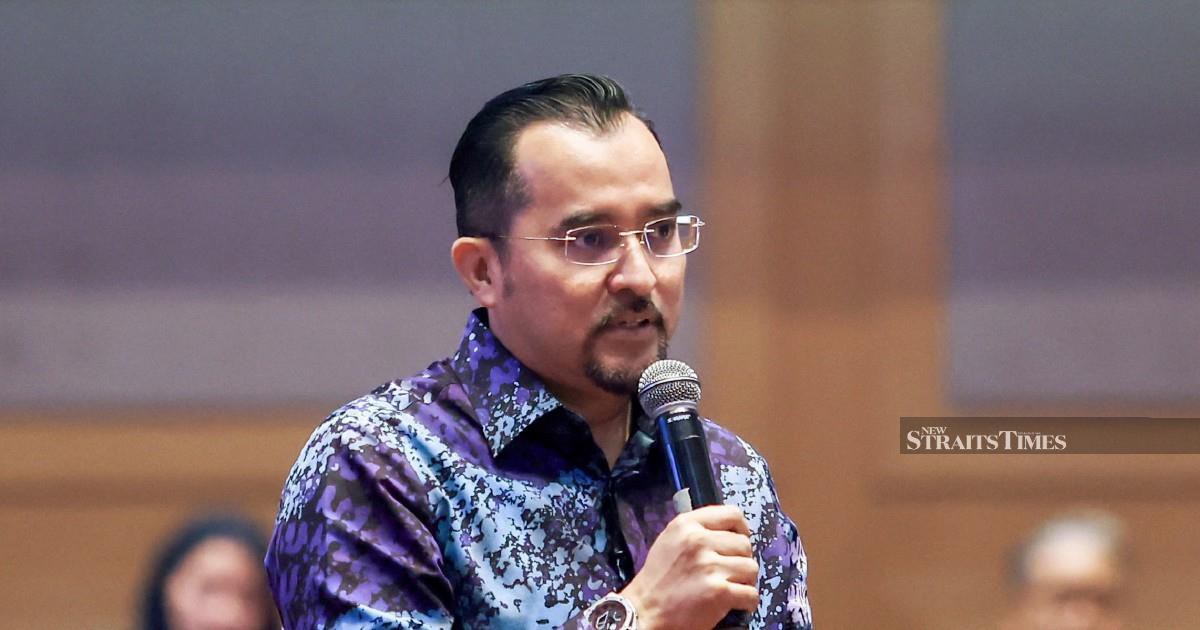
Umno secretary-general Datuk Dr Asyraf Wajdi Dusuki has firmly rejected suggestions that the party choreographed a facade designed to protect those accountable for the financial irregularities that have engulfed Lembaga Tabung Haji, Malaysia's pilgrimage savings institution. The denial comes as the TH scandal continues to generate intense public and political debate, with critics questioning whether certain party figures have received preferential treatment in investigations and disciplinary proceedings.
The Tabung Haji crisis, which emerged publicly following significant financial losses at the institution, has become a flashpoint in Malaysian political discourse. The fund, which manages savings for millions of Muslims planning to perform the hajj pilgrimage, lost billions in value, sparking widespread concern among depositors and calls for comprehensive accountability. As the primary custodian of these contributions, TH has faced mounting pressure to identify those responsible and implement corrective measures, yet progress has been inconsistent and often controversial.
Datuk Dr Asyraf's rebuttal addresses concerns that have circulated within opposition circles and among civil society observers who question whether Umno, which holds considerable political influence, has used its position to insulate party members from serious consequences. Critics have pointed to the divergent handling of cases involving different individuals, suggesting that political affiliation may have influenced investigative priorities and outcomes. These allegations strike at the heart of institutional credibility during a period when public trust in major financial institutions remains fragile.
The intersection of party politics and institutional accountability represents a recurring challenge in Malaysian governance. When scandals involve large public funds managed by entities connected to ruling coalitions, questions inevitably arise about whether impartial investigations can proceed unimpeded. The TH situation is particularly sensitive given that the fund's beneficiaries comprise a substantial portion of the electorate, many of whom are ordinary Malaysians with limited savings who depend on TH for their pilgrimage aspirations.
Umno's position as a major component of the coalition government has created perceptions, whether justified or not, that the party possesses institutional leverage that could shield allies. The denial by Datuk Dr Asyraf appears designed to counter this narrative by asserting the party's commitment to transparency and accountability. However, such statements carry limited persuasive power without accompanying concrete evidence of rigorous enforcement against any party-affiliated individuals implicated in wrongdoing.
The broader implications extend beyond Umno and encompass questions about institutional independence in Malaysia's governance framework. Regulatory bodies, auditing agencies, and investigative units charged with examining TH's affairs must operate with sufficient autonomy from political interference to maintain public confidence. When political leaders make sweeping denials without detailed substantiation, it may inadvertently amplify doubts rather than resolve them, particularly among constituencies already skeptical of official narratives.
Regional observers have noted that financial institution scandals involving state-linked entities represent a common governance challenge across Southeast Asia. Malaysia's handling of the TH case will likely influence perceptions of institutional accountability within the country and potentially set precedents for how similar situations are managed. Neighbouring nations facing comparable challenges with sovereign wealth funds and state enterprises may look to Malaysia's approach as either a cautionary tale or a model, depending on whether comprehensive accountability is ultimately achieved.
The political dynamics surrounding the TH investigation also reflect deeper divisions within Malaysia's coalition government. Different coalition partners have competing incentives regarding how aggressively investigations proceed and whether consequences should apply uniformly across party lines. These tensions can paralyse institutional responses, leaving the public with incomplete accountability even where wrongdoing is eventually acknowledged.
For Malaysian depositors and pilgrims, the immediate concern centres on financial recovery and institutional reform. Beyond political positioning, fundamental questions persist about how TH's management structures failed, what safeguards prevented earlier detection of problems, and what systemic changes will prevent recurrence. These operational issues demand technical expertise and institutional restructuring that transcends partisan considerations, yet political dynamics inevitably influence the implementation of reforms.
Looking forward, Umno's assertion of institutional integrity will be evaluated based on demonstrable actions rather than declarative statements. Should investigations progress transparently and consequences apply uniformly regardless of political affiliation, the party's denials will gain credibility. Conversely, if disparities in treatment become apparent or investigations encounter unexplained obstacles, Datuk Dr Asyraf's rejection of cover-up allegations will carry diminishing weight among sceptical publics who have witnessed similar patterns in previous institutional scandals.
The TH situation encapsulates a fundamental governance challenge: maintaining institutional independence while major financial institutions exist within political ecosystems. Resolution requires not merely political denials but structural reforms, transparent processes, and demonstrated commitment to accountability that extends uniformly across all individuals implicated in misconduct. Until those elements materialise comprehensively, questions about the adequacy of institutional responses will persist.

