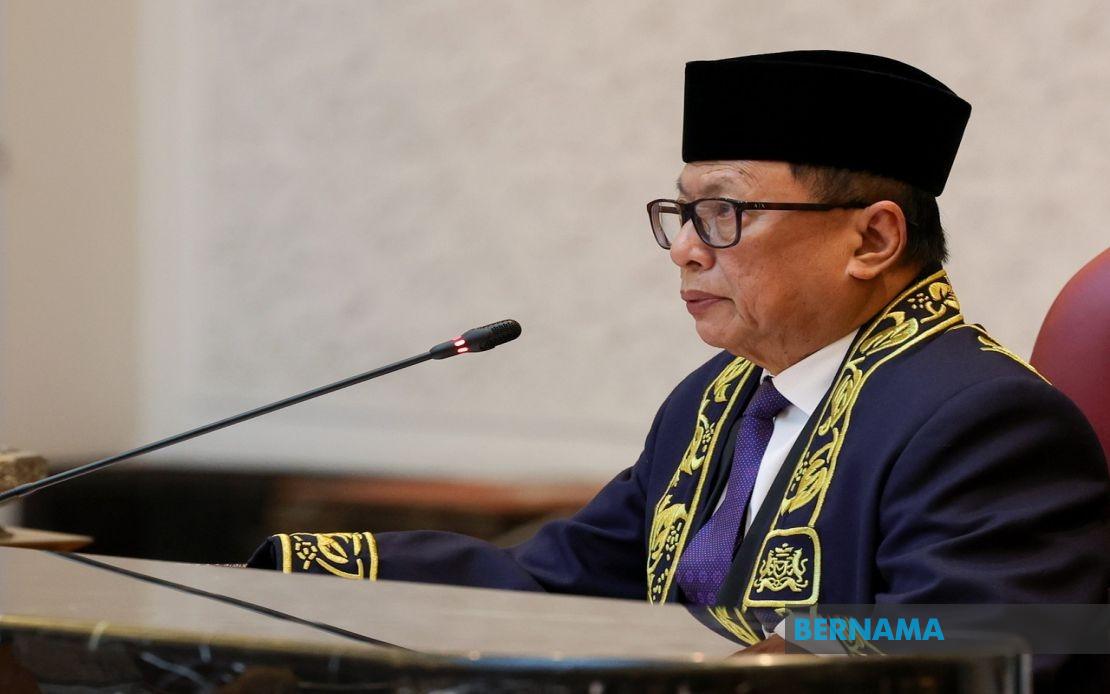
Datuk Dr Mohd Puad Zarkashi, a member of UMNO's Supreme Council, announced his resignation from the party on June 25, 2026, in a decisive move that signals deepening tensions within the Johor wing of the ruling coalition. The announcement, made through a Facebook statement, comes as the state prepares for elections and represents a significant breach in party unity at a critical juncture for Malaysia's dominant political force.
The Rengit state assembly incumbent framed his departure as a principled stand rather than a reactionary measure, emphasizing that he chose to exit voluntarily before the party could initiate disciplinary proceedings against him. This preemptive move underscores the severity of his grievances and suggests an expectation that continued membership would have resulted in formal action. By resigning with immediate effect, Puad Zarkashi has effectively neutralized any mechanism through which UMNO could silence or marginalize him while simultaneously removing any lingering obligation to maintain party discipline in his public statements.
The crux of Puad Zarkashi's criticism centers on what he characterizes as the subservience of Johor UMNO leadership to external pressures or individuals. His accusation that Johor Chief Minister Onn Hafiz functions as a "pak turut," or compliant follower, represents a damaging claim that strikes at the heart of party governance and decision-making autonomy. By describing the state party structure as a "tethered puppet," Puad Zarkashi implies that strategic decisions affecting Johor UMNO are not being made by party leadership but rather are dictated by unseen forces, raising serious questions about the legitimacy of recent party directives, particularly regarding candidate selection processes.
This departure gains particular weight given Puad Zarkashi's substantial track record within Malaysian political circles. As a former Johor State Legislative Assembly Speaker and previous Batu Pahat Member of Parliament, he brings considerable institutional credibility to his allegations. His experience in federal administration—including a tenure as Deputy Education Minister from 2009 to 2013 and directorship of the Special Affairs Department from 2015 to 2018—indicates he is not a peripheral figure but rather someone with intimate knowledge of how the party's senior echelons operate. His resignation therefore carries amplified significance, as it comes from someone positioned to observe governance dynamics at close quarters.
The immediate trigger for Puad Zarkashi's departure appears connected to his claims regarding irregularities in Barisan Nasional candidate selection for the upcoming Johor state election. He had previously announced that he would not defend his Rengit seat despite winning it convincingly in the 2022 state election, proposing instead that younger party members receive opportunities to contest. This decision itself suggested a willing step back, yet his subsequent allegations of candidate selection irregularities indicate that circumstances evolved beyond his initial understanding, prompting a more forceful response.
The decision to resign rather than merely boycott or lodge internal complaints represents a calculated escalation that transforms what might have remained an internal party dispute into a public accountability issue. Puad Zarkashi explicitly frames his resignation as an act of "political courage," positioning himself as willing to incur personal political costs in order to expose what he views as systemic wrongdoing within the party structure. This framing challenges other UMNO figures to justify their continued silence or compliance, potentially emboldening additional dissidents within party ranks.
For Malaysian voters and observers, this episode illuminates fault lines within UMNO that extend beyond simple factional disputes. The allegation that the party's state leadership lacks genuine autonomy strikes at fundamental questions about institutional integrity and decision-making processes. If Puad Zarkashi's characterization has merit, it suggests that Johor UMNO members may be operating under constraints that prevent them from exercising genuine party authority, raising concerns about how accurately party structures reflect the wishes and judgment of their membership.
Puad Zarkashi's parliamentary record provides additional context for understanding his departure. He won the Batu Pahat seat in the 12th General Election with a comfortable majority of 12,968 votes, demonstrating genuine electoral appeal. His subsequent loss to PKR's Datuk Mohd Idris Jusi in the 13th General Election, though by a narrower margin of 1,524 votes, occurred during a period of significant political realignment in Malaysia. That defeat, while disappointing, did not appear to have damaged his standing within UMNO sufficiently to account for his current frustrations, suggesting that recent developments rather than historical grievances have driven his decision.
The timing of this resignation deserves careful scrutiny, as it arrives when Johor is preparing for state elections and when candidate selection processes are typically contentious. The convergence of Puad Zarkashi's exclusion from running, his identification of selection irregularities, and his subsequent departure suggests a pattern of exclusionary decision-making that he found intolerable. His public articulation of these concerns, rather than silent withdrawal, indicates he intends to maintain a voice in state politics regardless of his UMNO membership status.
Looking forward, Puad Zarkashi's departure may presage broader organizational challenges for UMNO in Johor. His explicit statement that he is now "free to criticise UMNO" and his emphasis on exposing wrongdoing before conditions deteriorate suggest he intends to remain active in political discourse. Whether he ultimately joins another political organization, contests as an independent candidate, or pursues other avenues remains unclear, but his departure signals that retaining prominent party figures cannot be assumed and that internal governance issues may require more systematic attention from UMNO leadership.
The ramifications extend to coalition dynamics within Barisan Nasional as well. UMNO's internal stability directly affects the broader coalition's cohesion and electoral viability. Senior figures departing under acrimonious circumstances can undermine public confidence in the coalition's governance and raise questions about decision-making processes at the highest levels. Puad Zarkashi's specific allegations regarding Onn Hafiz and state-level autonomy will likely feature prominently in coming political discourse and may prompt calls for internal party inquiries or clarifications from UMNO leadership.

