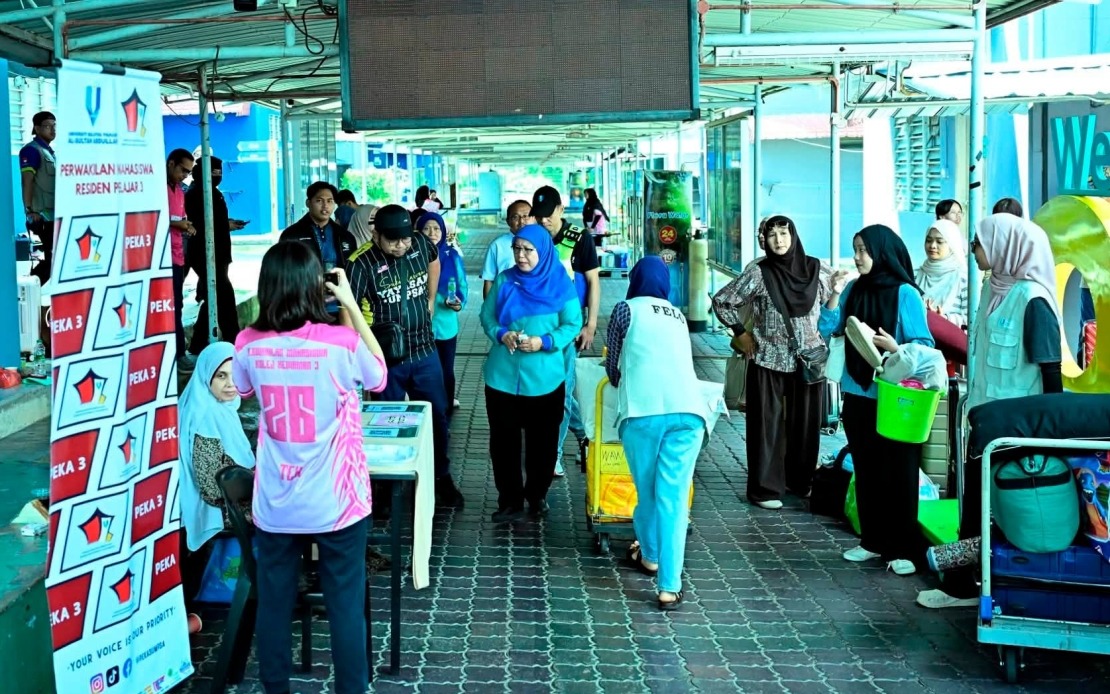
Universiti Malaysia Pahang Al-Sultan Abdullah (UMPSA) has reinforced its institutional commitment to removing financial barriers for disadvantaged students, with Vice-Chancellor Prof Dr Yatimah Alias emphasizing that equitable access to quality higher education remains central to the university's mission. Speaking during this week's registration period for new students in Kuantan, Yatimah underscored that UMPSA recognizes the pivotal role financial constraints can play in limiting educational opportunity, particularly among Malaysia's most vulnerable populations seeking degree-level qualifications.
The university's practical support mechanisms reflect this declared priority through multiple funding streams and assistance programmes. Twenty students were awarded scholarships covering the full spectrum of their educational expenses, including tuition and monthly living allowances designed to ease the burden of residential and daily costs. Beyond these flagship scholarships, UMPSA's Foundation has introduced an Early Education Incentive programme providing one-time grants of RM1,000 to students facing immediate financial hardship, recognizing that unexpected expenses often derail academic progress even when tuition is secured.
These financial interventions form part of a broader ecosystem of support that extends beyond monetary aid. Yatimah emphasized that UMPSA complements its scholarship offerings with comprehensive academic mentoring, tailored support services, and structured initiatives designed to help disadvantaged students navigate the intellectual and social demands of university life. This holistic approach acknowledges that financial assistance alone cannot fully compensate for educational gaps that many first-generation and lower-income students bring to campus; deliberate academic scaffolding and peer support networks are equally essential to ensuring retention and successful degree completion.
The timing of this welfare emphasis coincides with a landmark achievement in the university's expansion trajectory. The 2026/2027 academic session recorded the highest new student intake since UMPSA's establishment, with 1,045 diploma-level students completing registration during the intake period. This substantial cohort expansion presents both an opportunity and a responsibility: as UMPSA grows its student population, the proportion of disadvantaged enrollees will likely expand proportionally, making robust financial and academic support mechanisms more critical than ever to institutional success and social mobility outcomes.
For Malaysian higher education more broadly, UMPSA's explicit prioritization of underprivileged students carries broader significance. Many of Malaysia's public universities have expanded intake substantially in recent years, yet not all have equally emphasized or resourced support for lower-income cohorts. UMPSA's approach, combining competitive scholarship awards with foundation-level grants and integrated academic support, suggests a model that other institutions might usefully examine. The emphasis on removing obstacles to degree completion aligns with Malaysia's broader human capital development objectives and the aspirations outlined in recent education policy documents prioritizing inclusive growth.
The Vice-Chancellor's personal engagement with new students during the registration process itself carries symbolic weight beyond the immediate logistics of enrollment. By dedicating time to interact directly with incoming cohorts, Yatimah demonstrated institutional leadership commitment to student welfare rather than treating such matters as bureaucratic routine. This visibility signals to disadvantaged students that their presence is acknowledged and valued at senior institutional levels, a recognition that can influence sense of belonging and belonging and academic confidence during critical early semesters.
The specific design of UMPSA's support architecture reflects evolving understanding of what disadvantaged students actually require. Rather than imposing a uniform support package, the university's combination of tiered scholarships, need-based emergency grants, and differentiated academic support allows for responsiveness to varied circumstances. A student with strong secondary qualifications but limited income requires different support than one facing both academic preparation gaps and financial constraints. This recognition of heterogeneity within the disadvantaged student population demonstrates policy sophistication that goes beyond surface-level commitment to access.
Looking forward, the sustainability of these programmes depends on consistent institutional funding allocations and potentially diversified revenue streams. Foundation-supported initiatives, while valuable, may fluctuate with economic conditions and donor interest. UMPSA's stated commitment to maintaining these welfare priorities through core institutional budgets suggests a determination to embed support for disadvantaged students within baseline operations rather than treating such assistance as discretionary. This structural approach increases programme stability and signals that equity is integral to UMPSA's educational mission rather than supplementary.
The record intake of diploma students also suggests that UMPSA's expansion strategy is strategically targeting vocationally-oriented pathways that historically serve students with limited financial resources. Diploma programmes often appeal to students seeking faster entry into employment and students from lower-income backgrounds unable to commit to extended undergraduate timelines. By simultaneously expanding diploma capacity and reinforcing financial support mechanisms, UMPSA is positioning itself strategically within Malaysia's differentiated higher education ecosystem, serving populations that some more prestigious universities may overlook.
For prospective students in Southeast Asia's broader region, UMPSA's visible commitment to disadvantaged learners offers a valuable institutional differentiator. As regional higher education competition intensifies, universities that credibly demonstrate investment in student welfare and systematic support for lower-income cohorts gain competitive advantage in recruitment, particularly among conscientious families prioritizing not just degree attainment but institutional environments where their children will be adequately supported. This soft advantage becomes increasingly consequential as educational quality becomes increasingly standardized across regional competitors.

