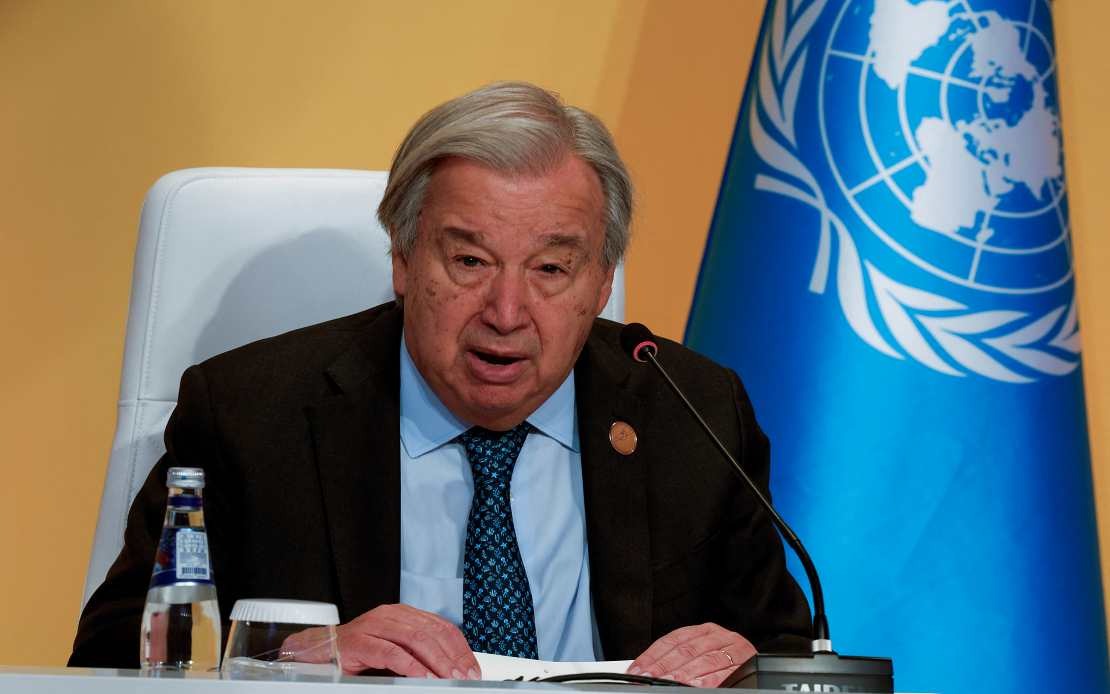
United Nations Secretary-General Antonio Guterres touched down in Damascus on Saturday, marking a watershed moment for UN engagement with Syria that had been absent for over a decade and a half. The arrival, confirmed by the Syrian Arab News Agency, represents the first visit by a sitting UN chief to the country since Ban Ki-moon's journey there in 2009—a period spanning Syria's devastating civil conflict and its aftermath. Foreign Minister Asaad al-Shaibani received Guterres and his accompanying delegation at Damascus International Airport, underscoring the formal nature of the visit and Syria's intention to project stability and diplomatic normalcy.
The timing of this visit carries profound significance for regional observers and international diplomacy watchers across Southeast Asia and beyond. Syria's emergence from over a decade of internal conflict has repositioned the Middle Eastern nation within global geopolitical calculations. For Malaysia and other ASEAN members watching developments in the region, this UN-level engagement demonstrates how post-conflict states can begin the lengthy process of reintegration into the international community. The visit reflects a deliberate strategy by both Damascus and the United Nations to move beyond crisis-management frameworks that had characterised the previous period, during which Syria's situation was primarily handled through special envoys and ad-hoc measures.
While specific details of Guterres' itinerary remain under wraps, the UN spokesperson Stephane Dujarric indicated beforehand that the secretary-general would spend several days in the country conducting substantive meetings with senior officials. Among those expected to receive Guterres is President Ahmad Al-Sharaa, marking what would be a direct conversation between the world organisation's highest-ranking diplomat and Syria's current leadership. Such summit-level dialogue carries symbolic weight that extends beyond bilateral discussions—it represents the international community's acknowledgment of Syria's transition and its readiness to engage constructively with Damascus.
A critical component of Guterres' agenda involves inspection of the UN Disengagement Observer Force, commonly known as UNDOF, which maintains a delicate presence in the occupied Syrian Golan Heights. This peacekeeping mission has functioned as a crucial buffer maintaining the ceasefire agreement between Syria and Israel since the 1970s. The visit to monitor UNDOF's operations signals the UN's commitment to ensuring that ceasefire mechanics continue functioning smoothly during Syria's political transition. For Malaysia, which has consistently advocated for international law and peaceful conflict resolution through multilateral bodies, the preservation of such monitoring mechanisms represents an important safeguard for regional stability.
The broader implications of this visit extend well beyond ceremonial diplomacy. Guterres' arrival symbolises a fundamental recalibration in how the international community approaches Syria's reconstruction and political rehabilitation. The shift from crisis-mode interventions managed by special envoys to direct engagement at the UN's highest echelon indicates confidence that Syria has achieved sufficient stability to warrant this elevated level of diplomatic attention. This transition also suggests that international energy previously consumed by Syria's civil war can now be redirected toward supporting reconstruction efforts and Syria's eventual reintegration into regional economic and political structures.
For Malaysian observers and policymakers, the Syrian case offers instructive lessons about post-conflict state rehabilitation within the UN system. The pathway that Syria is now taking—moving from international pariah status or crisis-management frameworks toward direct engagement with the UN secretary-general—demonstrates how determined diplomatic engagement can facilitate a state's return to normalcy. This is particularly relevant for ASEAN nations that maintain principles of non-interference while seeking to support regional stability through multilateral channels.
The visit also carries implications for Syria's relationship with its neighbouring countries and broader Middle Eastern dynamics. Guterres' presence in Damascus effectively legitimises the current Syrian government at the international level and opens channels for dialogue on regional issues ranging from humanitarian concerns to refugee return and reconstruction financing. Syrian officials and international observers alike will view this visit as validation that Syria's transition from conflict is sufficiently advanced to merit the UN's highest-level engagement.
Furthermore, this diplomatic engagement sets the stage for potential discussions on Syria's role in international institutions and frameworks. As Damascus works toward normalisation, participation in UN bodies and regional organisations will become increasingly important. The framework established through Guterres' visit provides a foundation for addressing technical issues related to UN memberships, international humanitarian law compliance, and participation in global governance structures.
The absence of a UN secretary-general from Damascus for fifteen years created a symbolic vacuum that this visit now fills. That gap had corresponded with Syria's isolation and internal conflict, making the timing of Guterres' arrival particularly significant as the country navigates its post-war political landscape. His presence demonstrates that the international community, through its primary multilateral institution, is prepared to support Syria's stabilisation efforts at the highest levels.
Looking forward, this visit will likely establish precedent for more frequent and substantive UN-level engagement with Syria. The security situation permitting, future visits by UN officials and representatives could facilitate Syria's participation in global initiatives ranging from climate action to sustainable development. For Malaysian and other ASEAN policymakers tracking Middle Eastern developments, Guterres' Damascus visit reinforces the principle that even states emerging from severe conflict can return to constructive participation in the international system when conditions permit.

