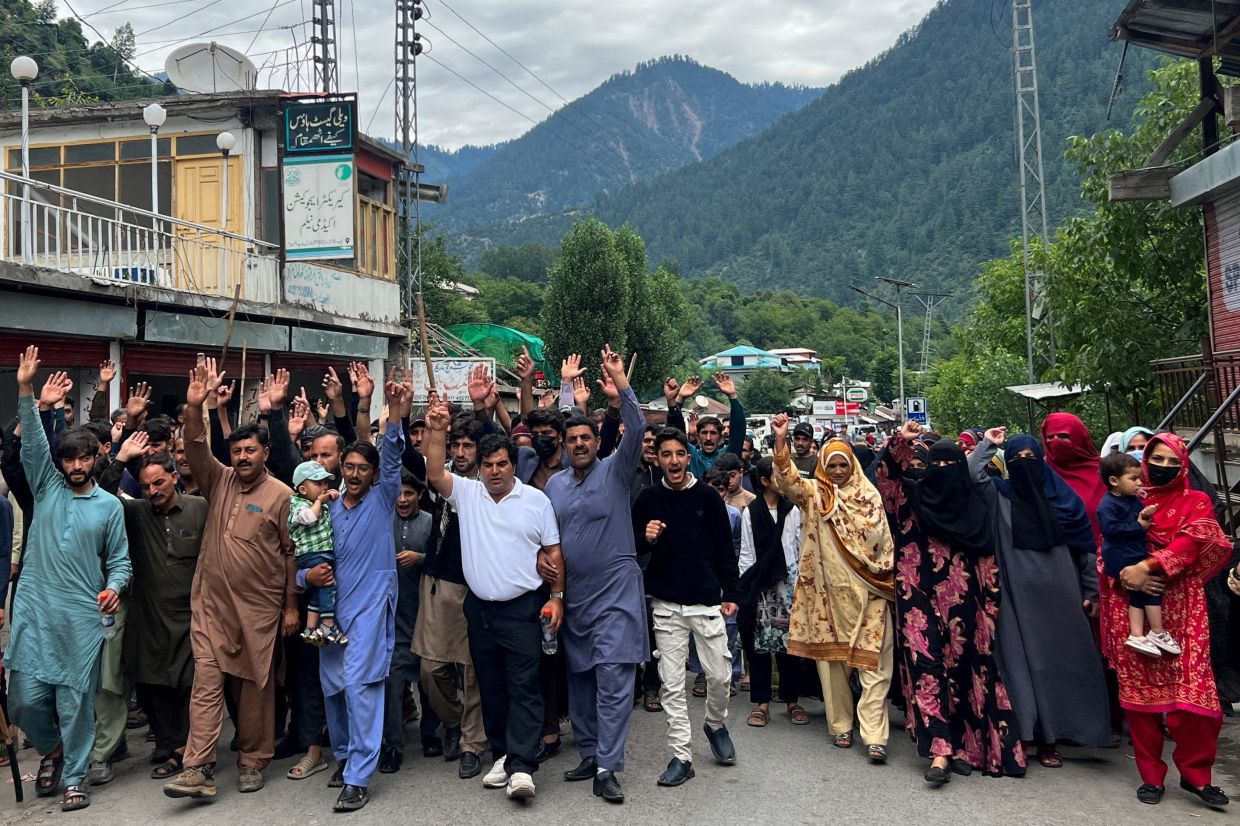
The United Nations has intensified scrutiny of security operations in Pakistan-administered Kashmir, calling for independent investigations into dozens of deaths that have emerged during a period of mounting civil unrest preceding the region's legislative assembly elections scheduled for July 27. UN High Commissioner for Human Rights Volker Turk issued the appeal through his spokesperson Jeremy Laurence in Geneva on Friday, signalling international concern over the scale and nature of the violence that has claimed lives among both demonstrators and law enforcement personnel since June.
The fatalities represent a dramatic escalation in tensions within the Himalayan territory, which remains under heavy military and government oversight due to its geopolitical sensitivity and decades of conflict with India. The spike in violence coincides with intensified mobilisation by the Joint Awami Action Committee (JAAC), a broad-based civil society movement advocating economic development and improved governance in the region. Despite being formally banned under Pakistan's anti-terrorism legislation last month—a designation authorities justified on grounds of public security concerns—the JAAC has persisted with demonstrations, drawing supporters who view the electoral process as an opportunity to voice accumulated grievances.
Turk's intervention addresses what international human rights observers regard as a troubling pattern of escalating repression. The UN human rights office has explicitly condemned the banning of JAAC and the subsequent detention of its leadership, warning that such measures constitute potential violations of fundamental freedoms including expression, peaceful assembly, and association. Laurence emphasised that detained JAAC leaders must receive proper legal representation and family contact, insisting that Pakistan's government is obligated to guarantee full due process protections and fair trial procedures regardless of terrorism designations applied to their movement.
The timing of these restrictions raises particular concerns among regional analysts, who view the pre-election environment as critical for democratic legitimacy. The JAAC's demands for economic reform and administrative change reflect broader frustrations within Kashmir's population, grievances that the UN has identified as requiring genuine political dialogue rather than security-focused responses. The contrast between the government's security apparatus approach and international calls for inclusive engagement highlights a fundamental disconnect in how different actors perceive the path toward stability in the territory.
Historical context shapes current dynamics substantially. Kashmir remains contested territory claimed in entirety by both India and Pakistan since their 1947 partition from British colonial rule, though the region has remained divided between both nations. Pakistan-administered Kashmir, where these current events are unfolding, has experienced repeated cycles of unrest and military intervention. Most notably, violent clashes between police and JAAC-led protesters just last September resulted in nine confirmed deaths, establishing a pattern of deadly confrontations during periods of heightened mobilisation.
Beyond the immediate question of accountability for deaths, the UN has highlighted serious concerns regarding communications restrictions in the region. Internet curbs implemented during the crisis have prevented residents from freely accessing information, reporting conditions, and organising, restrictions the UN characterises as disproportionate infringements on freedom of expression. Laurence specifically urged Pakistani authorities to restore full internet connectivity, particularly urgent given elevated tensions that typically correlate with information vacuums and rumour-fuelled escalation.
For Malaysian and Southeast Asian observers, events in Pakistani Kashmir carry several implications. The situation demonstrates how electoral processes in militarised territories can become flashpoints for civil rights concerns, relevant to any region experiencing tensions between democratic participation and security priorities. Additionally, the international community's response—balancing respect for Pakistan's sovereignty with human rights advocacy—illustrates ongoing tensions between national security frameworks and universal standards increasingly expected by UN bodies and global civil society.
Pakistan's designation of JAAC as a terrorist organisation represents a particularly fraught decision, one that transforms essentially political grievances into security matters. While authorities argue the ban was necessary given alleged threats to public order, the consequence has been the criminalisation of civilian activism and the imposition of gathering restrictions that prevent peaceful demonstration. This approach, common in various contexts across South and Southeast Asia, generates counterproductive consequences by pushing legitimate grievances underground and potentially radicalising populations feeling excluded from institutional channels.
Turk's appeal for meaningful political dialogue recognises this dynamic explicitly. By calling for inclusive engagement addressing underlying population grievances, the UN human rights office implicitly criticises purely security-focused governance models. The electoral process approaching on July 27 presents an opportunity for Pakistan to demonstrate commitment to both democratic participation and human rights protection, though current trajectories suggest authorities may prioritise order over openness.
The UN's intervention, while not binding on Pakistan, carries diplomatic weight and creates international record of the situation. For the JAAC and its supporters, the international attention provides modest protection against unchecked state action, though practical enforcement mechanisms remain limited. The coming weeks will demonstrate whether Pakistan's government responds to international pressure by moderating its security approach or whether it proceeds with current policies regardless of external criticism.
Regional implications extend beyond Pakistan proper. Neighbouring governments including India, China, and others with interests in South Asian stability monitor how Pakistan manages this domestic political challenge. The outcome will likely influence international perceptions of Pakistan's governance capacity and willingness to balance security concerns with democratic norms—assessments that affect bilateral relations, investment decisions, and broader regional trust dynamics.

