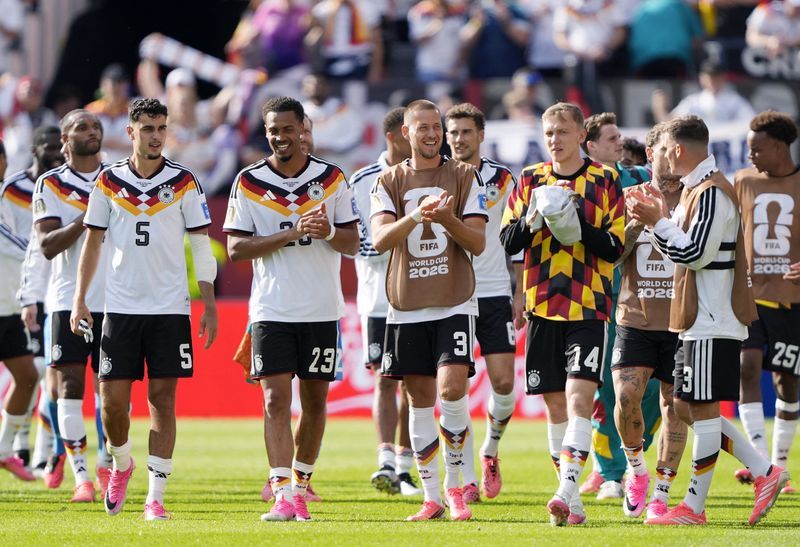
Germany bounced back from a difficult first half to overcome Ivory Coast 2-1 on Saturday, advancing to the knockout stage with a performance that showcased both their resilience and attacking prowess. Playing in Toronto before a crowd energised by over 100,000 locals of German descent, Julian Nagelsmann's side engineered a stunning turnaround after trailing at the break, with substitute Deniz Undav proving decisive in transforming the match's trajectory and claiming a spot in the last 32 for the first time since winning the tournament in 2014.
The opening period proved frustrating for the Germans, who controlled possession and created opportunities but found themselves unable to convert. They had two legitimate-looking goals ruled out during this span—first when midfielder Aleksandar Pavlovic rose highest at a short corner in the 25th minute but was penalised for contact with goalkeeper Yahia Fofana, and later when forward Jamal Musiala's finish was disallowed for a foul on Odilon Kossounou during the buildup. The controversial decisions visibly irked the German contingent in the stands, and referee's calls would remain a talking point long after the final whistle.
Ivory Coast capitalised on Germany's wastefulness to take the lead through midfielder Franck Kessie, who reacted quickest to convert a rebound following a shot from winger Amad Diallo. The goal resulted from a well-constructed sequence down the left flank where Yan Diomande charged forward to deliver a dangerous cross. It marked another example of Ivory Coast's attacking intent throughout the match, as the West Africans matched their European opponents' dynamism with incisive football of their own. The side's ability to find the net in seven consecutive tournament matches now represents their longest such streak in World Cup history—a statistic that underscores their potency in front of goal.
The decisive shift came after halftime when Germany introduced Undav, whose presence immediately changed the complexion of proceedings. The versatile forward levelled matters in the 68th minute with a composed, volleyed finish that gave the team genuine momentum. His second goal arrived minutes later when he received possession on the turn near the penalty area, swiftly pivoted, and dispatched a low drive that Fofana could not keep out. The clinical finish demonstrated Undav's quality in the final third—he has now accumulated nine goals across his last eight matches, a striking rate that validates his impact as an impact substitute.
Although Ivory Coast mounted late pressure with Simon Adingra creating a dangerous moment in the closing stages, the opportunity came to nothing when he failed to get a clear shot away. Germany's defensive solidity in the closing minutes, combined with a rapid counter-attack repelled by Fofana's block on a low attempt, preserved the victory and ensured qualification. The win represents a significant relief for Nagelsmann after the frustrations of the opening period—eight attempts on goal in the first half without reward could easily have derailed momentum and confidence.
The result leaves Germany atop Group E with six points after two matches, mathematically securing progression to the knockout round. Their forthcoming fixture against Ecuador in New Jersey on Thursday will determine final positioning and potentially seeding for the knockout draw. Ivory Coast, meanwhile, remain on three points and face a must-win scenario against Curacao in Philadelphia if they hope to continue their World Cup journey. The Saturday evening matchup between Ecuador and Curacao in Kansas City will further clarify the group's final standings and potential qualification scenarios.
The Ivory Coast performance, despite the defeat, demonstrated the hallmarks that have made them a challenging opponent throughout the tournament—creative passing, quick transitions, and a willingness to compete physically against a traditional World Cup powerhouse. However, the inability to close out the match after going ahead highlights a recurring challenge for African sides at this stage: converting first-half advantages into full-match victories against more experienced European nations. Their form in front of goal remains impressive, yet defensive vulnerabilities in critical moments continue to prove costly.
For Germany, the comeback validates Nagelsmann's tactical adjustments and squad depth. The introduction of Undav and other substitutes shifted the balance considerably, suggesting the side possesses the necessary tools to navigate a potentially challenging knockout phase. The team's passing prowess—evident throughout despite first-half frustrations—and their ability to recover from adversity bodes well for matches ahead. However, the controversial refereeing decisions that ruled out two goals will likely fuel debate about consistency in officiating standards, a concern that carries implications for all nations at the tournament.

