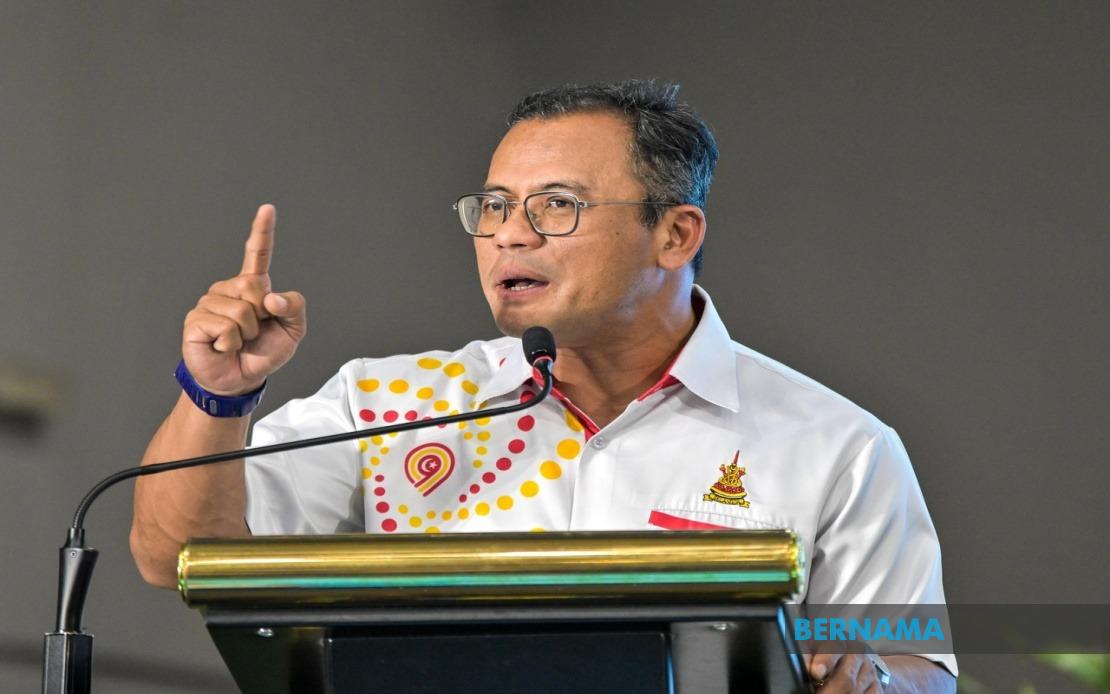
Selangor Menteri Besar Datuk Seri Amirudin Shari has called for a fundamental shift in how Malaysians engage with the Rukun Negara, arguing that superficial familiarity with the nation's foundational principles falls short of what is needed to preserve social cohesion in an increasingly fractured political landscape. Speaking after opening the MADANI Kita Bersama Komuniti Ampang Jaya programme in Kuala Lumpur, Amirudin stressed that the five pillars remain mere words unless Malaysians grasp the deeper values and unifying objectives that underpin each one.
The Menteri Besar's intervention addresses a growing concern among policymakers that the Rukun Negara, adopted in 1970 as Malaysia's social contract, has become increasingly hollow in public consciousness. Citizens may recite the principles—belief in God, loyalty to king and country, constitutionalism, rule of law, and good behaviour and morality—yet lack understanding of how these tenets are designed to work together to strengthen national identity and social cohesion. This disconnect, Amirudin warned, leaves Malaysian society vulnerable to manipulation by actors seeking to exploit religious, ethnic, or political divisions for narrow gain.
Amirudin illustrated his point by unpacking the first principle concerning belief in God. While the principle references religion, he explained, its actual objective transcends sectarian boundaries. When interpreted through the lens of promoting unity and fostering mutual respect among followers of different faiths, the principle transforms from a statement of doctrine into a mechanism for harmony. This reframing demonstrates how the Rukun Negara, when properly understood, can serve as an antidote to identity politics that weaponizes religious or cultural differences to generate social friction. Without this deeper comprehension, the principles remain vulnerable to selective interpretation that serves factional interests rather than the common good.
The timing of Amirudin's remarks comes as Malaysia grapples with persistent questions about national unity and identity. Political parties across the spectrum have increasingly adopted sectarian messaging, and social media has amplified divisive narratives that pit ethnic and religious communities against one another. In this context, the Menteri Besar's call for a return to substantive understanding of the Rukun Negara represents an attempt to invoke a shared national framework that predates and transcends contemporary partisan contestation. By emphasizing the document's unifying intentions rather than its surface formulations, Amirudin seeks to reclaim the Rukun Negara as a tool for building bridges rather than erecting barriers.
Amirudin also used the occasion to address recent criticism levelled at the government's decision to include the Rukun Negara preamble and its stated objectives in readings at official functions and ceremonies. Some commentators had accused the administration of altering or diluting the original principles through this practice. The Menteri Besar firmly rejected such claims, framing the initiative as a deliberate effort to resurrect awareness of the foundational aims and values that the framers embedded in the document. Rather than representing innovation or amendment, he argued, the move constitutes a restoration of institutional memory regarding why the Rukun Negara was created and what outcomes its architects intended to achieve.
This distinction carries particular weight for Malaysia's ongoing constitutional and political evolution. The Rukun Negara was conceived during a period of acute social tension following the May 13 incidents of 1969, when racial riots threatened the nation's very survival. It was designed as a deliberate instrument of national reconciliation and social reconstruction, one that would affirm multiple identities while binding them within a framework of shared constitutional principles and values. Over the decades, however, the document has receded in public discourse, treated as a ceremonial relic rather than a living guide to national conduct. By reintroducing its preamble and objectives, policymakers argue, the government seeks to restore the Rukun Negara to its intended status as a practical instrument for managing diversity and preventing conflict.
The emphasis on unity among people of different racial and religious backgrounds reflects a core anxiety animating contemporary Malaysian politics. As traditional structures of cross-communal accommodation have weakened, and as digital technologies have enabled unprecedented levels of targeted messaging and community polarization, policymakers increasingly worry that the social consensus underpinning the Malaysian project is fraying. Amirudin's intervention suggests that senior state-level leaders view a revitalized commitment to the Rukun Negara's underlying philosophy as a potential antidote to these forces of fragmentation. Rather than relying solely on legislative action or security measures to combat divisive rhetoric, the approach emphasizes civic education and national remembrance.
The Deputy National Unity Minister Yuneswaran Ramaraj, who attended the Ampang Jaya event alongside several state assembly members, signalled that this emphasis on Rukun Negara education and understanding enjoys support across multiple levels of government. The fact that the National Unity Ministry was represented underscores the official recognition that strengthening understanding of the principles constitutes a priority within the machinery of government. For readers and observers in Malaysia and across Southeast Asia, this development reflects both the enduring salience of the Rukun Negara as a legitimating framework and the anxiety that its original meaning and purpose have become obscured by time and political change.
Moving forward, Amirudin's call for deeper engagement with the Rukun Negara raises important questions about how Malaysian society can resurrect and revitalize historical consensus documents in contemporary political contexts. The challenge extends beyond mere ceremonial inclusion of preambles and objectives in official readings. It demands sustained civic dialogue about what the principles mean in practice, how they might guide responses to contemporary challenges ranging from religious accommodation to economic inequality, and how they can constrain the excesses of identity-based politics. Without such sustained engagement, even renewed attention to the Rukun Negara risks remaining superficial.
For Malaysia's Chinese, Indian, and other minority communities, the Menteri Besar's emphasis on the Rukun Negara's unifying objectives carries particular resonance. The document has historically served as a constitutional anchor affirming their place within the Malaysian political and social order. When the Rukun Negara is properly understood and actively invoked as a framework for managing diversity, it provides reassurance that the state remains committed to principles of inclusion and non-discrimination. Conversely, when the document is neglected or treated as merely ceremonial, concerns arise that the foundational compact underlying Malaysian multiculturalism is weakening. Amirudin's intervention thus operates on multiple levels simultaneously: it addresses immediate anxieties about identity politics and social division while also speaking to deeper concerns about the viability of Malaysia's historic approach to managing ethnic and religious pluralism.

