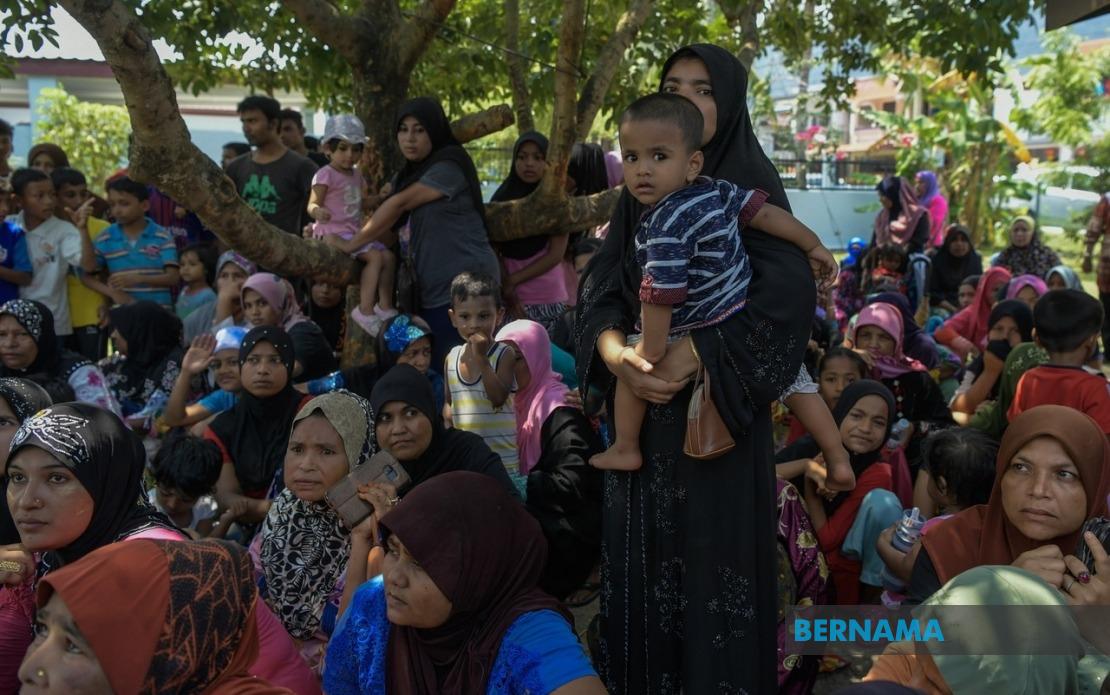
The Malaysian government has moved to dispel widespread confusion about the legal status of United Nations High Commissioner for Refugees (UNHCR) cards, emphasising that these documents confer neither citizenship nor exemption from local laws. Economy Minister Datuk Akmal Nasrullah Mohd Nasir made the clarification during a Global Supply Crisis Briefing streamed by the Ministry of Economy, underscoring the government's resolve to maintain law and order regardless of a person's refugee status.
Akmal Nasrullah's statement comes at a particularly sensitive moment for Malaysia's refugee policy debate. Growing public anxieties regarding refugee management, coupled with concerns about document fraud and trafficking networks, have prompted heightened scrutiny of how the nation handles its refugee population. The minister's comments suggest the government recognises the need to provide clear reassurance to Malaysian citizens that the presence of refugees does not create legal blind spots or undermine national security frameworks.
The clarification was formally presented to the National Economic Action Council (MTEN) during a meeting chaired by Prime Minister Datuk Seri Anwar Ibrahim at Parliament. The Home Ministry (KDN) brought the matter forward following mounting public concern, signalling that refugee administration has become intertwined with broader national economic and security discussions. This institutional positioning reflects the government's view that migration and refugee issues intersect with multiple policy domains beyond traditional immigration management.
Central to Malaysia's evolving approach is the rollout of the Refugee Registration Document (DPP) Programme, which represents a significant shift toward structured documentation and verification. The system incorporates biometric registration—fingerprinting, facial recognition, and other identifying markers—alongside comprehensive security screening. This technological investment aims to create a reliable database distinguishing legitimate refugees from those who may pose security or public order risks. For Malaysian authorities, such technological infrastructure is essential given the country's geographic position along major migration routes and its historically substantial refugee and undocumented migrant populations.
Enforcement capabilities are being substantially bolstered across multiple fronts. The government has committed to intensifying integrated operations targeting the networks that facilitate human smuggling, trafficking, and document abuse. These operations also focus on preventing illegal entry through unauthorised border crossings, a persistent challenge in a nation with extensive maritime and land boundaries. The emphasis on operational integration suggests a recognition that combating irregular migration requires coordinated action spanning immigration, police, intelligence, and military agencies rather than siloed efforts.
Data analytics and monitoring technology will play an increasingly central role in identifying migration-related risks. By leveraging artificial intelligence and pattern recognition, Malaysian authorities hope to anticipate and intercept problematic movements before they materialise into security incidents or public health crises. For a middle-income country managing complex demographic and security pressures, this digital turn represents an attempt to achieve enforcement efficiency without proportionally expanding bureaucratic capacity.
The financial commitment to these initiatives underscores governmental seriousness. The allocation of RM1.2 billion across several agencies for border control and security projects signals substantial investment in infrastructure, technology, and personnel. This expenditure spans not only refugee-specific programmes but broader border management and national security enhancement, reflecting an integrated view of how migration policy connects to sovereignty and territorial integrity.
The Malaysian Border Control and Protection Agency is simultaneously undergoing operational expansion aimed at streamlining coordination and enforcement at borders. This institutional strengthening responds to the reality that Malaysia's borders—comprising the Straits of Malacca, South China Sea maritime zones, and terrestrial boundaries with Thailand, Brunei, and Indonesia—represent multiple vulnerabilities requiring sustained, sophisticated management. Accelerating this agency's capacity reflects a strategic priority to ensure that border administration keeps pace with evolving security threats.
Understanding Malaysian authorities' emphasis requires acknowledging the country's unique demographic context. Malaysia hosts one of the region's largest refugee populations, with UNHCR registration exceeding 180,000 individuals from Myanmar, Afghanistan, Syria, and other countries. This concentration creates complex policy trade-offs between humanitarian obligations, security maintenance, and social cohesion. The government must balance international refugee law commitments against domestic political pressures and the genuine public safety concerns that irregular migration networks can pose.
The clarification regarding UNHCR card status also responds to misinformation circulating in Malaysian society. Some residents have reportedly harboured misconceptions that refugee documentation creates legal privileges or exemptions, potentially fuelling resentment or vigilante responses. By explicitly stating that refugee identification papers confer no immunity, Akmal Nasrullah seeks to establish clear public understanding of the law's applicability. This informational clarity serves both to reassure citizens and to legitimise enforcement action against refugees who commit crimes.
The broader context encompasses food security and manufacturing resilience discussions that also featured at the MTEN meeting. These references suggest the government perceives refugee and migration management as inseparable from economic stability concerns. Irregular migration can affect labour market dynamics, supply chain integrity, and consumer prices—dimensions making refugee policy relevant to economic policymakers, not merely security officials.
Looking forward, Malaysia's approach signals a middle course between restrictive and permissive refugee policies. The government is neither expelling existing refugee populations wholesale nor adopting permissive stances that international organisations might prefer. Instead, it is constructing a managed system combining documentation, biometric verification, data analytics, and targeted enforcement. This model reflects pragmatic recognition that Southeast Asia's geographic position ensures continued migration pressures, requiring orderly systems rather than policies either wholly welcoming or entirely excluding refugees.
For regional observers, Malaysia's evolving framework offers lessons in balancing humanitarian, security, and economic considerations amid migration pressures that characterise the broader Asian landscape. The emphasis on technology, integration, and clarifying legal status represents an attempt by a middle-income nation to govern migration in ways that are neither theoretically pure nor practically unmanageable.

