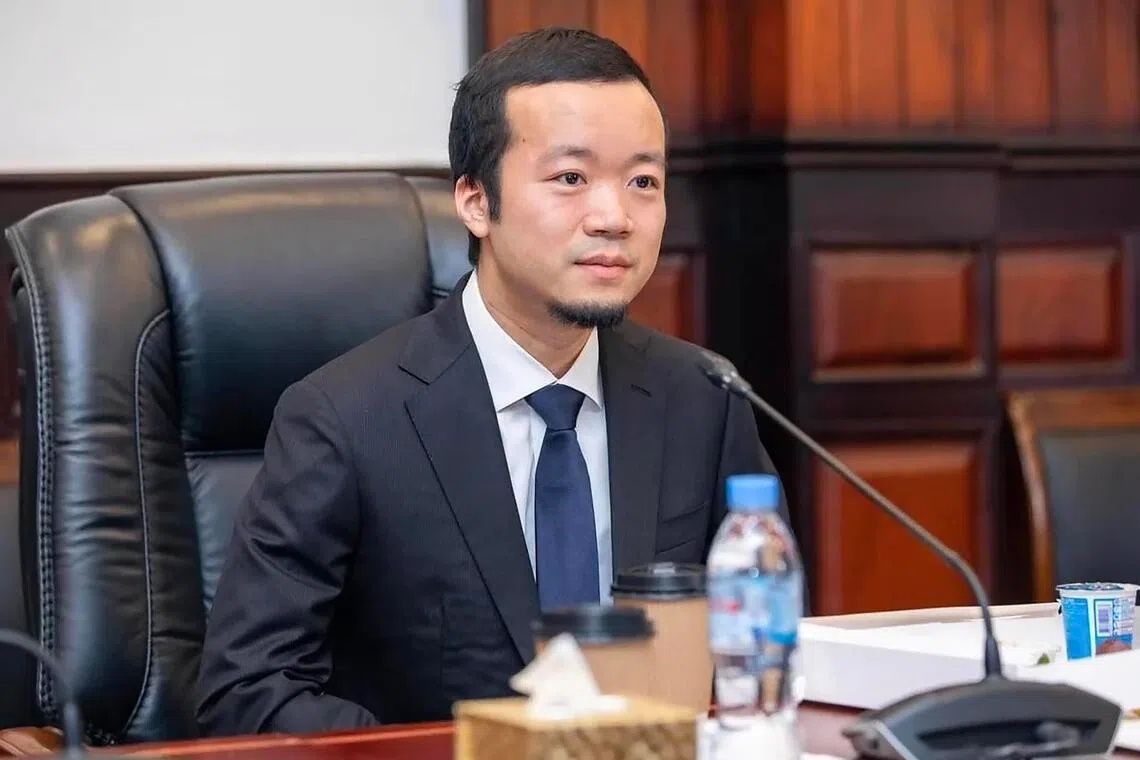
A painstaking investigation spanning six months has exposed the identity and sprawling asset portfolio of a key figure in one of the world's largest financial crime networks. Chen Sokly, born Chen Xing in Shanghai in 1986, emerged as the trusted lieutenant of scam kingpin Chen Zhi, overseeing critical functions within the Prince Holding Group's billion-dollar enterprise. The revelations came through a collaborative effort between The Straits Times and the Organised Crime and Corruption Reporting Project, which meticulously cross-referenced hundreds of pages of corporate records, property deeds, and government documents across multiple jurisdictions to construct a comprehensive picture of his clandestine operations.
The American criminal indictment filed in October 2025 identified Sokly as Chen Zhi's co-conspirator in a vast scheme that funnelled stolen wealth through an intricate web of shell companies. The sophistication of this operation underscores how international financial crime networks exploit loopholes in corporate registration systems. Sokly's role proved particularly critical to the syndicate's longevity—he functioned as the group's risk manager and fixer, tasked with anticipating legal threats and neutralising them through corrupt networks cultivated across government agencies. This organisational structure, with distinct divisions of labour among executives, mirrors legitimate multinational corporations, yet served entirely criminal purposes.
Sokly's journey through multiple identities reflects the deliberate obfuscation strategies employed by transnational crime syndicates. After obtaining Cambodian citizenship around late 2017, he legally changed his name from Chen Xing to Chen Sokly according to official government records. In Singapore's financial circles, however, he operated under yet another persona: the wealthy businessman Martin Chen. This multiplicity of identities proved essential to compartmentalising his activities and obscuring the true ownership of assets scattered across continents. For Malaysian readers, this case demonstrates how Southeast Asian jurisdictions have become attractive havens for proceeds from organised crime, requiring heightened regulatory vigilance.
The scope of the criminal enterprise Sokly facilitated becomes apparent when examining the financial forfeitures announced following the indictment. The US government seized 127,271 bitcoins valued at approximately US$15 billion, representing what prosecutors described as one of the largest financial fraud takedowns in history. The timing proved particularly striking—the indictment preceded by six days the American government's decision to drop sanctions against Chen Zhi and the Prince Holding Group. This sequence of events suggests a negotiated resolution typical of complex international prosecutions, though prosecutors alleged that the Prince Group generated approximately US$30 million daily through illicit activities at the height of its operations.
Sokly's responsibilities within the syndicate extended far beyond conventional asset management. According to prosecutors, he orchestrated a network of corrupted government officials across multiple nations, particularly in China. Evidence presented in the indictment detailed his communications with a Chinese official in May 2023, wherein the official promised to shield Prince Group associates from legal consequences in exchange for favours toward his son. The arrangement proved brazen in its directness—Sokly even allegedly directed the same official to instruct local police to extort businesses on behalf of the syndicate. Such coordination between criminal enterprises and state apparatus reveals vulnerabilities in anti-corruption mechanisms within certain jurisdictions.
The financial arrangements enabling Sokly's influence demonstrated the syndicate's willingness to deploy extraordinary sums for securing protection. A bribe ledger allegedly maintained by Chen Zhi and discovered by American authorities documented that Sokly purchased a yacht valued at more than US$3 million in 2019 specifically as a gift for a foreign government official. These transactions represent more than mere corruption—they constitute investments in infrastructure designed to perpetuate the criminal network's operations. The sophistication suggests that proceeds from human trafficking and forced labour in Cambodian scam compounds formed the foundation enabling these luxury acquisitions, linking the invisible suffering of coerced workers directly to the palatial acquisitions visible in Singapore and California.
Sokly's presence in Singapore manifested through substantial property investments that functioned simultaneously as legitimate-appearing assets and money laundering vehicles. In 2017, he announced his arrival in the city-state by purchasing a S$11 million apartment spanning 5,694 square feet at 10 Leedon Heights, one of Singapore's most exclusive addresses. This investment immediately established credibility within circles of high-net-worth individuals whilst providing a base for orchestrating regional operations. Subsequently, he incorporated M Capital Global Holdings, investing just over S$5 million in equal partnership with his wife. The company remains registered with the couple as shareholders, suggesting that family structures formed part of the asset protection strategy employed by the syndicate.
Between 2017 and 2019, Sokly aggressively expanded his corporate footprint across Singapore's business landscape, registering himself as director of at least sixteen separate entities. However, his name began disappearing from directorial positions between 2020 and 2023, a timing that coincided with increasing international scrutiny of money laundering activities within Southeast Asia. Many of these firms shared a registered address on Shenton Way in Singapore's central business district, though investigative visits revealed that office space appeared to host unrelated companies with no apparent connection to Sokly or the Prince Group. This compartmentalisation strategy—spreading nominal control across numerous entities with minimal connection to actual business operations—exemplifies techniques employed to obscure beneficial ownership.
Despite his apparent legitimacy as a Singapore-based businessman, Sokly maintained only a part-time physical presence in the city-state. Former employees indicated that he typically spent between two and three months annually in Singapore, during which he socialised extensively with associates including Chen Zhi himself. His leisure activities aligned with the profile of an ultra-high-net-worth individual—he maintained a fleet of luxury vehicles including a Bentley and a seven-seater luxury sport utility vehicle, all stored at his Leedon Heights residence. This lifestyle pattern raises important questions for Singapore's financial authorities regarding the detection and investigation of money laundering networks, particularly the scrutiny applied to individuals maintaining high-value assets whilst exhibiting limited engagement with their ostensible Singapore bases of operation.
Sokly's American property holdings served parallel functions within the broader money laundering ecosystem. In 2019, he purchased a California residence from Fang Zhizhen, a member of the Knight Attack Group, a Chinese cybercriminal syndicate that predated the Prince Group and shared operational connections with it. This transaction illustrates the interlocking networks of organised crime spanning continents—individuals and entities move between criminal organisations, transferring both assets and relationships. Sokly subsequently sold the property in 2024 for approximately US$4.5 million, a transaction that occurred as international pressure on the Prince Group intensified. In November 2025, shortly after sanctions were imposed, he transferred ownership of a separate US$4 million property to his wife, subsequently placing it within a trust structure she operated. These manoeuvres represent classic asset concealment tactics employed when criminal networks anticipate enforcement action.
The dual use of violence and financial leverage characterised Sokly's approach to maintaining the syndicate's operational dominance. When a Prince Group member allegedly stole funds from the organisation in July 2024, Chen Zhi specifically requested that Sokly handle the situation—a delegation suggesting that Sokly possessed both the authority and the willingness to employ force. His braggadocio regarding the network's reach and his confidence in corruptible officials suggested an individual entirely insulated from consequences by the depth of his protection networks. Yet this confidence ultimately proved misplaced when American enforcement agencies, operating from jurisdictional positions outside the reach of compromised officials, successfully dismantled the operation and secured forfeiture of its principal assets.
For Southeast Asian policymakers and financial regulators, the Sokly case reveals critical vulnerabilities in regional anti-money laundering frameworks. The ease with which he acquired multiple citizenships in Cambodia and Cyprus, combined with his ability to establish legitimate-appearing business structures in Singapore whilst maintaining criminal roles, demonstrates that sophisticated criminals continue to exploit gaps between national regulatory regimes. The investigation's success depended not upon any single jurisdiction's capabilities, but rather upon coordinated international collaboration and the application of cross-border asset tracing techniques. Malaysia and other Southeast Asian nations must strengthen mechanisms for detecting beneficial ownership behind corporate structures, particularly in real estate transactions and company directorships that may serve primarily as money laundering vehicles rather than genuine business purposes.

