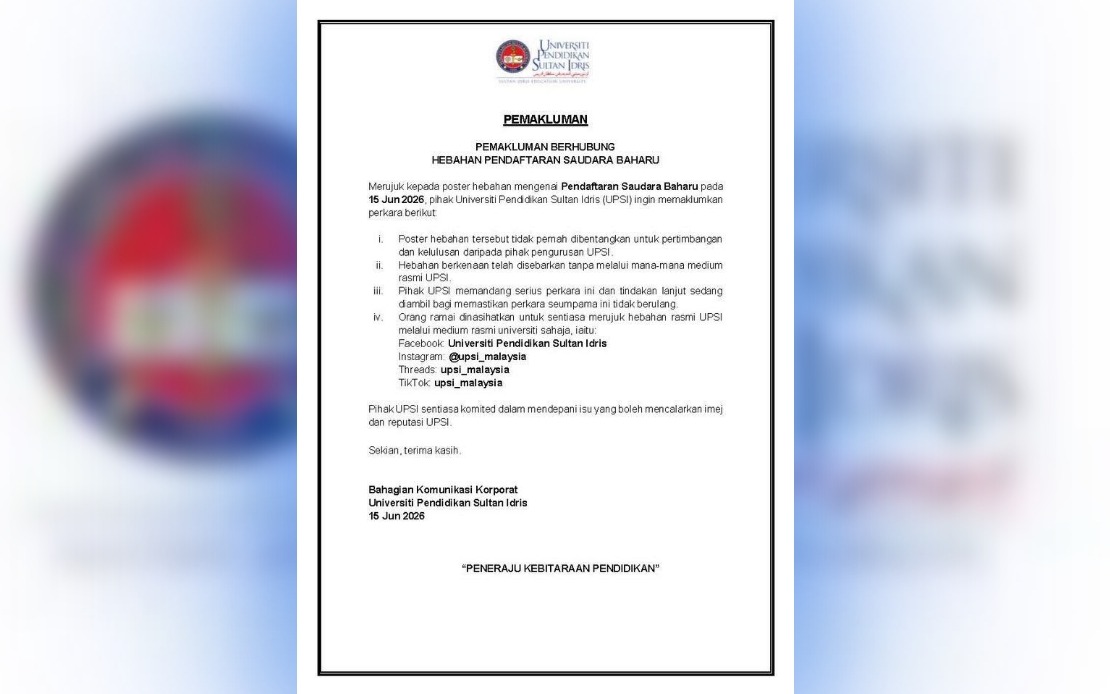
Universiti Pendidikan Sultan Idris (UPSI) has moved to distance itself from a controversial poster concerning the registration of 'saudara baharu' or newly converted Muslims that gained traction across social media platforms in mid-June. The institution released a statement through its official social media accounts asserting categorically that it played no part in creating, endorsing, or distributing the material, which bore a June 15 date stamp.
According to UPSI's clarification, the poster in question never reached the university's administrative hierarchy for formal evaluation or approval before it began circulating online. The institution emphasised that the document was disseminated entirely outside established official communication channels, suggesting it originated from unauthorised sources operating without institutional sanction. This distinction between unofficial and official communication streams is crucial in Malaysia's higher education environment, where universities maintain strict protocols governing public-facing materials to ensure consistency in messaging and brand integrity.
The university's response underscores a broader institutional concern about reputational management in the digital age. UPSI stressed that it takes such matters with considerable seriousness, signalling that internal investigations may follow to identify how the poster became associated with the institution and to prevent similar incidents. The statement reflects growing vigilance among Malaysian universities regarding their public image, particularly when materials circulating under their name could be misleading or misrepresent institutional positions on sensitive matters.
In its official communication, UPSI urged the general public to exercise discernment when encountering announcements purporting to represent the university. The institution reinforced that all legitimate information, whether concerning admissions, recruitment, registrations, or policy matters, should be sourced exclusively through verified official platforms operated directly by the university. This advisory aims to protect both the institution and the public from misinformation and fraudulent claims that may exploit the university's brand for unauthorised purposes.
The incident highlights the vulnerability of educational institutions to having their names and logos misused in an era of rapid digital communication. Posters and announcements can be created, modified, and shared with minimal technical barriers, making it relatively simple for bad actors to manufacture seemingly authentic materials. Universities across Malaysia have increasingly encountered similar situations where fake recruitment drives, false scholarship announcements, or misleading programme information circulate under their institutional names without authorisation.
UPSI's commitment to addressing matters that could damage institutional credibility reflects standard practice among Malaysian public universities, which face mounting pressure to maintain trust and transparency with their various stakeholders. The university indicated that further corrective measures would be implemented to safeguard against future unauthorised use of its name, identity, or reputation. Such measures typically involve enhanced digital monitoring, clearer institutional branding guidelines, and more robust verification procedures for communications claiming official status.
The timing of this incident and its viral spread on social media platforms illustrates how quickly unverified content can gain momentum online, potentially reaching thousands of individuals before an institution can issue clarification. This creates a lag between unauthorised dissemination and official denial, during which the false information may already influence public perception. UPSI's swift response demonstrates awareness of this challenge and the importance of rapid institutional communication in the current media landscape.
For Malaysian students and the general public, the incident serves as a practical reminder to verify institutional announcements independently rather than relying on materials encountered through social media or informal channels. Official university websites, registered email addresses, and verified social media accounts represent the safest sources for authentic information regarding admissions, courses, employment opportunities, or policy changes. This verification habit becomes increasingly important as higher education institutions in Malaysia expand their digital presence and engagement strategies.
The distinction UPSI draws between official and unofficial channels also reflects broader concerns within Malaysian institutions about accountability and governance. When materials circulate under an institution's name without approval, questions arise about institutional control and the security of official identity markers. Universities must balance openness and accessibility with the need to protect their brand identity and ensure that communications accurately represent institutional positions and decisions.
As Malaysian universities continue to navigate the complexities of digital communication, incidents like this prompt renewed consideration of social media governance, authentication protocols, and public awareness campaigns. UPSI's statement, while addressing a specific incident, implicitly communicates lessons relevant to other institutions grappling with similar challenges in protecting their reputation and ensuring that their official messages reach audiences without distortion or misappropriation by unauthorised parties.