Transforming the Upper Rajang region into an innovation-centred rural economy requires fundamental shifts in how development agencies approach community engagement and economic strategy. The Upper Rajang Development Agency (URDA) has signalled this transition by committing to deepen partnerships with academic institutions, government development bodies, and grassroots communities across the region. The strategic realignment reflects growing recognition that traditional commodity-dependent development models have reached their limits in delivering sustained prosperity to rural populations in Sarawak.
Datuk Seri Alexander Nanta Linggi, URDA's chairman, articulated this vision during recent discussions on the agency's economic roadmap. His remarks underscored a fundamental principle: raw material extraction and primary production alone cannot generate the wealth accumulation necessary for lasting community development. Instead, URDA is pivoting toward building comprehensive value chains that position rural enterprises to capture higher margins by processing goods, applying technology, and reaching wider markets. This shift addresses a persistent challenge in Malaysian rural development—the capture of disproportionate profits by middlemen and downstream processors, leaving primary producers with minimal returns.
The theoretical case for this reorientation has already found practical validation. URDA's High Impact Community Projects (HICP) initiative has demonstrated measurable outcomes, with participating households reporting average income increases exceeding 25 per cent. These results carry significance beyond raw statistics; they suggest that deliberate knowledge transfer, research application, and innovation adoption can translate into real improvements in living standards within timeframes that matter to rural families. The success of HICP projects indicates that communities are willing and capable of embracing new approaches when these approaches come with proper institutional support and demonstrable economic returns.
The positioning of universities as strategic partners marks a conceptual shift from viewing higher education institutions primarily as credential-granting bodies. Nanta's framing emphasises that academic research loses relevance when disconnected from community needs and real-world application. Conversely, when universities align their research agendas with the pressing economic challenges facing rural populations, the resulting innovations carry immediate practical utility. This orientation toward translational research and community-engaged scholarship offers Malaysia's rural regions a genuine pathway toward endogenous development driven by locally-generated solutions rather than top-down impositions.
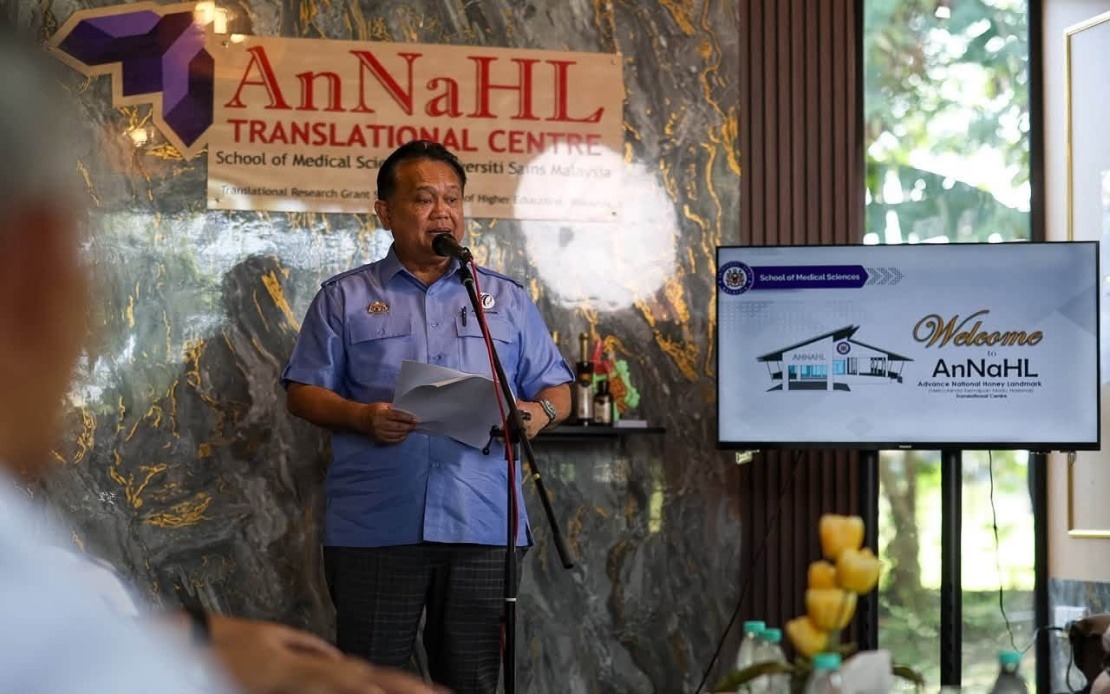
A recent joint delegation visit to the Advanced National Honey Landmark (AnNaHL) Translational Centre at Universiti Sains Malaysia's Health Campus in Kubang Kerian, Kelantan, crystallises this partnership approach. The facility exemplifies how research institutions can function as operational hubs connecting scientific discovery with commercial development, worker training, and market linkage. For rural producers, such centres reduce the friction between innovation and implementation by providing infrastructure, expertise, and market intelligence under one operational roof. The honey sector itself offers compelling advantages for rural Sarawak—stingless bee farming requires modest capital investment, suits smallholder operations, and targets premium-priced products with growing domestic and regional demand.
Kapit parliamentary constituency has already been identified as a pilot zone for expanded high-impact projects, with stingless bee farming among the priority sectors. This geographic focus reflects pragmatic targeting of communities with both genuine entrepreneurial interest and suitable agroecological conditions. The concentration of effort in specific constituencies also simplifies coordination between URDA, local government, and academic partners, creating denser networks of support that increase project success rates. Such targeted approaches contrast with earlier dispersed rural development initiatives that struggled to achieve critical mass in any single location.
The implications of URDA's strategic reorientation extend beyond Upper Rajang itself. Sarawak's development challenges—geographic dispersion, limited urban markets, dependence on primary commodities—mirror those facing rural regions throughout Southeast Asia. Models emphasising community capacity-building, technology adoption, and value chain integration offer potential templates for other Malaysian states and neighbouring countries grappling with rural stagnation. Success in Upper Rajang could generate practical evidence supporting scaled replication across the region.
Implementing this vision requires sustained commitment from multiple stakeholders. Government agencies must maintain funding, universities must commit research capacity to applied problems, development bodies must facilitate connections, and critically, communities must engage actively in identifying opportunities and managing projects. The 25 per cent income gains from HICP initiatives suggest these conditions can be met, yet scaling success demands institutional resilience and political continuity beyond typical election cycles. The challenge lies in anchoring these partnerships in structures resilient enough to survive leadership changes and budget constraints.
Market access remains perhaps the most critical factor determining whether innovation and technology adoption translate into sustainable income. Rural producers can master new techniques and adopt sophisticated practices, yet still struggle if they lack reliable pathways to buyers offering fair prices. URDA's emphasis on university partnerships implicitly acknowledges that research institutions increasingly engage in market development and value chain facilitation alongside scientific work. For stingless bee farming and other pilot sectors, establishing regional and potentially international market connections must occur concurrently with production capacity development.
The transition toward innovation-led rural economies also creates space for younger, educated rural residents to remain in their communities rather than migrating toward urban centres. Youth migration from rural areas represents a hidden cost of commodity-dependent development models—the loss of entrepreneurial talent and human capital investment from regions that generated it. Opportunities in technology-intensive value chains, processing operations, and knowledge-intensive agricultural sectors appeal more effectively to younger demographics than traditional commodity production. This demographic dimension carries implications for regional stability and social cohesion.
URDA's strategic repositioning ultimately represents an acknowledgement that rural development in contemporary Malaysia cannot proceed through traditional sectoral approaches or infrastructural investment alone. Sustainable prosperity requires embedding innovation systems, knowledge networks, and market linkages within rural communities themselves. The partnership framework with universities, development agencies, and local stakeholders offers institutional machinery for achieving this embedding. Whether these partnerships can move beyond pilot initiatives to reshape rural development practice across the region remains the critical outstanding question.

