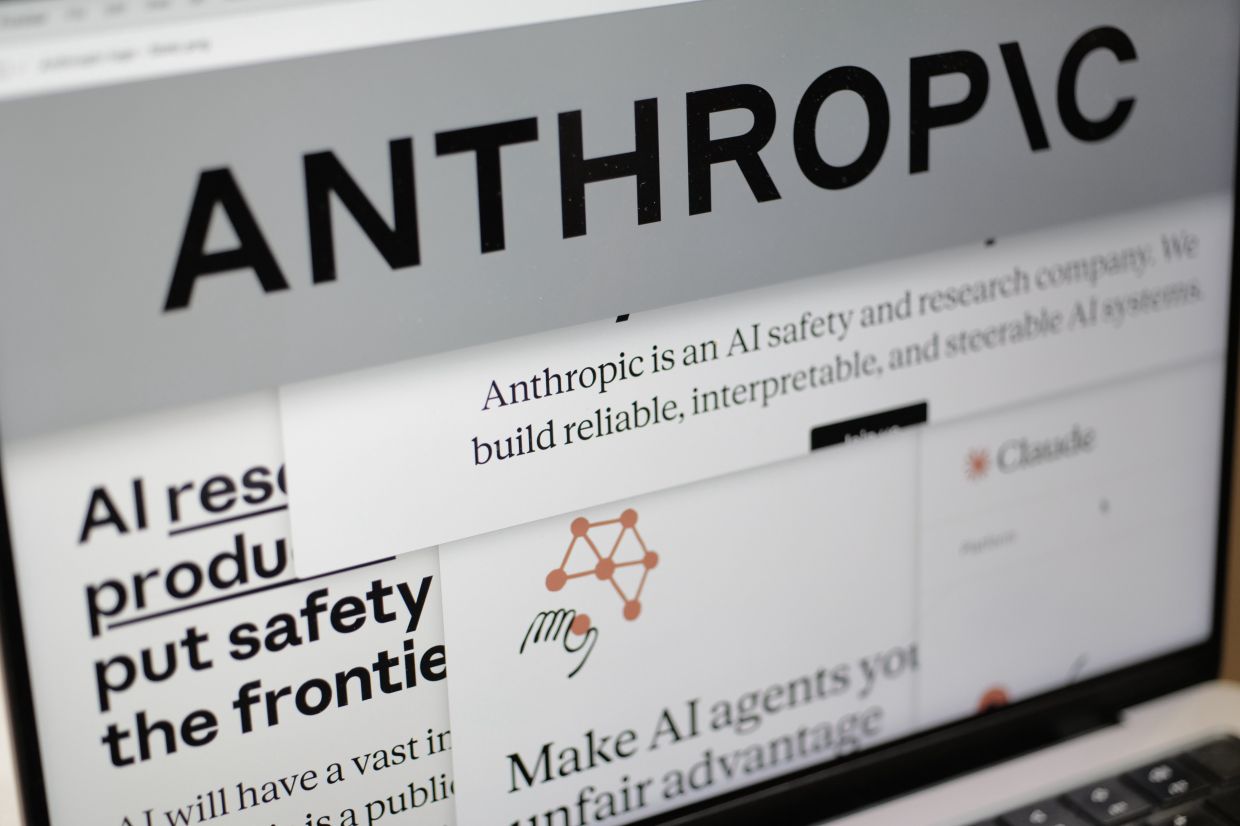
An American litigation-technology startup has initiated legal proceedings against the Trump administration over restrictions that prevent access to Anthropic's most sophisticated artificial intelligence systems. Legion, which develops software solutions for lawyers, filed its complaint on June 23 in federal court in Washington, arguing that a government export control directive issued by Commerce Secretary Howard Lutnick has dealt an irreversible blow to its operations and competitive standing. The case underscores growing tensions between national security concerns and the practical realities facing companies that depend on access to the frontier of AI development.
Anthropics decision to disable access to its premier models—Fable 5 and Mythos 5—came shortly after the administration's order requiring government permission before the company could provide these systems to foreign nationals or export them internationally. Legion, though headquartered in the United States, maintains software development personnel who are Canadian citizens working remotely from Canada. This arrangement, which would have been unremarkable in the pre-restriction environment, now places the company in violation of compliance requirements it cannot realistically navigate without abandoning crucial parts of its workforce.
The timing of the restriction has magnified its impact on Legion's business trajectory. The company contends in court filings that losing immediate access to Fable 5 represents more than a temporary inconvenience—it constitutes an "immediate, irreparable and existential" threat. This language reflects a broader reality in the artificial intelligence sector, where the pace of technological advancement moves with such velocity that delays measured in weeks can translate into competitive disadvantages that prove impossible to recover from. Companies that fall behind in access to cutting-edge models risk losing market position, engineering talent, and investor confidence in ways that traditional legal remedies cannot adequately address.
Legion's complaint emphasises that the competitive landscape of AI development operates under entirely different temporal rules than other industries. "Each day the directive remains in force disrupts Legion's product, operations, sidelines its engineers, and erodes the company's ability to survive in a field defined by continuous access to the most capable models," the filing states. This articulation captures an essential tension in technology policy: regulatory approaches designed for conventional industries may prove ill-suited to sectors where a few weeks of disadvantage can determine which companies thrive and which fade into irrelevance.
Commerce Secretary Lutnick had previously communicated directly to Anthropic Chief Executive Officer Dario Amodei, warning that the company would require explicit governmental authorization before deploying Fable 5 and Mythos 5 outside American territory or to foreign nationals anywhere. The letter represented a deliberate escalation in government oversight of AI model distribution, reflecting administration policy to ensure that American leadership in artificial intelligence remains unchallenged by preventing advanced capabilities from reaching foreign competitors or adversaries. However, the practical consequence has been to strangle American companies themselves that cannot operate without international collaboration.
Anthropics public stance attempts to balance multiple pressures. In a statement responding to the lawsuit, the company expressed gratitude toward the administration while pledging continued cooperation with government objectives around protecting critical infrastructure and maintaining American AI dominance. This diplomatic language masks the underlying friction between the company's commercial interests and its position as a de facto instrument of state technology policy. Anthropic faces pressure from customers suffering under the restrictions while simultaneously depending on government goodwill for regulatory approval and access to advanced semiconductor capacity essential for training large language models.
The case arrives at a moment when American artificial intelligence companies are grappling with the implications of increasingly strict export controls. Silicon Valley has long operated on the assumption that talent, capital, and intellectual exchange flow freely across borders, enabling the rapid iteration and innovation that produced American technological dominance. The new restrictions challenge that model fundamentally, forcing companies to choose between excluding foreign employees or facing legal liability. For Malaysian and Southeast Asian technology companies that have hired American personnel or partnered with US-based firms, the decision has broader implications—it potentially signals a future where such collaborations become untenable under American regulatory frameworks.
The substantive legal arguments Legion will advance remain to be fully developed, but the complaint implicitly challenges whether export control authorities can constitutionally or prudentially be wielded to restrict American companies' access to their own products based on workforce composition. There are potential constitutional dimensions around due process and takings claims, alongside statutory arguments about whether the Commerce Department has authority to issue such directives without formal regulatory procedures. Courts have traditionally shown deference to national security determinations, but they have also recognised limits on executive power when regulations effectively confiscate property or livelihood without compensation.
Regional technology ecosystems across Southeast Asia have built increasing interdependencies with American AI firms. Malaysia's growing technology sector, along with efforts to develop artificial intelligence capabilities in Singapore, Thailand, and Vietnam, all depend partly on access to frontier models and technical expertise housed in American companies. Restrictions that make international collaboration administratively impossible or legally hazardous could accelerate efforts by competing nations to develop indigenous large language model capabilities, potentially fragmenting the global AI landscape into competing technological spheres. This could ultimately undermine American commercial interests while pushing other regions toward greater technological self-sufficiency and reduced reliance on American providers.
The resolution of Legion's case will likely establish important precedent for how aggressively the administration can wield export control authority against American companies employing foreign nationals. If the courts side with Legion, it could force the administration to pursue its export control objectives through different mechanisms—perhaps explicit visa restrictions or workforce composition requirements rather than model access denial. Conversely, if the government prevails, American AI companies will need to fundamentally reorganise their operations, potentially pushing significant portions of their development work offshore or forcing them to divest international personnel.
For Malaysian stakeholders in the technology sector, the Legion case represents a cautionary signal about the fragility of technology partnerships built on the assumption of relatively open international collaboration. The case demonstrates that even American companies cannot assume unimpeded access to their own technological products when foreign nationals are involved. This reality may accelerate conversations about technology sovereignty and the necessity for regional alternatives to American-dominated artificial intelligence infrastructure, even as global norms around AI governance remain unsettled.

