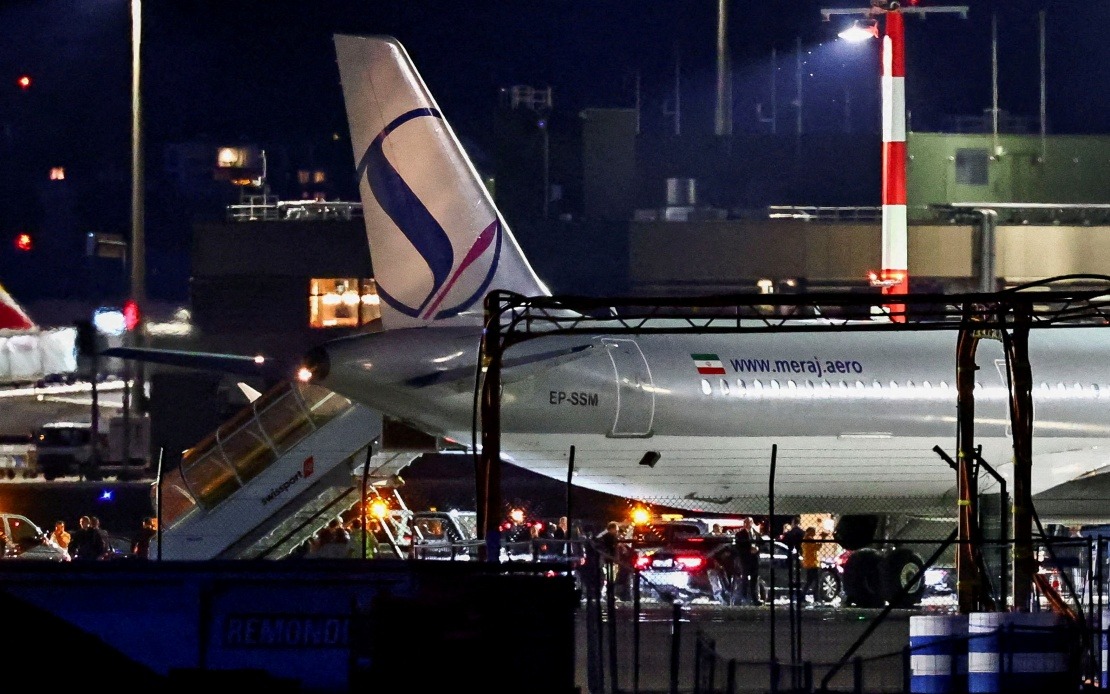
American and Iranian delegations descended on Burgenstock, Switzerland, on Sunday to commence technical negotiations designed to translate a landmark ceasefire agreement into practical implementation mechanisms. The gathering marks a significant diplomatic juncture following the electronic signing of the Islamabad Memorandum of Understanding between US President Donald Trump and Iranian President Masoud Pezeshkian just days earlier, an accord intended to terminate the military conflict that erupted on February 28.
The American contingent is headed by Vice President JD Vance, who landed at Emmen Air Base north of Burgenstock after transiting from Washington. He emphasised optimism regarding the negotiations, declaring confidence that both nations could sustain the ceasefire framework established under the accord. Vance noted that seasoned diplomatic envoys Jared Kushner and Steve Witkoff had already positioned themselves at the talks venue to address the granular technical dimensions of the agreement.
On the Iranian side, Parliament Speaker Mohammad Bagher Ghalibaf and Foreign Minister Abbas Araghchi lead the delegation, having arrived in Switzerland several hours ahead of their American counterparts. Upon arrival, Ghalibaf issued a statement via social media platform X, striking a solemn tone that underscored the human cost of the preceding months of hostilities. He referenced the need to honour those killed during the conflict and invoked the memory of victims including over 160 people who perished in a bombing strike against a girls' primary school in the southern Iranian city of Minab on February 28.
Pakistan plays a crucial mediating role in these negotiations, with Prime Minister Muhammad Shehbaz Sharif and Chief of Army Staff Field Marshal Syed Asim Munir facilitating discussions between the two delegations. The Pakistani involvement underscores the broader regional dimensions of the conflict and ceasefire, reflecting how the West Asia tensions have implications across the Muslim world and for neighbouring states invested in stability.
The agenda extends beyond direct US-Iran negotiations. According to diplomatic sources cited by CBS News, an emergency session addressing the escalating Israel-Hezbollah conflict has been added to the opening day's discussions, suggesting this regional flashpoint takes priority in talks. The Lebanese dimension of the broader West Asia crisis demands urgent attention, as the Israeli military offensive launched on March 2 has inflicted substantial casualties and displacement. Official tallies indicate more than 4,000 deaths, nearly 12,000 injured, and over one million Lebanese residents displaced from their homes.
Israel's military operations have penetrated deep into Lebanese territory, with forces advancing more than 10 kilometres beyond the border in certain sectors. Many positions now occupied by Israeli forces in southern Lebanon represent longstanding territorial incursions spanning decades, alongside newly seized areas from the recent campaign. The scale of displacement and destruction underscores why resolution of the Lebanon dimension has become integral to broader ceasefire efforts in the region.
Notably, the Switzerland talks proceed without direct participation from Israel, Hezbollah, or the Lebanese government itself. This absence reflects the complex diplomatic architecture whereby the US and Iran, as major regional powers with respective allies, effectively serve as proxy negotiators for their respective sides. The exclusion of these parties complicates implementation prospects, as commitments made in Burgenstock will require acceptance from actors not present at the bargaining table. For Malaysian observers, this arrangement highlights the challenges inherent in brokering durable settlements when principal protagonists remain absent from negotiations.
The Islamabad Memorandum itself represents a dramatic shift in US-Iran relations following years of confrontation. The agreement's nomenclature reflects Pakistan's diplomatic investment in achieving a settlement, acknowledging Islamabad's role as an influential mediator capable of bridging Washington and Tehran. For Southeast Asian nations including Malaysia, which maintain diplomatic relations and economic ties with both the United States and Iran, the ceasefire offers prospects for reducing regional volatility that otherwise might disrupt trade flows and energy markets.
The technical focus of these Switzerland discussions suggests negotiators must now move beyond diplomatic declarations toward concrete mechanisms: verification procedures, timeline for force withdrawals, arrangements for reopening the Strait of Hormuz, and confidence-building measures to prevent conflict recurrence. The complexity of implementing a comprehensive ceasefire across the Levant and Persian Gulf region cannot be overstated, particularly given the multiplicity of armed actors with divergent interests.
From a Malaysian and Southeast Asian perspective, these developments carry material significance. The Strait of Hormuz remains critical to regional energy security, with a substantial portion of global maritime energy trade transiting through these waters. The months-long closure threatened to disrupt supply chains and elevate energy costs across Asia, affecting economies as far east as the region. A successful reopening and stabilisation would alleviate these pressures and restore predictability to energy markets affecting Malaysian manufacturing, shipping, and energy-dependent sectors.
The coming days will test whether the diplomatic momentum can be sustained through the technical phase. The presence of Kushner and Witkoff alongside Vance suggests American negotiators bring experience from previous Middle East peace efforts, though critics note such engagement has yielded mixed results in durability and acceptance. Iranian delegation members, particularly Ghalibaf's invocation of martyrs and victims, indicate Tehran negotiators approach discussions from a position of domestic political sensitivity, where any perceived capitulation faces domestic criticism.
Observers across Southeast Asia, mindful of the region's economic dependence on Middle Eastern stability, will be watching developments at Burgenstock closely. The success or failure of these technical negotiations will reverberate well beyond Switzerland, affecting energy prices, shipping insurance costs, and geopolitical calculations affecting Malaysian foreign policy and economic interests for years ahead.

