The United States and Jamaica have formalized a significant military cooperation pact designed to intensify their shared struggle against drug trafficking organizations and narco-terrorist groups destabilizing the Western Hemisphere. The agreement represents an expansion of security ties that have developed over decades, positioning the two nations at the forefront of Washington's increasingly aggressive posture toward transnational criminal enterprises. SOUTHCOM, which oversees American military operations across Central America, South America, and the Caribbean, characterized the arrangement as a critical reinforcement of anti-cartel efforts at a moment when drug-trafficking syndicates have grown more sophisticated and deadly.
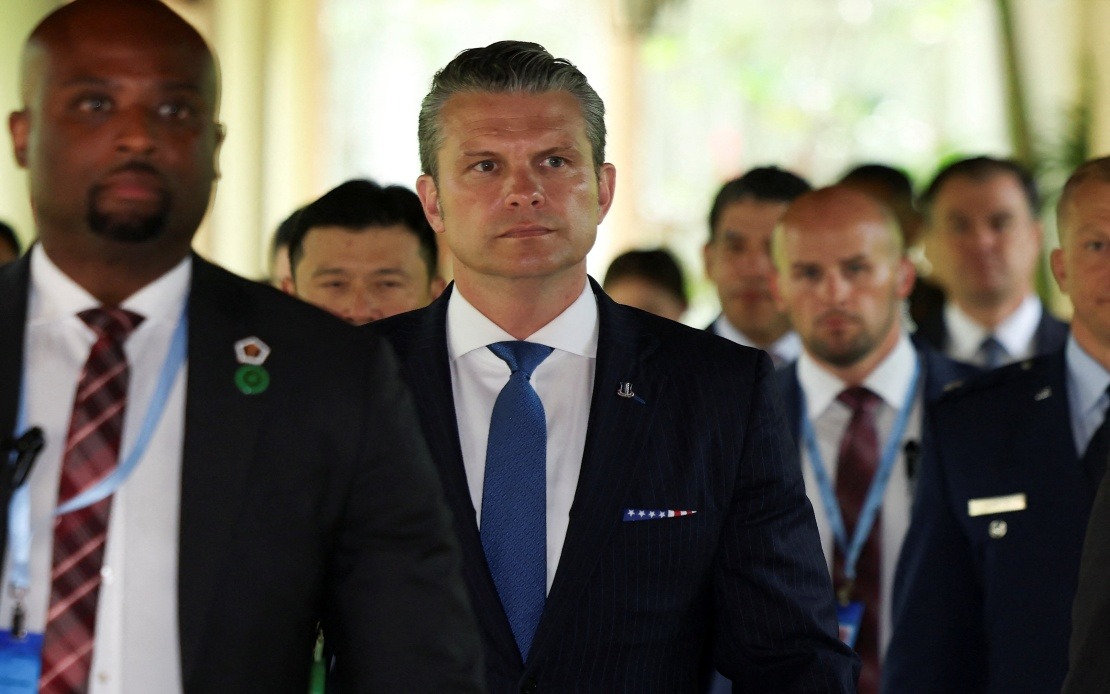
General Francis L. Donovan, the commander of SOUTHCOM, emphasized that the partnership capitalizes on an established foundation of bilateral security cooperation. The agreement came following substantive discussions held in August at Panama's A3C anti-cartel forum, where Defence Secretary Pete Hegseth engaged directly with Jamaica's Deputy Prime Minister and Minister of National Security Horace Chang. These high-level interactions underscore the urgency with which the Trump administration views the narcotics crisis affecting both the hemisphere and American territory. Jamaica, positioned strategically along critical drug transit routes, has emerged as an increasingly vital partner in Washington's security architecture for the region.
The deepening alliance reflects broader strategic calculations about containment and interdiction. In November 2025, the Pentagon launched Operation Southern Spear, a comprehensive campaign explicitly targeting cartel operations throughout Latin America. This initiative signals a militarization of drug enforcement efforts that extends well beyond traditional law enforcement cooperation, incorporating naval operations, intelligence sharing, and coordinated strike capabilities. The operation represents the most expansive military engagement against narcotics trafficking since the height of Cold War interventions in the region, raising complex questions about sovereignty and the efficacy of kinetic responses to supply-side drug problems.
Since September 2025, American military forces have conducted at least 67 strikes against suspected drug-smuggling vessels across the Caribbean and Pacific waters, resulting in 221 deaths according to SOUTHCOM statistics. These operations demonstrate the scale and intensity of the current campaign, though they also highlight the human costs and potential for civilian casualties in maritime interdiction efforts. The strikes represent a dramatic escalation from previous anti-trafficking operations, employing military assets and rules of engagement typically reserved for conventional warfare scenarios. For Jamaica and other Caribbean nations, this militarized approach offers enhanced security capabilities while simultaneously raising concerns about unintended consequences and regional destabilization.
For Southeast Asian observers, the US-Jamaica arrangement carries important implications regarding maritime security paradigms and great power strategies in strategic corridors. The Western Hemisphere's experience with drug trafficking networks, cartel violence, and transnational organized crime parallels challenges emerging across Southeast Asia's maritime zones. Countries like Malaysia, with significant coastlines and proximity to major shipping lanes, face similar vulnerabilities to narcotics trafficking and the destabilizing effects of criminal networks operating across borders. Washington's willingness to commit substantial military resources to hemispheric drug interdiction may foreshadow similar intensified engagement in Indo-Pacific security partnerships.
The Jamaica partnership also reflects American strategic reassessment of regional threats. Beyond traditional geopolitical competition, Washington increasingly frames transnational criminality as a national security imperative demanding military rather than purely law enforcement responses. This conceptual shift carries consequences for how allied nations approach their own security priorities and resource allocation. Jamaica, with limited indigenous military capacity, gains access to advanced American naval and air capabilities while becoming more deeply integrated into Washington's security apparatus. Such arrangements strengthen bilateral ties while potentially constraining policy autonomy in subsequent regional negotiations.
The agreement emerges amid broader hemispheric instability fueled by cartel competition, gang violence, and state fragility in Central America. Countries including Honduras, Guatemala, and El Salvador have experienced unprecedented homicide rates and criminal penetration of government institutions, creating humanitarian crises that generate migration pressures affecting both the region and the United States. By strengthening cooperation with Jamaica, Washington seeks to establish more effective interdiction at the source and transit points, hoping to reduce the flow of narcotics northward while simultaneously addressing destabilization that could encourage further irregular migration. This comprehensive security approach integrates multiple American policy objectives within a single regional framework.
Jamaica's participation in this enhanced military partnership reflects the island nation's vulnerability to cartel operations and the particular challenges posed by its geography. Positioned along major trafficking corridors between South American production zones and North American consumption markets, Jamaica has experienced increased gang violence, turf wars, and criminal infiltration of commercial enterprises. The homicide rate has fluctuated dramatically in recent years, with periods of intense gang conflict creating humanitarian emergencies and overwhelming local law enforcement capacity. American military support offers Jamaica temporary relief from criminal pressure while potentially creating long-term dependencies that complicate the island's foreign policy independence and regional relationships.
The practical dimensions of the renewed cooperation remain partially obscured from public view, though SOUTHCOM's operational statistics provide insight into current activities. Enhanced intelligence sharing likely enables faster identification and tracking of suspected trafficking vessels, while coordinated strike capabilities allow more aggressive intervention. Training and equipment transfers strengthen Jamaica's maritime patrol capabilities, potentially improving domestic law enforcement effectiveness. Joint planning efforts facilitate more synchronized regional responses to cartel activities, reducing coordination delays that previously allowed smuggling networks to exploit gaps in coverage. However, the sustainability of such operations depends on continued American commitment and Jamaica's capacity to maintain equipment and personnel trained under the partnership.
Critical questions surround the long-term effectiveness of military approaches to drug trafficking. Despite decades of American military engagement in the war on drugs, both hemispheric and global narcotics flows have expanded substantially. Cartel networks demonstrate remarkable adaptability, modifying routes, methods, and organizational structures in response to enforcement pressure. Evidence from prior campaigns suggests that interdiction alone, without addressing underlying demand factors in consuming countries or addressing the conditions that make drug trafficking economically attractive in producing regions, achieves limited permanent success. Nevertheless, policymakers continue pursuing militarized strategies, partly because alternative approaches require sustained investment in social development, public health, and governance reform—investments that face domestic political obstacles in the United States and limited resources in Caribbean nations.
The timing of this agreement coincides with broader Trump administration foreign policy priorities emphasizing hemispheric integration and securitization. The administration has signaled intentions to strengthen relationships with regional allies through military partnerships and security cooperation, framing such arrangements as essential to American prosperity and sovereignty. Jamaica, along with other Caribbean states, occupies an important position in these calculations, serving both as a security partner and as a jurisdiction where American power can be projected with minimal domestic political friction. The agreement therefore reflects not merely drug enforcement priorities but larger strategic designs for regional influence and order.
For Malaysia and other Southeast Asian nations, the evolving US-Jamaica relationship offers instructive lessons about security cooperation patterns, the benefits and constraints of deep military partnerships, and the trajectories that regional powers might anticipate in their own bilateral engagements with Washington. As the United States pursues similar security architectures throughout the Indo-Pacific, understanding these Western Hemisphere precedents provides valuable perspective on what such partnerships entail in practice and what long-term implications they carry for regional autonomy and strategic flexibility.

