The heads of two prominent US Congressional bodies focused on China have formally requested that the Justice Department undertake a thorough investigation into a break-in at a California museum commemorating the 1989 Tiananmen Square incident. The three-page letter, delivered to federal authorities on Thursday, was signed by John Moolenaar, a Republican from Michigan who chairs the House Select Committee on China, and Christopher Smith, a Republican from New Jersey and co-chairman of the Congressional-Executive Commission on China. Their intervention signals growing concern among US lawmakers about the security of spaces dedicated to sensitive topics related to China's governance and human rights record.
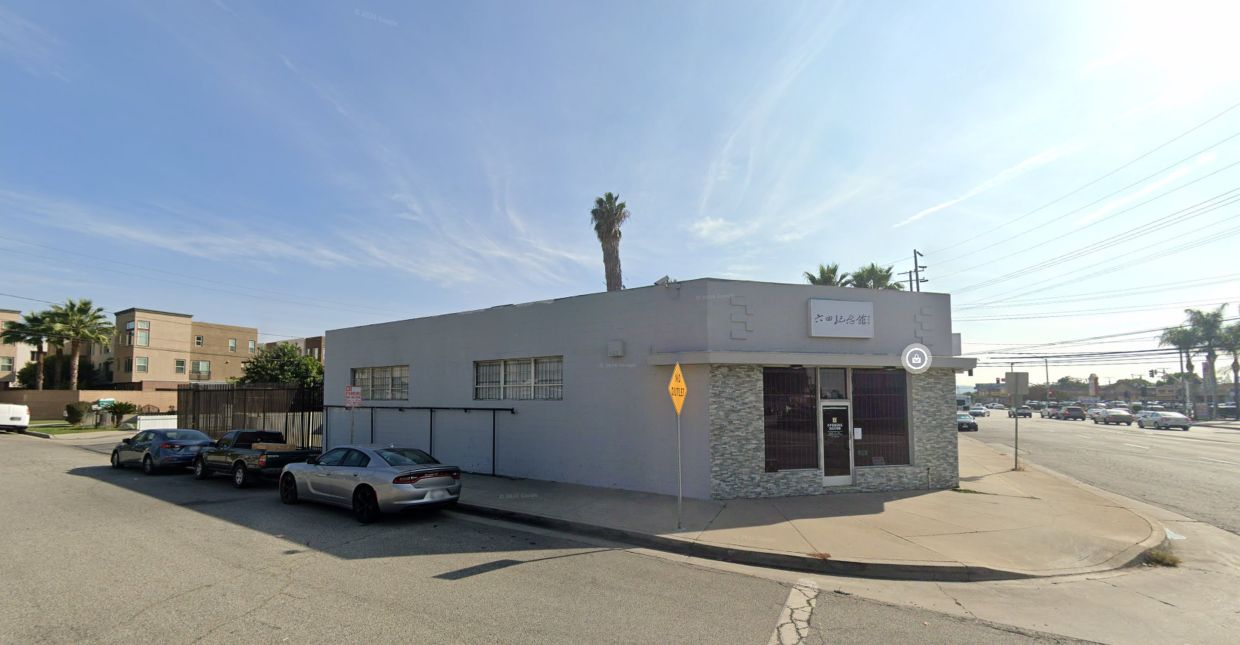
The June 4th Memorial Museum in El Monte, California experienced a break-in on May 31, just days before commemorations marking the anniversary of the 1989 crackdown. The facility suffered considerable damage, with unknown perpetrators spray-painting walls and exhibition materials, damaging property, and deliberately interfering with the museum's surveillance system. The museum's management released a statement condemning the attack and pledging to pursue legal action against those responsible. Reflecting the tension surrounding the incident, museum officials declared they would not yield to what they characterised as elements of intimidation and threat, even as they called for public reassurance.
Established in 2023, the June 4th Memorial Museum represents one of the few physical spaces in the United States dedicated to preserving the memory of the Tiananmen Square events for the Chinese diaspora. The institution originally operated from New York but relocated to the Los Angeles area to reduce operational expenses. Photographs circulated online depicted the vandalism clearly, with orange paint streaking across framed newspaper clippings and related historical displays. The museum, registered as a non-profit entity under US tax law, has depended on crowdsourced fundraising and civil society contributions rather than government or institutional backing. An online artist collective reported in 2023 that organisers had raised US$500,000 toward an ambitious target of US$2 million.
In their letter to federal authorities, Moolenaar and Smith called on the Justice Department, the Federal Bureau of Investigation's Los Angeles Field Office, and the National Security Division to coordinate with local law enforcement in determining whether the incident was orchestrated, encouraged, or supported by individuals acting on behalf of or in sympathy with the People's Republic of China or the Chinese Communist Party. This language reflects broader concerns within US policy circles about potential foreign interference campaigns targeting vulnerable opposition or memorial spaces. El Monte police have confirmed opening a case and conducting an active investigation, with the museum stating it had uncovered certain leads and points requiring clarification while pledging cooperation with authorities.
The museum's own statement suggested suspicion of what it termed "transnational repression," a concept referring to efforts by authoritarian governments to suppress dissent or opposition activities that extend beyond their borders. However, officials declined to provide specific details substantiating this characterisation. The break-in occurred amid what many in the Chinese diaspora community view as an intensifying pattern of intimidation targeting overseas commemorative activities and spaces. Such concerns have gained prominence in recent years as Beijing has expanded diplomatic and economic initiatives abroad, and as some segments of the diaspora report increased pressure when visiting China or engaging in commemorative practices.
Both the House Select Committee on China and the Congressional-Executive Commission represent established structures within the US legislative system for addressing China-related policy issues. The House Select Committee, established in January 2023, operates with a mandate to examine US economic and security competition with China, reflecting the current geopolitical importance accorded to the bilateral relationship. The Congressional-Executive Commission, created in 2000, originated from a bargain during China's entry into the World Trade Organization and focuses on monitoring human rights and rule of law developments. While neither body possesses authority to propose legislation directly, both conduct investigations and submit policy recommendations to Congress, lending their interventions considerable weight within US policy discussions.
The diplomatic backdrop to this incident is significant. Beijing has consistently criticised both Congressional bodies as "political tools with zero credibility," characterising their activities as driven by "Cold War mentality" and "ideological bias." Chinese officials have historically resisted external scrutiny regarding the 1989 Tiananmen Square events, with the topic remaining sensitive within domestic Chinese discourse. The Chinese embassy in Washington has not yet responded to inquiries regarding the museum break-in or the Congressional letter, maintaining its customary stance on such matters. The timing of the incident, occurring just before the anniversary of the events the museum commemorates, adds symbolic weight to what opponents view as an attempt to suppress remembrance activities.
For Southeast Asian observers, this incident carries implications beyond the specific context of US-China relations. The break-in and subsequent Congressional response reflect broader questions about freedom of expression and assembly for diaspora communities throughout the region. Many Southeast Asian countries host significant Chinese diaspora populations, some of whom engage in commemoration and activism around sensitive topics. The incident highlights potential vulnerabilities faced by non-majority political expression in diaspora spaces, and the willingness of external powers to challenge such activities. It also underscores the way security concerns involving China have become integrated into mainstream US policy discussions, with Congressional leaders treating museum security as a matter of national interest.
The investigation's outcome, should federal authorities pursue it vigorously, could establish precedent for how the US addresses alleged foreign interference targeting diaspora institutions. A determination that the break-in involved foreign instigation would represent a significant escalation in alleged transnational repression activities and could trigger broader policy responses. Conversely, if local criminal actors prove responsible, the incident would still raise questions about security vulnerabilities affecting politically sensitive institutions. The case demonstrates how seemingly localised incidents within the diaspora community can rapidly ascend to high-level policy consideration, reflecting the strategic importance assigned to US-China competition and the symbolic significance of spaces dedicated to commemorating sensitive historical events.

