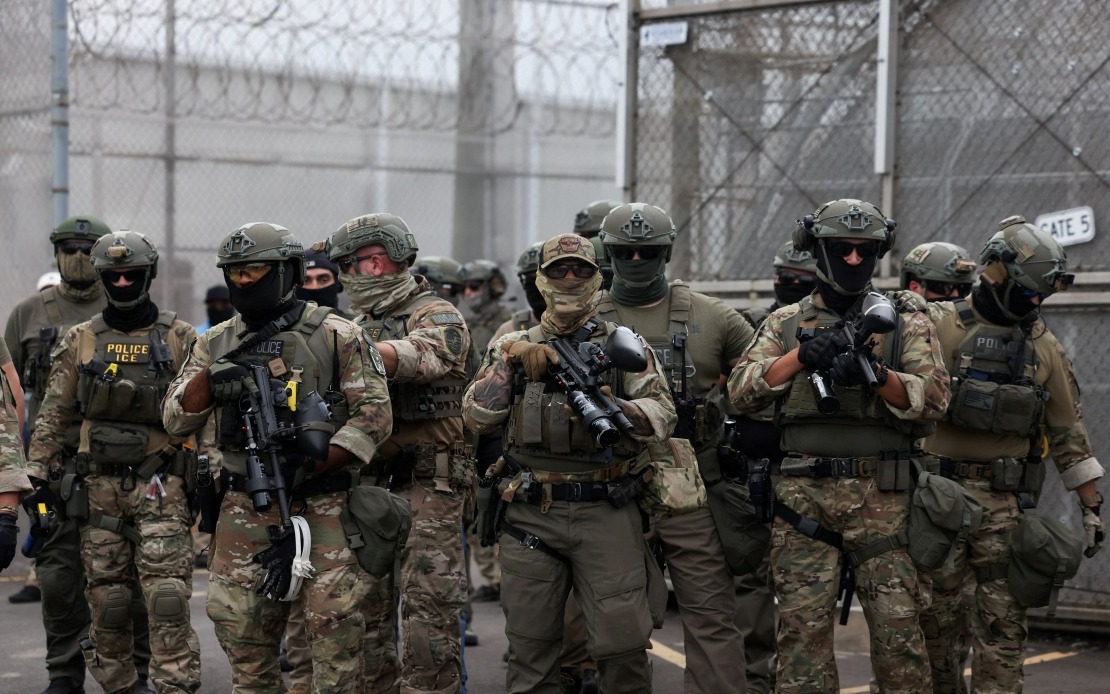
A federal judge in California has issued a sweeping nationwide injunction preventing United States Immigration and Customs Enforcement (ICE) from conducting arrests of migrants inside and around immigration courthouses, marking a significant legal setback for the Trump administration's aggressive deportation enforcement strategy. The decision effectively terminates one of the administration's most contentious immigration enforcement practices, which had drawn criticism from immigrant advocacy groups and legal experts who argued it fundamentally undermined access to judicial proceedings.
The policy under review permitted ICE officers to apprehend undocumented migrants at courthouses during various stages of their immigration proceedings. Since the practice commenced last year, agents have conducted numerous arrests within these facilities and their surrounding areas, sometimes before migrants had completed their scheduled hearings. This approach represented a marked departure from earlier, more cautious protocols that typically discouraged courthouse arrests to preserve the integrity of legal proceedings and ensure defendants' appearance at hearings.
The Trump administration introduced revised guidelines at the beginning of the president's second term that actively promoted courthouse arrests as an enforcement mechanism, emphasizing what officials characterised as the operational advantages of apprehending migrants at these high-traffic locations. The administration argued that courthouses presented efficient opportunities to identify and detain individuals subject to deportation. However, the federal court found this reasoning insufficient and potentially flawed from a legal perspective.
In his ruling, the federal judge determined that ICE had fundamentally failed to conduct adequate administrative review before implementing the new enforcement approach. The court noted that the agency had not meaningfully addressed or responded to documented concerns about how the policy might negatively affect the immigration court system and individuals' constitutional rights. Specifically, the judge highlighted that the government had not provided what legal standards require—a reasoned explanation demonstrating why changing established practices served legitimate governmental interests or why the new approach represented an appropriate exercise of agency discretion.
The implications of this ruling extend beyond simple procedural concerns about courthouse conduct. Civil rights organisations and immigrant advocates have long contended that allowing arrests in judicial facilities discourages migrants from attending their own hearings, knowing they risk immediate detention upon arrival. When defendants skip proceedings through fear of arrest, courts face difficulty processing cases, immigration judges must continue managing cases without the defendant present, and the entire system becomes less efficient. By blocking these arrests, the court has effectively removed a deterrent that was preventing some migrants from exercising their legal right to contest deportation proceedings.
For readers in Malaysia and the broader Southeast Asian region, this development carries significance beyond American domestic policy. Migration and deportation practices in Western democracies often influence discussions about human rights standards and due process protections in other countries. As Malaysia navigates its own immigration enforcement challenges—with significant populations of irregular migrants from Myanmar, Bangladesh, and Indonesia—American legal precedents regarding migrants' rights and government administrative overreach can inform regional discourse about balancing security needs with fundamental fairness in legal proceedings.
The legal vulnerability the judge identified in the Trump administration's approach also illustrates how judicial review functions as a check on executive power in the United States. The court did not simply accept the government's assertion that courthouse arrests were beneficial; instead, it required officials to demonstrate through rigorous analysis and transparent reasoning why this particular enforcement tactic was necessary and proportionate. This standard reflects a principle that arbitrary policy changes, however well-intentioned, must survive judicial scrutiny when they affect people's liberty interests.
The ruling applies nationwide, meaning immigration courts throughout the United States—from major cities to smaller communities—are now covered by the injunction. This uniformity prevents the government from attempting a piecemeal approach where some regions might continue the practice while others halt it. The comprehensiveness of the court's decision suggests the judge viewed the underlying constitutional and administrative law problems as systemic rather than limited to particular circumstances or geographic areas.
Government attorneys may pursue appeals through higher courts, setting the stage for continued litigation that could ultimately reach the Supreme Court. The administrative law principles at stake—particularly the requirement that agencies provide reasoned explanations when changing longstanding policies—have broad applications beyond immigration enforcement. How courts ultimately resolve these questions will influence not only immigration policy but also how agencies approach regulatory changes across numerous sectors affecting millions of Americans and foreign nationals in the United States.
The courthouse arrest ban represents a notable achievement for legal challenge advocates who questioned whether executive immigration enforcement actions would withstand judicial review under the Trump administration's approach. The decision demonstrates that even when an administration possesses genuine statutory authority to enforce immigration laws, courts retain the power to ensure that implementation procedures comply with constitutional protections and administrative law requirements. For migrants awaiting court proceedings across America, the ruling provides immediate practical relief by permitting safer courthouse attendance and potentially improving their ability to mount legal defences to deportation allegations.
Beyond the immediate enforcement consequences, the judgment highlights ongoing tensions between security-focused governance and rights-protective jurisprudence. Democratic societies continuously grapple with reconciling legitimate government interests in border control and deportation enforcement with individuals' entitlements to fair legal processes. This federal court has concluded that the Trump administration's approach tilted excessively toward enforcement efficiency at the expense of procedural fairness, creating a precedent that subsequent enforcement efforts must navigate carefully.

