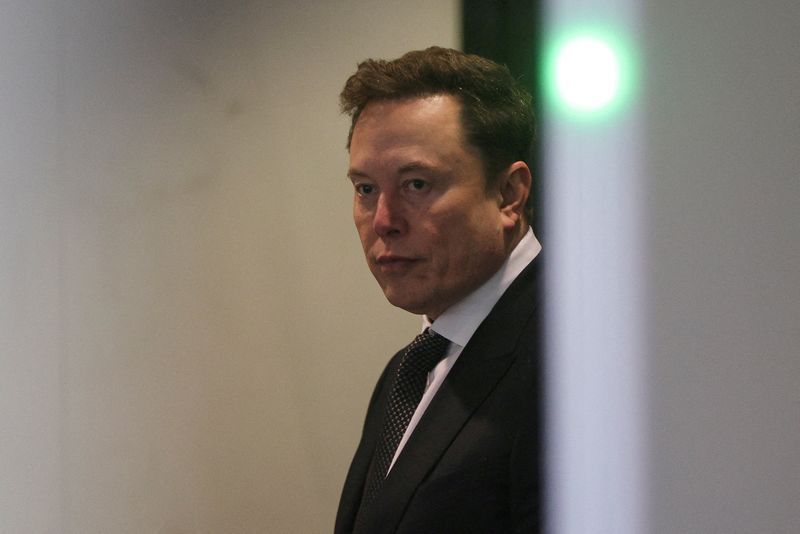
A federal judge in Washington, D.C. has given her approval to the US Securities and Exchange Commission's settlement with Elon Musk concerning his purchase of Twitter shares, though she made clear her discomfort with the arrangement and its potential implications for regulatory enforcement. U.S. District Judge Sparkle Sooknanan signed off on the agreement on Wednesday, but not without articulating reservations about what she characterised as "red flags" embedded within the accord and questioning whether the world's wealthiest individual had been held adequately accountable.
The core of the dispute centres on Musk's failure to promptly disclose his early accumulation of Twitter stock in March and April 2022. According to the SEC's calculations, the approximately 11-day delay in public notification gave Musk an estimated $150 million advantage by allowing him to purchase shares at depressed prices before the market reacted to his ownership stake. Musk has consistently maintained that the delayed disclosure was unintentional rather than a deliberate strategy to profit from information asymmetry. He ultimately acquired Twitter for $44 billion in October 2022 and subsequently rebranded the platform as X, which now operates as a division within his broader commercial empire.
Under the settlement terms, a trust established in Musk's name will transfer $1.5 million to the government, thereby resolving the SEC's allegations. However, Sooknanan's written decision reveals significant judicial scepticism about whether this financial penalty adequately addresses the alleged misconduct or compensates those potentially harmed by the transaction delay. The judge emphasised that courts reviewing consent judgments occupy a delicate constitutional position—neither rubber-stamping executive agreements nor serving as independent ombudsmen second-guessing regulatory decisions. Yet she clearly felt compelled to signal her concerns about the adequacy of the enforcement action.
A particularly contentious aspect of the settlement, from the judge's perspective, involves the SEC's decision to forgo seeking disgorgement—the legal mechanism typically used to recover ill-gotten gains from securities violations. The SEC's justification rested on historical precedent, arguing that it had not routinely pursued disgorgement in comparable cases. Sooknanan's response was pointed: she questioned whether this historical pattern reflected sound policy or simply represented an inconsistent approach to enforcement that could set a problematic standard. The judge's language suggested that the absence of disgorgement language might itself constitute a deviation from what fairness would ordinarily demand.
Another dimension troubling the court involved the procedural architecture of the settlement itself. Rather than settling directly with Musk, the SEC negotiated an agreement with his trust arrangement, a structure that permitted Musk to maintain his public narrative of vindication and regulatory clearance. Sooknanan explicitly queried why the SEC structured the settlement this way and whether such a framework was essential to resolving the dispute. The judge's underlying concern appeared to be that this arrangement allowed Musk to simultaneously settle a serious regulatory matter while insisting he had been exonerated—a messaging advantage unavailable to other defendants.
The timing and political context of the settlement have invited additional scrutiny. The announcement came in May, following the March departure of Margaret Ryan, who served as the SEC's enforcement chief for merely six months before departing amid substantive disagreements with agency leadership over enforcement priorities and strategy. Sooknanan's decision explicitly noted that in May, when the settlement was revealed, SEC attorneys prosecuting the case appeared genuinely surprised to learn that settlement negotiations with Musk's legal team had been underway. This discovery raised the unseemly possibility that senior SEC officials had negotiated directly with Musk's representatives outside the normal litigation chain of command.
The judge voiced her most pointed concern through a rhetorical question that cuts to the heart of regulatory equity: whether the SEC would extend comparable "solicitude" to other alleged securities-law violators, or whether Musk had received a discretionary one-time accommodation negotiated without input from the agency lawyers actually litigating the case. This framing transforms the settlement from a technical resolution of a specific dispute into a broader question about whether the regulatory environment treats differently situated defendants fairly. For Malaysian investors and regulators monitoring international securities markets, this episode illuminates how even sophisticated enforcement regimes can produce settlements that appear to privilege the powerful.
Musk's position atop the global wealth hierarchy—Forbes values his net worth at $927.2 billion—and his various roles across multiple industries add complexity to the regulatory calculus. Beyond his Twitter acquisition, he leads Tesla as well as SpaceX, positioning him as a central figure in technologies from electric vehicles to space exploration. His previous service as an adviser to Republican President Donald Trump created additional political dimensions that the judge, herself appointed by former Democratic President Joe Biden, appeared conscious of throughout her decision.
The SEC maintained in subsequent filings that the settlement did not emerge from improper collusion and that the $1.5 million penalty represented the largest fine of its type. The agency further argued that the public benefit derives from an injunction effectively constraining how Musk can operate through the trust vehicle, which the SEC characterised as the primary mechanism through which the billionaire manages significant portions of his assets. This injunction, the SEC contended, provides ongoing oversight capability that would persist beyond the financial penalty.
Yet Sooknanan's approval, hedged with such extensive reservations, suggests that judicial acceptance does not necessarily confer legitimacy upon a settlement. Her written opinion serves as a public record of judicial disquiet, signalling to future litigants, regulators, and the broader public that the agreement satisfies minimum constitutional requirements while falling short of what fairness might ordinarily demand. In the Malaysian and Southeast Asian context, where regulatory capacity and enforcement resources often remain constrained, Sooknanan's decision offers instructive lessons about the institutional pressures that can compromise enforcement even in well-resourced jurisdictions. The case demonstrates how settlements can obscure rather than clarify regulatory violations, and how structural arrangements in dispute resolution can produce outcomes that technically satisfy legal minimums while offending substantive justice.
Sooknanan ultimately deferred to the democratic process, suggesting that whether the executive branch, through the SEC, had adequately held Musk accountable represented a matter for citizens to evaluate at the ballot box rather than through judicial second-guessing. This invocation of democratic accountability, however, rings with a certain resignation—an acknowledgment that the judge possessed legal authority to disapprove the settlement but felt constrained by separation-of-powers doctrine from exercising that authority according to her apparent intuitions about fairness. The decision thus embodies the tension between judicial scrutiny and executive deference that characterises modern regulatory enforcement.

