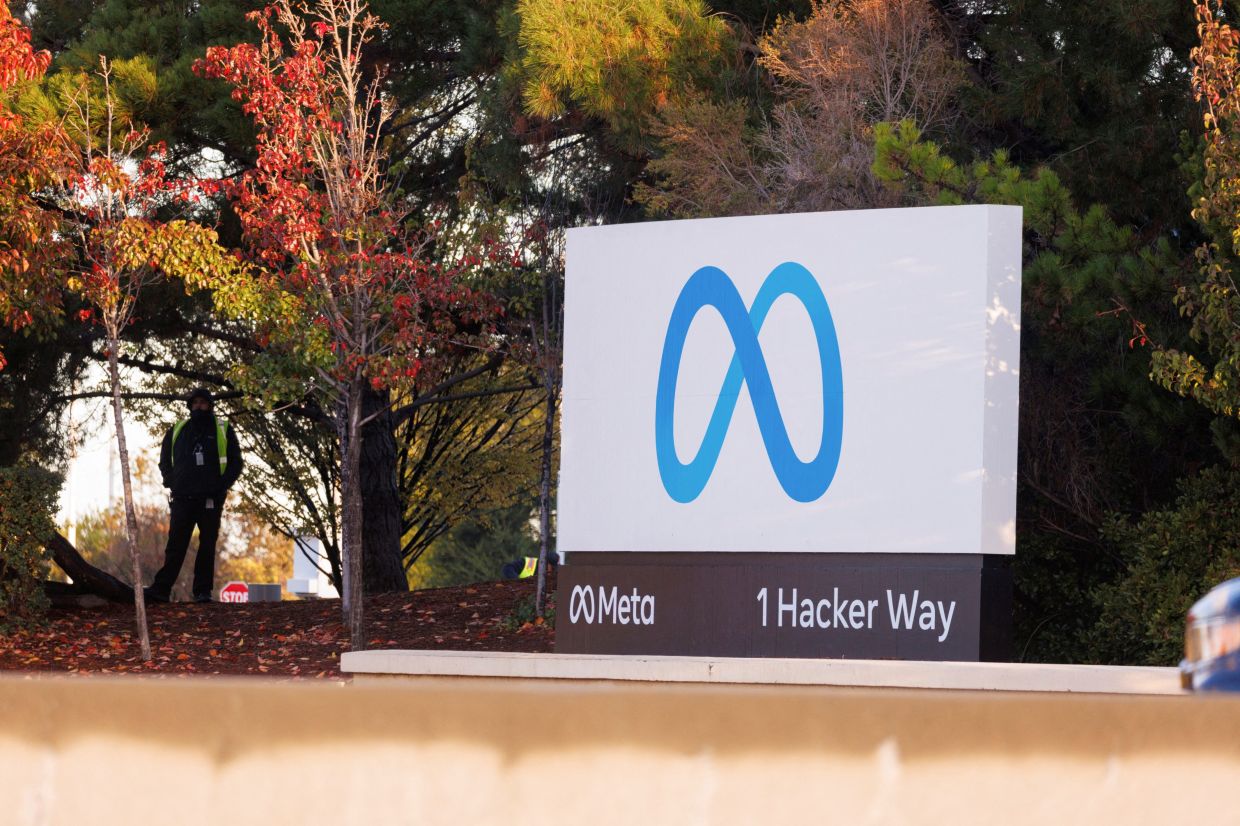
A United States federal judge has determined that Meta deliberately destroyed or allowed the destruction of critical evidence in a legal dispute brought by an Australian mining magnate, dealing a significant blow to the social media platform's defence strategy in a case that challenges fundamental protections enjoyed by internet companies. Judge P. Casey Pitts found that the company's conduct in suppressing data amounted to gross negligence, a finding that could reshape how Meta's liability is assessed in the preliminary stages of litigation that remains far from resolution.
The Australian billionaire has mounted a sweeping legal challenge against Meta, alleging that the company knowingly permitted advertisements featuring his image to circulate widely across its platform, directing users towards fraudulent cryptocurrency investment schemes. More provocatively, his legal team contends that Meta did not merely passively host these deceptive posts but actively wielded its proprietary algorithms and artificial intelligence systems to refine, target, and amplify the fraudulent content before delivering it to unsuspecting users. This argument strikes at the heart of Meta's legal strategy, which relies on immunity provisions that shield internet platforms from responsibility for user-generated content.
Central to the plaintiff's case is the destruction or loss of data that would ostensibly demonstrate Meta's deliberate manipulation of the fraudulent advertisements. The significance of this evidence cannot be overstated: should the full record emerge, it could prove that Meta functioned as an active publisher rather than a neutral intermediary, thereby forfeiting the extensive legal protections that currently shield the company from liability. Pitts's ruling on evidence destruction therefore represents a preliminary but consequential victory, exposing gaps in Meta's data preservation practices and questioning the credibility of the company's explanations for these gaps.
Meta's claim that it required two years to locate relevant data within its own technological infrastructure drew particular scepticism from the bench. Judge Pitts articulated a cutting assessment of this argument, noting that it was simply implausible for a technology company of Meta's scale and sophistication to need such an extended period to discover what information existed in its own systems. The judge's language—describing the assertion as "simply not credible"—signals judicial frustration with Meta's institutional incompetence or, more darkly, deliberate obstruction. This scepticism may influence how the court ultimately assesses Meta's credibility on other pivotal claims as the case advances.
The company's primary legal shield remains Section 230 of the Communications Decency Act, a provision enacted in 1996 that grants sweeping immunity to internet platforms for content posted by their users. Meta has consistently argued that this legislation protects it from the Australian tycoon's allegations, a position it intends to press vigorously when the case reaches the preliminary hearing stage. However, the central vulnerability in Meta's position lies in the plaintiff's assertion that the company transformed passive hosting into active participation by deploying algorithmic tools to optimise and personalise the scam advertisements. If that allegation withstands judicial scrutiny, Section 230 may offer no shelter, as the provision is designed to protect platforms from user content, not from their own editorial interventions.
The broader legal landscape has already begun shifting against Meta on related grounds. The Massachusetts Supreme Judicial Court has previously ruled that Section 230 does not insulate Meta from Massachusetts's lawsuit concerning Instagram's purportedly addictive design features and their effects on minors. This development, coupled with recent jury verdicts in Los Angeles and Santa Fe, New Mexico finding Meta liable for harming children through its platform's architecture, suggests that courts are increasingly willing to pierce the immunity shield when platforms' own design choices, rather than user-generated content, form the basis of litigation. The Australian case operates in this evolving judicial environment.
Since 2019, thousands of deceptive advertisements exploiting the Australian billionaire's image have proliferated across Facebook, collectively defrauding thousands of victims. The scale of the operation and its persistence across several years underscore what the plaintiff characterises as Meta's systematic failure to police its own platform despite possessing the technological capacity to do so. The lawsuit frames this not merely as negligence but as deliberate monetisation of fraudulent content, with Meta's advertising algorithms arguably enhancing the profitability of scams through improved targeting and delivery mechanisms. This framing positions Meta not as an unfortunate victim of bad actors but as a willing beneficiary of illicit activity.
The case remains in its preliminary phase, and Meta is anticipated to mount an aggressive motion to dismiss before Judge Pitts by the close of the calendar year, relying principally on Section 230 immunity arguments. However, the judge's findings regarding evidence destruction may complicate Meta's path to early dismissal. Courts are generally reluctant to grant immunity motions when a defendant has engaged in adverse inferences or appears to have concealed material information. The destruction of evidence, even if deemed grossly negligent rather than intentional, can prejudice a defendant's credibility and strengthen a plaintiff's position when arguments over the scope of immunity protections are joined.
For Malaysian readers and Southeast Asian observers, this American litigation carries significant implications. Meta's business model and operational practices in the region mirror those under scrutiny in the United States, and a precedent establishing that the company bears liability for algorithmic amplification of fraudulent content could influence regulatory approaches across Asia-Pacific jurisdictions. Malaysian authorities, already concerned with cryptocurrency scams and online fraud, may find this case instructive as they formulate policies governing platform accountability. Should US courts ultimately determine that Meta cannot hide behind Section 230 when its own systems actively enhance scam visibility, the company's operational flexibility globally will be substantially constrained, potentially benefiting consumers in Southeast Asia who have fallen victim to similar schemes.
The judge's assessment that Meta's conduct constituted gross negligence rather than intentional misconduct may prove significant in subsequent phases of the litigation. Gross negligence occupies a middle ground, suggesting behaviour that falls far below reasonable standards without necessarily evincing calculated wrongdoing. This distinction could influence damages calculations and affect Meta's ability to secure insurance coverage for liability judgments. It also provides a framework for courts to hold the company accountable without necessarily proving that senior executives conspired to defraud users—a notably difficult evidentiary burden. As the case progresses toward trial or settlement, this preliminary ruling on evidence destruction will likely serve as a template for how courts assess Meta's institutional practices and accountability mechanisms more broadly.

