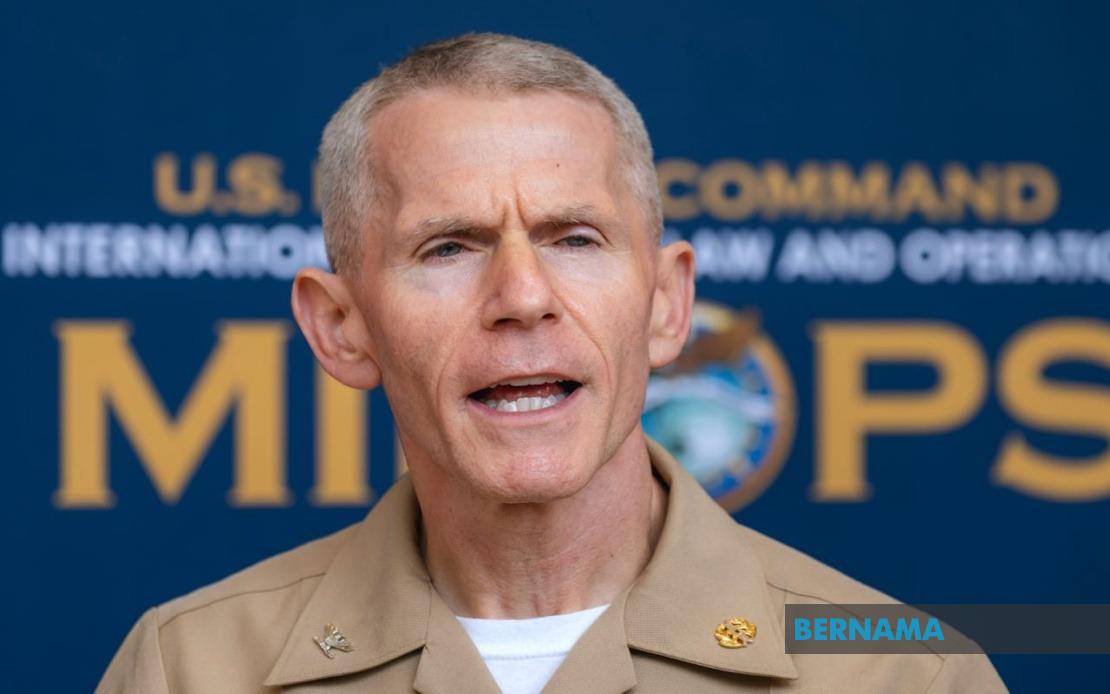
The United States Pacific Command has declared its intention to sustain a robust operational presence across the South China Sea as part of a comprehensive strategy aimed at upholding security and fostering stability throughout the broader Indo-Pacific region. This commitment, articulated at a major military law conference in Kuala Lumpur, underscores Washington's determination to back regional allies and partners in an increasingly complex geopolitical environment. The statement carries particular significance for Malaysia and other Southeast Asian nations navigating competing strategic interests in one of the world's most economically vital and geopolitically contested maritime zones.
Navy Captain Dustin Wallace, serving as USPACOM's Staff Judge Advocate, outlined the command's operational philosophy during remarks at the 37th International Military Law and Operations Conference. Wallace emphasised that maintaining security and stability in the South China Sea remains integral to USPACOM's broader Indo-Pacific mission. His comments reflected a wider recognition within American military circles that the region's stability directly influences global commerce, supply chain resilience, and the balance of power among major powers.
Central to USPACOM's approach is an unwavering commitment to international law, freedom of navigation, and freedom of commerce. Wallace characterised these principles not merely as abstract ideals but as foundational to protecting the sovereign equality and rights of all nations operating in the region. This framing matters significantly for Malaysia and its neighbours, as it positions international law as a counterbalance to unilateral assertions of control over disputed areas. The emphasis on these shared principles reflects an attempt to build consensus among regional states on rules-based conduct at sea.
A notable aspect of USPACOM's strategy involves its focus on deterring aggression and destabilising activities throughout the South China Sea and Indo-Pacific. Wallace's assertion that deterrence remains a core mission suggests the command views its continued presence as essential to preventing escalation. For Malaysian policymakers and security planners, this deterrent posture offers reassurance, though it also raises questions about the effectiveness of such approaches in managing rising tensions without inadvertently triggering confrontation.
Wallace's remarks on ASEAN merit particular attention for regional observers. He described the 10-member grouping as critical to regional peace and security, emphasising that USPACOM strongly supports ASEAN centrality. This statement represents a deliberate reaffirmation of American commitment to ASEAN-led mechanisms as the preferred framework for addressing regional challenges. Such support becomes increasingly important as ASEAN navigates pressure from larger powers seeking to marginalise the organisation in favour of bilateral or exclusive arrangements.
The command's pledge to tailor its engagement with individual ASEAN nations according to their respective sovereign interests marks a recognition of the bloc's internal diversity. Wallace explained that USPACOM intends to work with each ASEAN country by identifying and meeting their particular priorities rather than imposing a one-size-fits-all approach. This nuanced strategy acknowledges that Indonesia, Vietnam, Thailand, the Philippines, Malaysia, and other members hold differing perspectives on regional security challenges and the role external powers should play in addressing them.
The hosting of the 37th International Military Law and Operations Conference in Kuala Lumpur demonstrates the depth of defence cooperation between the United States and Malaysia. Conducted jointly by USPACOM, Malaysia's Defence Ministry, and the Malaysian Armed Forces, the conference assembled over 300 military leaders, national security lawyers, policymakers, and scholars from more than 30 countries, alongside representatives from international organisations. This gathering represents one of the region's premier forums for dialogue on security and legal governance.
The conference theme, "From the Seabed to Space: Advancing Security, Freedom, and Prosperity for All Across the Indo-Pacific," reflects the expanding scope of regional security concerns. The inclusion of maritime and space domains acknowledges that modern security challenges extend beyond traditional naval operations to encompass undersea infrastructure, satellite communications, and emerging domains. For Malaysia, which depends heavily on undersea cables and faces vulnerabilities in critical infrastructure, this comprehensive approach has direct relevance.
The gathering served as a platform to reinforce commitment to the rule of law and the sovereign equality of nations. These recurring themes highlight an attempt to establish legal and normative frameworks that can constrain great power competition and protect smaller states' interests. For Malaysia and its neighbours, engagement in such conferences provides opportunities to shape international discourse on acceptable behaviour and to build coalitions around shared principles.
Underlying USPACOM's statements is a strategic calculation that American engagement in the region serves both regional stability and broader American interests. The command's emphasis on strengthening existing partnerships and forging new relationships reflects a recognition that sustained regional support requires demonstrable commitment to partners' priorities. For Malaysia, this approach suggests that while the United States seeks expanded military engagement and operational cooperation, it remains responsive to Malaysian national interests and preferences.
The security environment in and around the South China Sea continues to evolve, with rising concerns about maritime incidents, competing territorial claims, and the military modernisation of major powers. USPACOM's renewed commitment to presence and deterrence must be understood within this context. The command's focus on international law and freedom of navigation attempts to establish parameters for acceptable state behaviour, though the effectiveness of such approaches in preventing escalation remains contested among regional security analysts.
For Malaysia and broader Southeast Asia, the significance of USPACOM's statements lies not solely in military commitments but in the broader framework they propose for regional relations. By emphasising ASEAN centrality, respect for sovereignty, and rule of law, American officials signal an alternative vision to some proposed arrangements that might marginalise ASEAN institutions. However, questions persist about how such statements translate into concrete policies during moments of actual regional tension or crisis.
Moving forward, the extent to which USPACOM can balance its multiple objectives—deterring aggression, supporting allies, respecting ASEAN centrality, and maintaining freedom of navigation—will likely determine whether American engagement contributes to stability or inadvertently heightens tensions. Malaysian policymakers will need to carefully evaluate how expanded American military presence aligns with Malaysian strategic autonomy and long-term national interests in an increasingly multipolar region.

