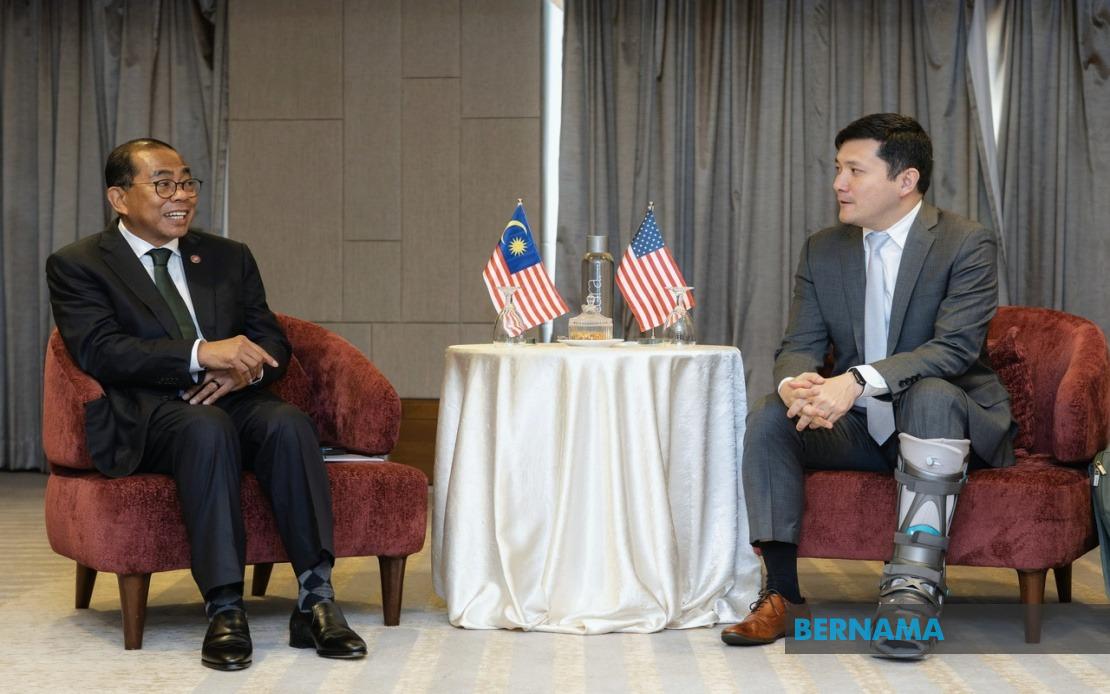
The United States remains firmly committed to deepening its defence partnership with Malaysia, according to Defence Minister Datuk Seri Mohamed Khaled Nordin, who received a courtesy call from US Ambassador to ASEAN Kevin Kim during high-level discussions in Kuala Lumpur. The meeting, held on August 3 during the 37th Annual Military Law and Operations Conference (MILOPS), underscored Washington's strategic interest in maintaining robust bilateral and multilateral security arrangements across Southeast Asia at a time of shifting regional dynamics and growing geopolitical competition.
The exchange between Mohamed Khaled and Kim focused primarily on sustaining and elevating existing defence mechanisms rather than introducing new policy directions or commitments. This measured approach reflects the mature nature of US-Malaysia defence relations, which has evolved considerably since the Cold War era and now encompasses multiple layers of cooperation spanning intelligence-sharing, training exercises, and capacity-building initiatives. The emphasis on continuity rather than dramatic departures suggests both nations are content with the current trajectory of their security partnership, even as they seek incremental improvements in specific operational areas.
Beyond the US engagement, Mohamed Khaled's schedule during the MILOPS conference included separate courtesy calls from other regional security heavyweights, demonstrating Malaysia's central role in shaping the defence architecture of Southeast Asia. His meeting with ASEAN Secretary-General Dr Kao Kim Hourn allowed both officials to discuss the multifaceted challenges confronting the regional bloc, from maritime security concerns to emerging non-traditional threats such as cybercrime and pandemic preparedness. The defence sector's contribution to upholding ASEAN Centrality—the principle that the Association of Southeast Asian Nations should remain the driving force for regional diplomacy and security cooperation—emerged as a key theme in their conversations.
The discussion with Kao also highlighted the defence sector's instrumental role in maintaining regional peace, stability, and economic prosperity. This framing is particularly significant for Malaysia and other ASEAN members that depend heavily on unimpeded maritime trade and freedom of navigation through critical sea lanes. The consensus that defence cooperation strengthens ASEAN unity reflects a subtle but important acknowledgment that security matters increasingly dominate the regional agenda, sometimes overshadowing economic and social cooperation initiatives that traditionally defined ASEAN's mission.
Singapore's newly appointed Permanent Secretary for Defence, Joseph Leong, separately conveyed his nation's determination to enhance cooperation with Malaysia across bilateral, multilateral ASEAN, and Five Power Defence Arrangements (FPDA) frameworks. This tiered approach to security engagement reflects the complex architecture of defence partnerships in Southeast Asia, where bilateral relationships exist alongside broader multilateral mechanisms designed to manage shared regional challenges. Singapore's emphasis on continuity despite a change in leadership suggests institutional stability in its defence policies and a long-term strategic orientation toward deepening ties with key regional partners.
The FPDA, which also includes Australia, New Zealand, and the United Kingdom, remains a cornerstone of regional stability mechanisms that predate ASEAN itself. Malaysia's participation in this arrangement, alongside its ASEAN commitments, places the country in a unique position as a bridge between Southeast Asian regionalism and broader Indo-Pacific security architecture. The FPDA's enduring relevance in an era marked by great power competition demonstrates that traditional alliance structures continue to shape Southeast Asian security calculations, despite the region's efforts to maintain strategic autonomy and non-alignment principles.
The 37th MILOPS Annual Conference, which runs through August 6, brought together government and military representatives from over 30 nations to deliberate on pressing regional security challenges and foster cooperation in military legal frameworks and operational protocols. The conference's scale and composition underscore the interconnected nature of modern security challenges, which increasingly transcend national borders and require coordinated international responses. Participation from diverse nations reflects recognition that regional stability depends not merely on bilateral relationships but on multilayered cooperative mechanisms that can adapt to emerging threats.
For Malaysia, hosting this high-level security gathering carries symbolic weight as a demonstration of the country's diplomatic weight and its capacity to convene important regional and international discussions. The conference also provides opportunities for Malaysian defence officials to showcase the nation's military modernisation efforts and strategic thinking on contemporary security matters. Beyond ceremonial value, the MILOPS platform allows Malaysia to network with defence counterparts from developed and developing nations, potentially opening avenues for future defence cooperation, technology transfer, and professional military exchanges.
The emphasis across these interactions on defence sector contributions to broader regional goals reflects an evolving understanding of security that extends beyond traditional military considerations to encompass economic development, environmental protection, and human security concerns. This holistic approach aligns with Malaysia's own defence and foreign policy narratives, which have increasingly incorporated non-traditional security dimensions alongside conventional military capabilities. The defence establishment's role in supporting ASEAN's overarching objectives suggests that regional security organisations are adapting to address challenges that transcend purely military domains.
For Malaysia and other Southeast Asian nations navigating relationships with major powers including the United States, China, and others, maintaining balanced partnerships across multiple forums and formats remains strategically essential. The US reaffirmation of commitment to defence cooperation provides reassurance about Washington's long-term strategic interest in Southeast Asia at a moment when regional nations are carefully calibrating their relationships amid broader geopolitical realignment. Simultaneously, Malaysia's engagement with ASEAN mechanisms and multilateral arrangements like the FPDA demonstrates the country's commitment to diverse security partnerships that serve different strategic purposes and address distinct regional challenges.

