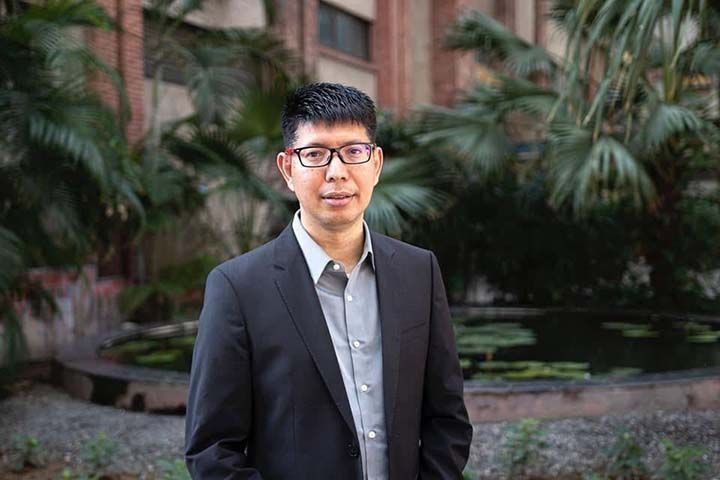
An American scholar specialising in Myanmar affairs has been held in custody by Chinese authorities since early June, prompting calls for his release from both the research institute he founded and the United States government. Min Zin, who serves as executive director of the Institute for Strategy and Policy (ISP) - Myanmar, was apprehended in Kunming while travelling to participate in an academic workshop, according to a statement released by his think tank on Wednesday. China's foreign ministry had previously confirmed the detention, alleging that Min Zin was suspected of engaging in espionage and threatening national security—charges that both his organisation and American officials have flatly rejected as baseless.
The circumstances surrounding Min Zin's arrest reveal the growing tensions between international academic and policy research communities and Beijing's increasingly stringent security apparatus. His detention appears particularly significant given the timing, occurring merely weeks before Myanmar's military ruler Min Aung Hlaing undertook a scheduled state visit to China. The arrest underscores how academic freedom and scholarly exchange have become contested terrain in US-China relations, particularly when research touches on sensitive geopolitical issues affecting Beijing's strategic interests.
The Institute for Strategy and Policy has issued an emphatic statement condemning what it characterises as groundless allegations against its detained director. The think tank explicitly reaffirmed Min Zin's purpose for travelling to Kunming was purely academic in nature—to attend a workshop focused on scholarly exchange and dialogue. This defence reflects the think tank's broader mission of conducting rigorous research on Myanmar's political dynamics, economic challenges, and international relations without external pressure or intimidation. The institute's statement constitutes both a personal plea for Min Zin's release and a principled assertion about the fundamental necessity for research organisations to operate freely.
Washington has also intervened diplomatically, with a spokesperson for the US State Department rejecting China's espionage accusations outright. The State Department confirmed that American consular officers have been granted access to Min Zin since his detention, allowing them to verify his condition and provide appropriate support. The department indicated ongoing engagement with Chinese officials to secure Min Zin's release, positioning his case within broader US-China diplomatic channels. This consular involvement represents standard practice for American citizens detained abroad, though it also signals official US concern about the justification for his arrest.
China's foreign ministry has maintained its position that Min Zin engaged in espionage activities and that authorities will proceed with the case according to Chinese law. This response, coupled with the initial arrest, reflects Beijing's determination to enforce its national security framework regardless of international pressure or characterisations of the detained individual's legitimate academic purposes. The stance demonstrates how national security legislation in China continues to cast an expansive net over activities that democratic countries typically classify as protected academic and intellectual endeavour.
Min Zin's background as both a scholar and pro-democracy activist adds contextual weight to his detention and the international response it has generated. A veteran of Myanmar's 1988 democracy movement, he later pursued formal academic training in political science at the University of California, Berkeley, establishing credentials in rigorous scholarly analysis. Following Myanmar's military coup in February 2021, when the junta ousted the elected government led by Aung San Suu Kyi, Min Zin and his colleagues relocated the Institute for Strategy and Policy overseas to continue their work unimpeded by military restrictions. This institutional migration reflects how Myanmar's political upheaval has scattered civil society and research communities across the region and globally.
The Institute for Strategy and Policy has cultivated expertise on some of Southeast Asia's most consequential issues during an exceptionally volatile period. The think tank's research agenda encompasses the armed conflict currently devastating Myanmar, the country's economic deterioration, political transitions, and crucially, Myanmar's complex bilateral relationship with China. As China emerges as the military junta's most significant foreign patron, understanding this relationship becomes essential for comprehending Myanmar's trajectory. The ISP's scholarly focus on these interconnections may partly explain why Beijing views the institution and its leadership with suspicion.
Myanmar's military has maintained extensive reliance on Chinese economic and military support since the 2021 coup, making China arguably the junta's most indispensable external ally. In the months following the coup, nationwide protests evolved into an armed uprising, with newly formed pro-democracy militia groups joining established ethnic armed organisations in confronting the military across multiple theatres. China's unwavering support for the junta throughout this period has frustrated democratic movements and international observers concerned about Myanmar's trajectory. Research institutions documenting and analysing this relationship serve as important sources of public information and policy analysis.
The detention raises pressing questions about the boundaries of permissible academic activity in an era of tightening national security frameworks globally. While China justifies security investigations through legitimate concerns about espionage, Western governments and civil society organisations argue that such broad applications of national security law effectively criminalise ordinary scholarship. This fundamental disagreement reflects divergent philosophies about academic freedom, state security, and the role of international research networks in the digital age.
The case highlights the particular vulnerability of scholars studying China's relationships with its neighbours, especially when those relationships involve military engagement or geopolitical competition. Researchers examining Myanmar's dependence on Chinese military aid, weapons, and diplomatic support navigate an inherently sensitive terrain where their findings may be construed as undermining Chinese interests. For academics based in democratic countries, detention for allegedly engaging in such work represents a significant deterrent to forthright scholarship on China's regional activities.
Min Zin's situation also illuminates broader dynamics affecting civil society organisations and independent research institutions throughout Southeast Asia. As Myanmar's junta consolidates power and seeks international legitimacy through engagements with China and other partners, independent analysis of government performance and regional dynamics becomes increasingly difficult. The relocation of the ISP overseas reflects a pattern whereby Myanmar's political instability has forced progressive organisations and scholars into diaspora communities, diminishing local capacity for independent research and public intellectualism within the country itself.
The international response to Min Zin's detention will likely influence how other researchers assess the risks of studying China-Myanmar relations or other geopolitically sensitive topics in the region. Should his case result in extended detention or conviction based on the current espionage allegations, it may discourage other Western-based scholars from conducting fieldwork in China or travelling to the region for academic purposes. Conversely, sustained diplomatic pressure for his release might establish some protective precedent for academic researchers engaged in legitimate scholarly exchange.
As this situation develops, it exemplifies the broader challenge confronting the international academic community in an era of rising nationalism and increasingly expansive national security doctrines. The Institute for Strategy and Policy's insistence that research organisations must operate without intimidation reflects core principles of academic integrity that transcend borders, yet its application remains contested across jurisdictions with divergent political systems and security philosophies.

