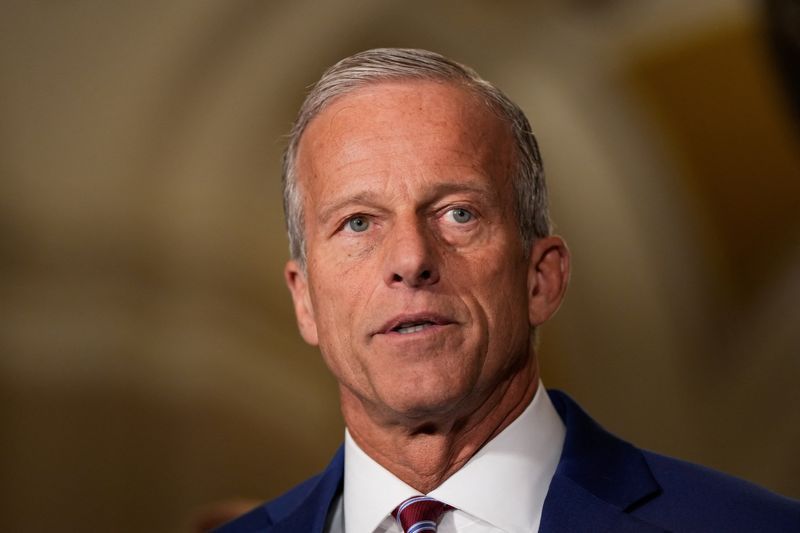
The US Senate took significant procedural steps on Saturday to propel comprehensive cryptocurrency legislation towards a floor vote, marking an intensified push by Republican leadership to reshape America's approach to digital asset regulation before the chamber breaks for its August recess. Senate Majority Leader John Thune filed motions early Saturday morning to schedule a critical procedural vote on the Clarity Act once lawmakers return in mid-September, signalling that Republican leadership believes passage remains within reach despite substantial Democratic opposition to the measure.
The Clarity Act represents the crypto industry's most ambitious attempt yet to secure legislative legitimacy through a sweeping federal framework that would define the regulatory status of digital tokens and establish clear jurisdictional boundaries among government agencies. Under the proposed legislation, digital assets would be classified either as securities or commodities, with respective regulators—the Securities and Exchange Commission or the Commodity Futures Trading Commission—holding defined authority. This delineation has eluded American policymakers for years, leaving the cryptocurrency sector operating in legal ambiguity that has hindered mainstream adoption and created compliance nightmares for legitimate businesses seeking to navigate multiple competing regulatory interpretations.
For the bill to clear the 60-vote threshold required under Senate rules, Republican lawmakers must secure support from at least eight Democratic senators while maintaining unity among their own voting members. This arithmetic presents a substantial challenge given Democratic scepticism toward crypto-friendly policies, though some senators from states with significant cryptocurrency mining operations or blockchain development communities may prove persuadable. The procedural filing by Thune represents a calculated gamble that negotiations over the bill's remaining contentious provisions might yet yield sufficient crossover support to advance the measure.
The Trump administration has made cryptocurrency reform a centrepiece of its second-term economic agenda, viewing digital asset regulation as essential infrastructure for maintaining American competitiveness in fintech innovation. The White House has actively lobbied Congress to advance the Clarity Act, recognizing that comprehensive federal oversight could paradoxically benefit established crypto firms capable of meeting stringent compliance requirements while raising barriers for unregulated competitors. This apparent contradiction—industry support for regulation that protects market leaders—reflects maturation within the crypto sector, where larger enterprises increasingly view clear rules as preferable to the current regulatory vacuum.
Trump's personal financial stakes in cryptocurrency markets have become impossible to overlook. The president reported earning more than $1.4 billion in income from his family's crypto ventures during the previous year, creating what critics characterise as an obvious conflict of interest in his administration's vigorous advocacy for crypto-friendly legislation. Democrats have seized on this relationship, arguing that government officials profiting directly from cryptocurrency should face stricter ethical guidelines before voting on bills affecting the sector. These concerns remain unresolved within ongoing negotiations, with Democratic negotiators insisting on additional restrictions governing officials' personal crypto holdings and transactions.
The crypto industry mobilised unprecedented financial resources to support candidates aligned with its regulatory objectives during the 2024 election cycle, investing more than $119 million in pro-crypto candidates hoping to advance both the Clarity Act and complementary stablecoin legislation. This investment reflected industry recognition that favourable regulatory treatment requires political power, and the willingness of crypto entrepreneurs to deploy capital decisively toward sympathetic lawmakers demonstrated the sector's maturation as a political force. The substantial spending underscores cryptocurrency's evolution from a fringe technology movement toward an established industry with conventional lobbying infrastructure and electoral influence.
Passage of the Clarity Act would represent a second major legislative victory for Trump on cryptocurrency matters, building on his signature of stablecoin legislation into law during his previous presidency. Stablecoins—digital tokens designed to maintain constant value by maintaining dollar backing—occupy a crucial position within cryptocurrency infrastructure, providing the liquidity mechanisms that enable broader crypto trading and settlement. By establishing separate regulatory frameworks for stablecoins and other digital assets, Congress would effectively legitimise crypto as a component of America's financial system rather than treating it as a speculative fringe activity subject to sporadic enforcement actions.
The banking sector has mobilised substantial opposition to the Clarity Act, particularly concerning language that could permit cryptocurrency companies to effectively compete with traditional banks by offering yield-bearing products on customer stablecoin holdings. Banks view these provisions as a potential threat to deposit funding, their traditional source of capital for lending operations. This conflict reveals an underlying tension within financial regulation: whether policymakers should protect incumbent institutions through regulatory barriers or enable competitive innovation that could serve consumer interests better. The Clarity Act appears positioned to favour innovation over incumbency protection, a significant philosophical shift in American financial regulation.
For Malaysian readers and Southeast Asian observers, the American Senate's deliberations carry considerable significance given the region's emerging role in global cryptocurrency markets and blockchain development. Several Southeast Asian nations, including Singapore and El Salvador's neighbours, have already adopted more permissive approaches to crypto regulation, viewing digital assets as opportunities for financial inclusion and technological leadership. American legislative action could either validate these jurisdictions' approaches or establish competing regulatory models that create fragmentation within global crypto markets. The Clarity Act's passage would represent a decisive signal that major developed economies are actively embracing digital asset integration rather than restricting crypto activity through regulatory hostility.
The bill's advancement also reflects broader American anxieties about technological competition with China and other nations that have pursued aggressive blockchain development strategies. Policymakers increasingly view cryptocurrency and blockchain technology as essential components of future financial infrastructure, making regulatory clarity a matter of national competitive interest rather than merely an accommodation to industry lobbying. This geopolitical dimension adds weight to Trump administration advocacy, positioning crypto regulation alongside artificial intelligence and semiconductor policy as critical arenas for maintaining American technological dominance.
Democratic negotiators continue pressing for amendments that would impose ethical constraints on government officials' crypto activities, suggesting that even if the Clarity Act passes, its final form may incorporate safeguards addressing conflict-of-interest concerns. These ongoing negotiations will likely dominate discussions when the Senate reconvenes in mid-September, with the procedural vote serving as a critical inflection point determining whether momentum favours passage or creates opportunities for filibustering tactics that could derail the bill entirely. The outcome will substantially shape American cryptocurrency regulation for years ahead.

