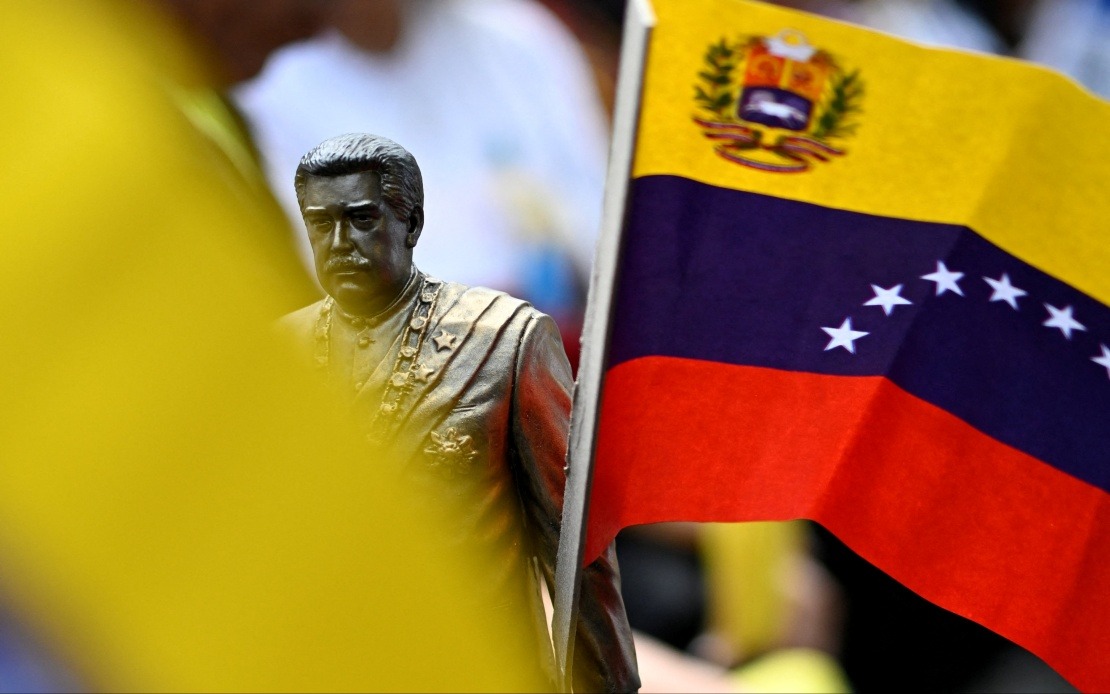
A United States federal judge has scheduled the trial of Venezuelan President Nicolas Maduro and his wife Cilia Flores to commence on June 1, 2027, following a brief hearing in Manhattan this week. The couple, who face allegations of drug trafficking and illegal weapons distribution, entered not guilty pleas during their appearance before Judge Alvin Hellerstein. The decision came after lawyers representing both the prosecution and defence jointly requested the trial date, with the hearing lasting approximately fifteen minutes.
The backdrop to this case involves extraordinary circumstances that have drawn condemnation from across the international community. In early January, US military forces executed what amounted to a large-scale military operation in Venezuela, during which Maduro and Flores were forcibly taken into custody and subsequently transported to New York. This marked their third appearance before the American court since their seizure, and the couple has remained detained at the Metropolitan Detention Centre in Brooklyn throughout the proceedings.
Maduro's legal team, led by attorney Barry Pollack, has signalled its intention to mount a significant challenge to the charges on grounds of sovereign immunity. Should this legal argument succeed, it could fundamentally undermine the prosecution's case and potentially result in dismissal of all charges. This preliminary battle over the court's jurisdiction may prove consequential, as it addresses a fundamental question about whether a sitting head of state can be prosecuted in foreign courts for actions allegedly taken in an official capacity.
For Malaysian observers and Southeast Asian policymakers, this case represents a troubling precedent. The military seizure of a foreign leader—regardless of one's views on that leader's governance—raises profound questions about the limits of unilateral state action and the relevance of international law in constraining powerful nations. The incident challenges the principle of non-interference in internal affairs that underpins the ASEAN Charter and has long been central to regional diplomatic practice.
The controversy has mobilized significant protest activity in the United States itself, with demonstrations gathering outside the Manhattan courthouse demanding Maduro's release. Participants expressed opposition to what they characterised as illegal military intervention and questioned the legitimacy of prosecuting a sovereign leader after what they termed a kidnapping rather than a lawful arrest. These protests reflect deeper anxieties within American civil society regarding executive power and military adventurism abroad.
Activists and political observers at the demonstrations articulated several interconnected arguments. Tom Burke of the Anti-War Action Network characterised the situation as a violation of international law, drawing parallels to robbery through force. He warned that such actions damage American credibility globally, suggesting that international observers increasingly distrust US government commitments to lawful conduct. This sentiment carries particular weight in developing nations and regions that have historically experienced military intervention by powerful actors.
Sara Flounders, a political commentator, marked Wednesday as the two-hundredth day since Maduro's abduction, emphasising the symbolic weight of this extended detention. Her remarks connected the Venezuelan situation to broader patterns of American military and political intervention, specifically invoking US operations affecting Iran and Cuba. This framing situates the Maduro case within a longer historical narrative of hemispheric power dynamics rather than treating it as an isolated incident.
The legal mechanisms through which American prosecutors are pursuing their case merit closer examination. The drug trafficking and weapons charges form the substantive basis of the prosecution, yet they unfold against the backdrop of the sovereignty immunity question that may determine whether proceedings continue. The trial date set for June 2027 offers more than eighteen months for preliminary legal battles, indicating that jurisdictional questions will likely consume substantial courtroom resources before any substantive criminal proceedings commence.
For Southeast Asian governments and observers, the implications extend beyond bilateral US-Venezuela relations. The case tests assumptions about international legal order and the circumstances under which military force can be deployed across borders. Whether framed as counternarcotics operations or regime change activities, the precedent established—or rejected—will influence how regional powers assess risks of extraterritorial enforcement actions. Countries hosting significant narcotics trafficking networks or whose leaders face US scrutiny must reckon with the possibility that traditional notions of diplomatic immunity and state sovereignty may not provide reliable protection.
The international response to Maduro's seizure and detention has been notably substantive, with widespread expressions of concern about the methods employed and questions raised regarding compliance with international law. This reaction suggests that even nations without particular affinity for the Venezuelan government have recognised the troubling implications of unilateral military action undertaken without clearly established legal frameworks. The consensus across diverse jurisdictions and political perspectives points toward discomfort with the precedent being set.
The extended timeline to trial—nearly four years from the initial seizure—creates a prolonged period of uncertainty and detention that itself raises humanitarian and legal concerns. International observers note that such extended pretrial detention in foreign custody represents an extraordinary deprivation for any defendant, let alone a sitting head of state. The lengthy wait for trial, even if it ultimately results in acquittal or dismissal on jurisdictional grounds, inflicts substantial personal consequences.
As this case progresses through the American legal system, it will likely generate further international commentary and diplomatic tensions. For Malaysia and other Southeast Asian nations committed to principles of non-alignment and respect for national sovereignty, the unfolding litigation offers instructive lessons about the limitations of international law and the persistent capacity of powerful states to override established protocols. The June 2027 trial date marks not a conclusion but merely a checkpoint in what promises to be a protracted legal and political struggle with ramifications extending far beyond the courtroom.

