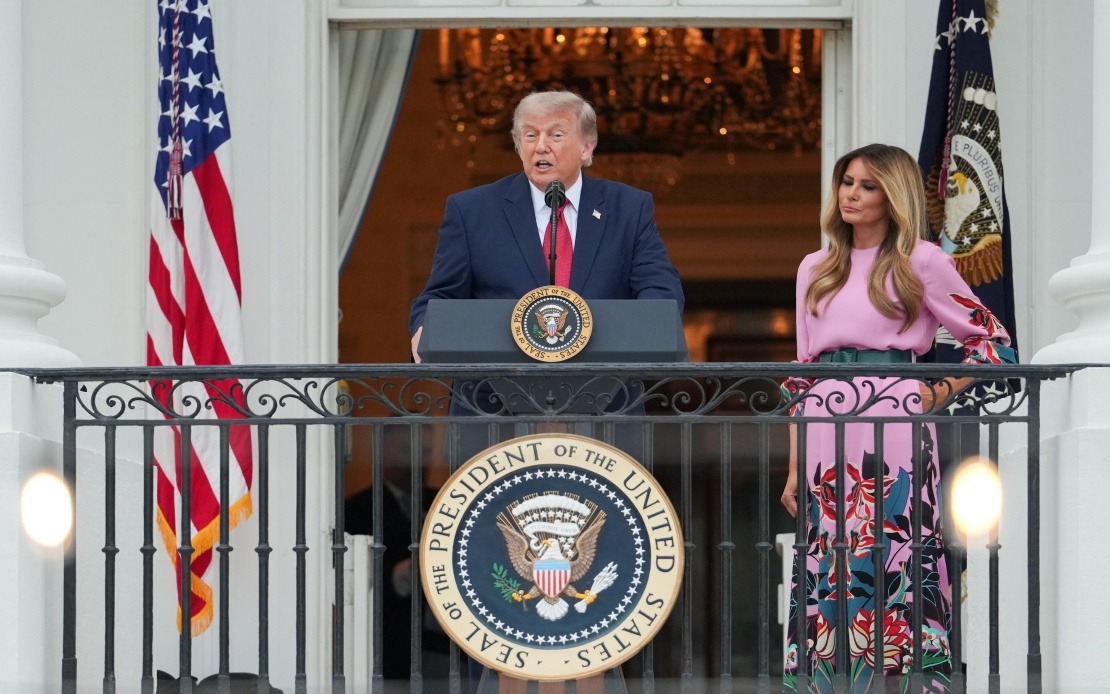
The United States Supreme Court has intervened in a years-long dispute over construction of a new ballroom at the White House, temporarily overturning a lower court's decision to halt the project. Chief Justice John Roberts issued a brief order on Friday suspending the previous ruling, effectively permitting work to continue on the grounds for now. The temporary stay will remain in effect until the Supreme Court makes a final determination on the merits of the case, keeping the project in a state of legal limbo even as construction activity resumes.
The ballroom initiative has become one of the most contentious architectural undertakings in recent White House history, generating a complex web of litigation that pits the Trump administration against heritage conservation advocates. The project, which commenced in 2025 on the site of the former East Wing, is expected to cost several hundred million dollars and represents a substantial expansion of the presidential residence's ceremonial capabilities. According to administration officials, the new facility will dramatically expand the capacity for state banquets and formal diplomatic functions, allowing the White House to host significantly larger gatherings than currently possible within existing structures.
Central to the controversy is the manner in which the project has proceeded without what conservationists argue was adequate congressional oversight or public consultation. An appeals court recently determined that Trump lacked the authority to initiate such a major construction project unilaterally, ruling that congressional approval was mandatory before work could continue. This decision represented a significant setback for the administration and prompted the emergency appeal to the Supreme Court, highlighting the constitutional tension between executive power and legislative prerogative over matters affecting national property and security.
Heritage preservation organizations have mounted sustained legal challenges against the ballroom, citing multiple concerns beyond purely architectural considerations. Critics have questioned the project's enormous financial burden during a period of budgetary constraints, objected to its substantial physical footprint on the historic complex, and expressed alarm at the apparent circumvention of traditional approval processes. The groups contend that such a transformative undertaking demands transparent deliberation involving Congress, heritage experts, and the public rather than proceeding through executive directive.
The Trump administration has consistently framed the ballroom as essential to national security, a justification that has become central to its legal arguments before the courts. Officials maintain that the new facility must incorporate advanced defensive capabilities, including ballistic protection and resistance to various forms of attack. During recent remarks, Trump emphasized that the structure would combine security imperatives with aesthetic excellence, describing it as simultaneously bulletproof, drone-proof, and resistant to missile strikes while maintaining visual elegance. This security rationale has provided the administration with powerful constitutional grounds to resist congressional interference, invoking executive authority over matters of national defence.
The Supreme Court's decision to stay the lower court's injunction represents a procedural victory but leaves fundamental questions unresolved. The court has not yet agreed to hear the full case on its merits, nor has it suggested what the outcome of such deliberation might be. By intervening to permit continued construction, the justices have effectively prioritized maintaining the status quo of ongoing work rather than preserving the lower court's halt. This approach is common when courts issue temporary stays, but it does signal that at least some members of the bench found the administration's arguments sufficiently compelling to warrant such action.
For Malaysia and the broader Southeast Asian region, this episode offers instructive lessons about constitutional governance and the balance between executive efficiency and institutional checks. The case illustrates how heritage conservation, budgetary accountability, and democratic process can come into tension with security requirements and executive prerogatives. Regional governments increasingly face similar pressures as they undertake major infrastructure projects: the desire to move swiftly and decisively conflicts with demands for transparency, environmental protection, and proper institutional authorization. The White House ballroom dispute demonstrates that even wealthy democracies struggle with these tensions.
The financial dimensions of the project carry particular relevance for developing economies managing limited resources. The commitment of hundreds of millions of dollars to enhance ceremonial capacity, no matter the security justifications offered, raises questions about budgetary priorities that resonate across jurisdictions grappling with public expenditure constraints. Malaysia and other Southeast Asian nations frequently confront similar choices between security infrastructure modernization and competing demands for education, healthcare, and economic development.
The legal odyssey surrounding this ballroom also underscores the power of judicial intervention in constraining executive action. The fact that heritage advocates successfully obtained a lower court ruling halting the project, even temporarily, demonstrates that courts can serve as meaningful checks on executive overreach. This principle matters throughout the region, where concerns about concentrated executive power remain significant. However, the Supreme Court's willingness to suspend that injunction equally demonstrates the limits of such judicial constraints, particularly when national security arguments are deployed.
Looking ahead, the Supreme Court's eventual decision on the merits could establish important precedent regarding the extent of presidential authority to undertake major White House modifications without explicit congressional consent. The outcome may influence how future administrations approach similarly contentious projects affecting historic federal properties. For Malaysian observers, the case illustrates how constitutional frameworks designed to distribute power among branches of government can function—and sometimes fail—in practice.
The temporary reprieve granted by the Supreme Court permits construction to continue, but the underlying dispute remains far from settled. Whether the justices will ultimately side with the Trump administration's security arguments or uphold the appellate court's insistence on congressional involvement remains unclear. What is certain is that this ballroom has already cost more in legal fees and institutional disruption than many public buildings, and the full accounting is not yet complete.

