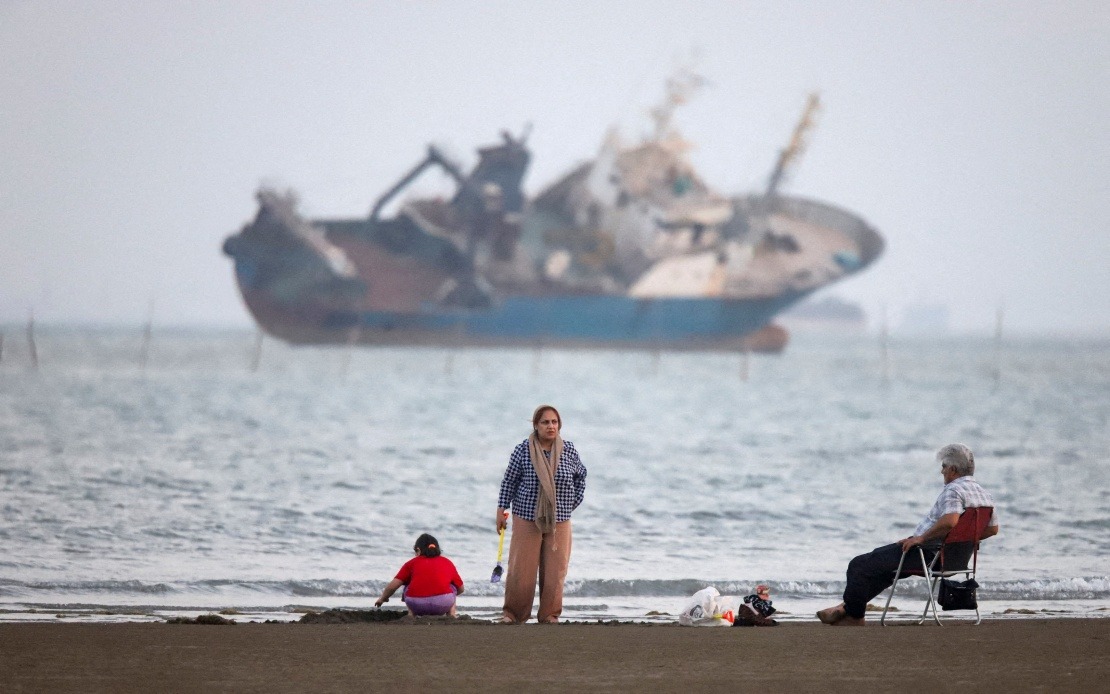
The United States has escalated pressure on Iran through a new round of financial sanctions, moving against a network of individuals and entities accused of channelling resources tied to Tehran's leadership and military apparatus. The action, announced Friday by the Treasury Department's Office of Foreign Assets Control, comes amid mounting tensions over maritime security in one of the world's most strategically vital waterways following Iranian attacks on three commercial vessels transiting the Strait of Hormuz.
OFAC designated Ali Ansari as a target of the sanctions regime, alleging his connections to Iran's Supreme Leader Mojtaba Khamenei and the Islamic Revolutionary Guard Corps, the country's most powerful military organisation. The designation extends beyond individuals to encompass an array of financial intermediaries that American authorities say operate covertly to circumvent existing international restrictions. The Treasury identified three exchange houses based in Iranian cities Tehran and Shiraz—the Mohammad Darbani and Partners Exchange, the Mohsen Khandan and Partners Exchange, and the Lavasani and Partners Exchange—as general partnership companies facilitating illicit financial flows. These entities were added to OFAC's Specially Designated Nationals List, a move that freezes any assets they hold within American jurisdiction and prohibits American citizens and companies from conducting business with them.
The enforcement action reflects Washington's strategy of targeting shadow banking networks that facilitate cross-border transactions while evading international oversight. Such exchange houses, operating across the Middle East and beyond, have long attracted scrutiny from Western financial regulators who argue they enable sanctions evasion and fund-raising for designated entities. Smart Global Limited, a holding company registered in the Caribbean jurisdiction of Saint Kitts and Nevis, was similarly designated for alleged links to Ansari, demonstrating how sanctions authorities increasingly pursue offshore corporate structures that they contend serve as vehicles for concealing beneficial ownership and true sources of capital.
For Malaysian readers and broader Southeast Asian observers, these sanctions carry particular relevance given the region's deep dependence on stable maritime commerce. The Strait of Hormuz, through which roughly one-third of global seaborne traded oil passes, remains a critical chokepoint for energy supplies reaching Asian markets. Malaysia itself, as a major maritime trading nation and a country whose eastern shipping lanes connect to Indian Ocean routes, faces potential disruption from any escalation of hostilities in the region. The attacks on commercial shipping directly threaten the flow of crude oil to refineries across Asia, with downstream implications for fuel prices and energy security.
The Iranian government swiftly rejected the American action, with Foreign Minister Seyed Abbas Araghchi issuing a statement on social media platform X challenging the legal and diplomatic basis for the sanctions. Araghchi specifically referenced paragraph nine of what he termed a memorandum of understanding, asserting that Iran has adhered to its commitments while accusing the United States Treasury Secretary of violations. His statement underscores the ongoing dispute over the interpretation and implementation of international agreements, particularly those related to Iran's nuclear programme and subsequent sanctions relief arrangements.
The dispute centres on competing narratives regarding compliance obligations. The Iranian foreign minister's assertion that "there can only be mutual compliance" signals Tehran's view that unilateral American action, particularly after previous agreements, undermines trust and incentivises further escalation. This framing reflects broader patterns in US-Iran relations, where each side accuses the other of bad faith, creating a cycle of tit-for-tat measures that further entrench mistrust and reduce diplomatic off-ramps. The recent maritime attacks and subsequent American response exemplify how tactical military actions and financial sanctions reinforce each other, raising the costs of de-escalation for both sides.
For regional powers including Malaysia, which maintains commercial ties with both the United States and Iran, these deepening tensions create a complex diplomatic environment. ASEAN nations have historically sought to maintain balanced relationships with major powers while minimising involvement in their disputes. However, threats to maritime security and potential disruptions to energy supplies force Southeast Asian governments to take positions indirectly through their engagement with international forums and their willingness to enforce international sanctions regimes.
The expansion of American sanctions targeting shadow financial networks reflects evolving enforcement priorities. Rather than solely targeting military or nuclear entities, Washington increasingly focuses on the financial infrastructure that enables sanctions evasion. This approach acknowledges that comprehensive sanctions regimes depend not merely on naming and shaming but on dismantling the networks through which targeted entities access international financial systems. The inclusion of exchange houses and offshore corporate vehicles suggests that American authorities believe they have identified significant vulnerabilities in Iran's efforts to sustain international commerce despite existing restrictions.
The broader context involves the fragility of maritime commerce amid regional militarisation. Commercial shipping companies operating tankers and bulk carriers have become unwilling participants in broader geopolitical contests, facing insurance premium increases and navigational risks. Their losses and operational difficulties, while less visible than headline-grabbing sanctions announcements, accumulate into meaningful economic costs that ripple across supply chains globally and throughout Asia-Pacific trade networks.
Moving forward, the trajectory of US-Iran tensions remains uncertain. The sanctions announcement signals American determination to maintain pressure despite Tehran's claims of compliance with prior agreements. Whether further escalation or diplomatic repositioning follows depends on multiple variables including domestic political considerations within both countries, the response of regional actors, and the capacity of international mediators to create space for negotiation. For Southeast Asia, monitoring these dynamics and their implications for maritime security and energy markets remains essential to regional stability and prosperity.

