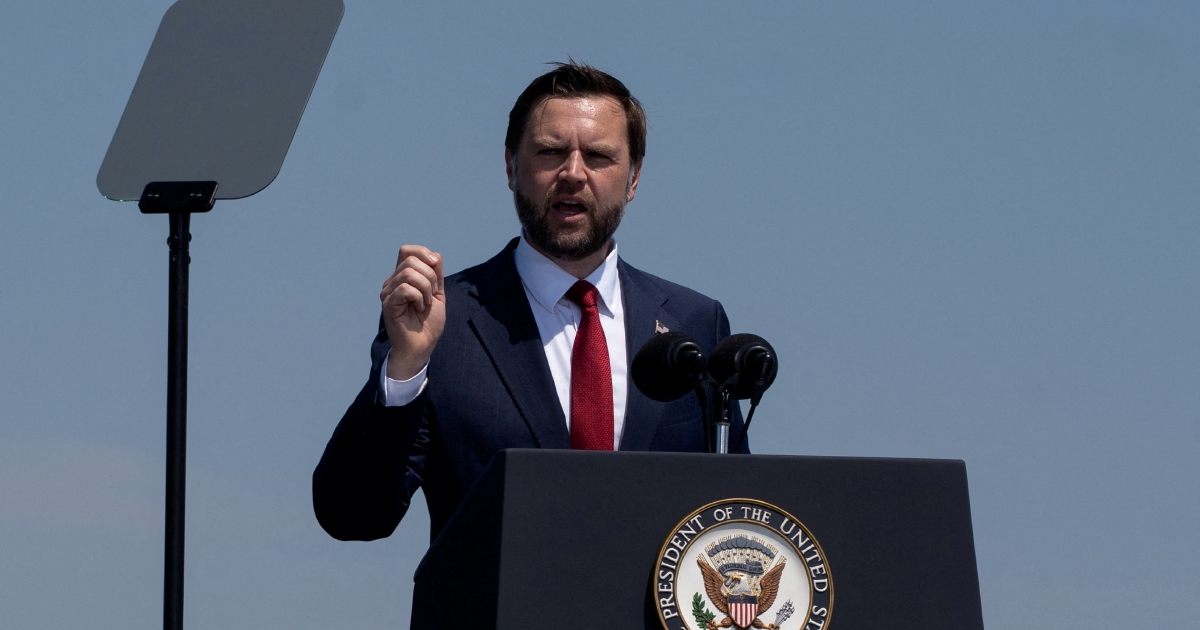
US Vice President JD Vance has delivered a pointed critique of Britain's political establishment, asserting that the country has suffered under failing leadership and requires substantial institutional reform to restore public trust. Speaking during a visit to London, Vance characterised the state of British governance as a consequence of prolonged mismanagement by successive administrations, signalling that the incoming prime minister bears significant responsibility for delivering the sweeping changes voters have demanded.
The remarks reflect growing American political interest in British electoral outcomes and represent a notable intervention by the incoming Trump administration into domestic British politics. Vance's comments come amid broader transatlantic alignment on populist themes and criticism of establishment governance structures, positioning the United States alongside reform-minded movements across Western democracies. The timing of his statement suggests the incoming administration intends to maintain close engagement with Britain's political trajectory, particularly as fresh leadership takes office.
Britain has endured sustained political instability in recent years, marked by frequent changes in executive leadership and contentious domestic disputes. The cumulative effect of Brexit negotiations, inflation, industrial action, and public service challenges has eroded confidence in parliamentary institutions and left voters disillusioned with traditional political approaches. Vance's assessment acknowledges this widespread discontent and frames the forthcoming premiership as a critical moment for reversing what many observers characterise as institutional decline and loss of national direction.
For Southeast Asian observers, Vance's critique carries implications beyond British shores. The United States' willingness to comment publicly on Britain's governance challenges reflects a broader strategic calculus about influence and alignment within Western democracies. Malaysia and neighbouring countries maintain significant diplomatic and economic relationships with both Britain and the United States, and shifts in transatlantic relations inevitably affect regional dynamics, particularly regarding trade frameworks, defence arrangements, and multilateral institutions where British and American positions carry considerable weight.
Vance's emphasis on structural change aligns with the incoming Trump administration's stated intention to pursue transformative approaches to governance across allied nations. This philosophy diverges substantially from the institutionalism that characterised previous American administrations, potentially signalling readiness to support unconventional political movements and leaders who present themselves as agents of radical change. For Malaysia, such positioning warrants careful attention, as American diplomatic postures toward reform movements and institutional disruption may influence how Washington engages with governments throughout the Asia-Pacific region.
The structural reforms Vance implicitly referenced encompass multiple domains of British public life. These include persistent economic underperformance relative to peer economies, difficulties recruiting and retaining skilled workers across healthcare and public services, deteriorating infrastructure investment, and political dysfunction that has prevented coherent long-term planning. Additionally, Britain faces profound questions about its post-Brexit international role and strategic positioning, challenges that demand comprehensive rethinking rather than incremental adjustments to existing frameworks.
Malaysia's experience with governance reform efforts offers comparative perspective on the difficulties inherent in delivering structural change across entrenched bureaucratic systems and established power structures. Successful institutional renovation requires sustained commitment beyond electoral cycles, sustained political consensus among competing factions, and careful management of disruption costs borne by vulnerable populations. Vance's confidence that a new British prime minister can accomplish such ambitious transformation reflects either underestimation of implementation complexity or conviction that British political culture retains sufficient coherence to execute major reforms successfully.
The incoming prime minister's capacity to satisfy voter demands for transformative change will likely depend heavily on global economic conditions, international security developments, and the ability to forge cross-party support for reforms that typically generate significant resistance from beneficiaries of existing arrangements. British political institutions possess considerable capacity for adaptation, yet decades of accumulated challenges suggest that piecemeal solutions will prove insufficient. Vance's remarks implicitly challenge the new government to abandon incremental approaches and pursue comprehensive institutional redesign.
For Malaysia and other Commonwealth nations, Britain's governance trajectory carries particular significance given historical institutional connections and ongoing policy coordination through multilateral forums. Should Britain successfully implement major structural reforms, such developments could encourage similar initiatives across Commonwealth countries struggling with comparable challenges. Conversely, if reform efforts falter or produce unintended consequences, the experience may inform Malaysian policymakers' assessments of institutional change risks and the importance of managing reform processes carefully to preserve essential functions while addressing legitimate demands for systemic improvement.
Vance's diplomatic intervention signals that the incoming American administration intends close engagement with Britain's political renewal process. This reflects both genuine strategic interest in British trajectory and the Trump administration's apparent comfort with direct commentary on allied governments' internal affairs. For regional observers, such willingness to shape allied governments' reform agendas warrants consideration of how shifting American diplomatic practices might influence international relations more broadly and what implications emerge for countries attempting to maintain strategic autonomy while managing relationships with powerful external actors whose political philosophies and governance approaches differ substantially from longstanding international norms.

