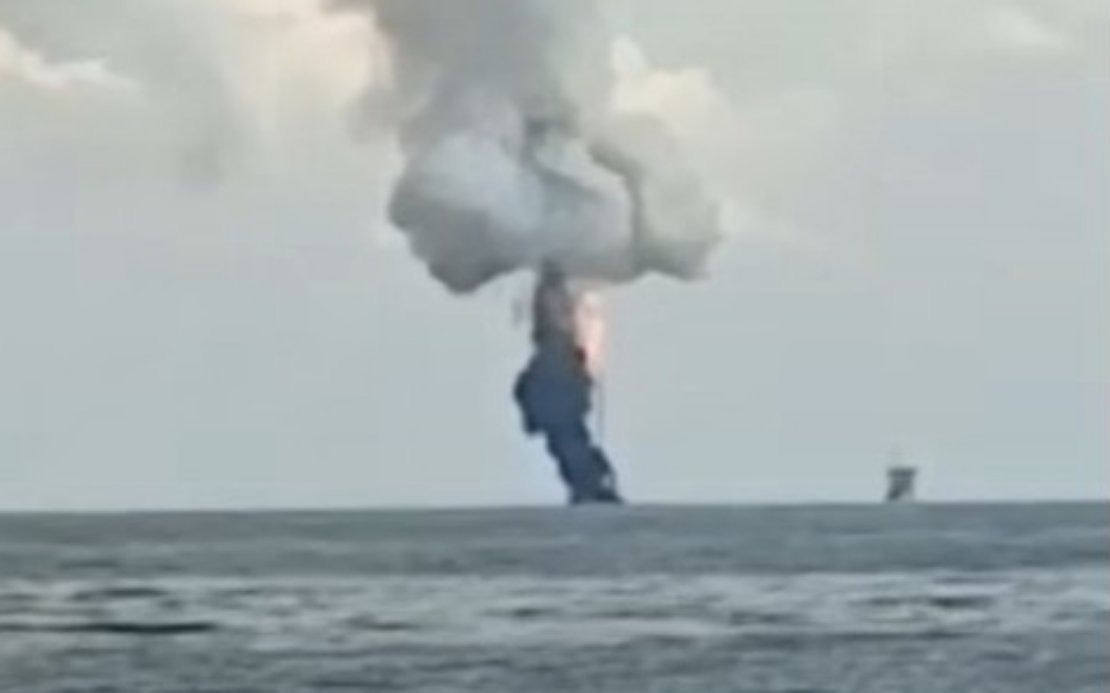
Petronas Carigali's subsidiary Vestigo Petroleum Sdn. Bhd. has officially confirmed a fire incident at its West Lutong Vent A (WLV-A) facility located offshore Sarawak, which occurred at approximately 2 pm on June 28. The company disclosed the incident through a formal statement issued today, providing initial details of the event that had already begun circulating on social media platforms.
The fire at the offshore installation has been successfully contained and brought under control, according to Vestigo's official account. The operator stated that investigations into the root cause of the incident remain ongoing, with technical teams working to determine exactly what triggered the fire. This investigation phase is critical for the oil and gas sector, as understanding causation helps prevent similar occurrences across the industry's operational footprint.
Vestigo emphasised its collaborative approach to managing the situation, noting that the company has been engaging actively with all relevant authorities throughout the response phase. The operator has implemented comprehensive precautionary measures designed to mitigate exposure risks and prevent any escalation of the incident. Such coordination between private operators and government agencies reflects established protocols in Malaysia's offshore petroleum sector, where safety frameworks involve multiple stakeholder oversight.
A significant aspect of the company's statement concerns personnel safety and environmental protection. Vestigo confirmed that the incident resulted in no injuries or harm to any personnel working at the facility. This outcome, while fortunate, underscores the importance of rigorous safety protocols and emergency response procedures that have become standard practice across Malaysia's offshore operations following decades of regulatory refinement and industry evolution.
The operator further asserted that the fire posed no immediate or residual threat to surrounding communities or the broader marine environment. This declaration carries weight given international scrutiny of offshore petroleum activities in Southeast Asia and growing environmental awareness among Malaysian stakeholders. The company's ability to contain the situation without environmental consequences reflects both the technical capabilities deployed and the geographic factors that may have aided containment efforts.
Vestigo's formal commitment to maintaining the safety of its workforce, protecting environmental integrity, and preserving operational reliability forms the cornerstone of its public messaging around the incident. These three pillars—personnel, environment, and operational continuity—represent the industry's response framework and align with Malaysia's regulatory expectations for offshore operators. Such commitments gain particular significance given Malaysia's position as a major regional oil and gas producer with substantial economic dependence on reliable hydrocarbon extraction.
The incident gained rapid visibility through social media channels, with video footage circulating online before official confirmation. This phenomenon reflects broader patterns in crisis communication where unverified or partial information spreads quickly across digital platforms, often preceding formal corporate and regulatory statements. The speed of Vestigo's official response appears calibrated to address public concern while providing factual clarity on the situation's status.
For Malaysian investors and regional stakeholders monitoring the offshore sector, incidents at major facilities carry implications beyond immediate operational concerns. The West Lutong field represents part of Sarawak's crucial petroleum infrastructure, with production from such installations contributing substantially to both Petronas revenues and state development funding. Any significant disruption therefore intersects with Malaysia's energy security and fiscal planning frameworks.
The incident also intersects with broader discussions about offshore safety standards and regulatory enforcement in Southeast Asian waters. Malaysia's petroleum regulator maintains detailed oversight of offshore operations, and incidents like this fire trigger formal investigative processes that ultimately inform industry practice and regulatory refinements. International operators and competitors monitor such events closely as indicators of operational excellence and risk management capabilities.
Vestigo's status as a Petronas subsidiary means the incident falls within frameworks governing Malaysia's national oil company's operations and strategic direction. Petronas has invested significantly in safety culture and operational excellence across its global portfolio, making swift containment and injury-free outcomes consistent with the company's broader operational philosophy and competitive positioning within global energy markets.
Looking forward, the investigation findings will likely be disseminated through Petronas's formal channels and may inform industry guidance or regulatory discussions. Such transparency, while commercially sensitive in some respects, builds confidence among stakeholders that Malaysia's petroleum sector maintains professional standards and learning mechanisms to continuously improve operational safety. For Malaysian industry participants and regional competitors, how this incident is managed and communicated carries implications for sector reputation and investor confidence in the broader operating environment.

