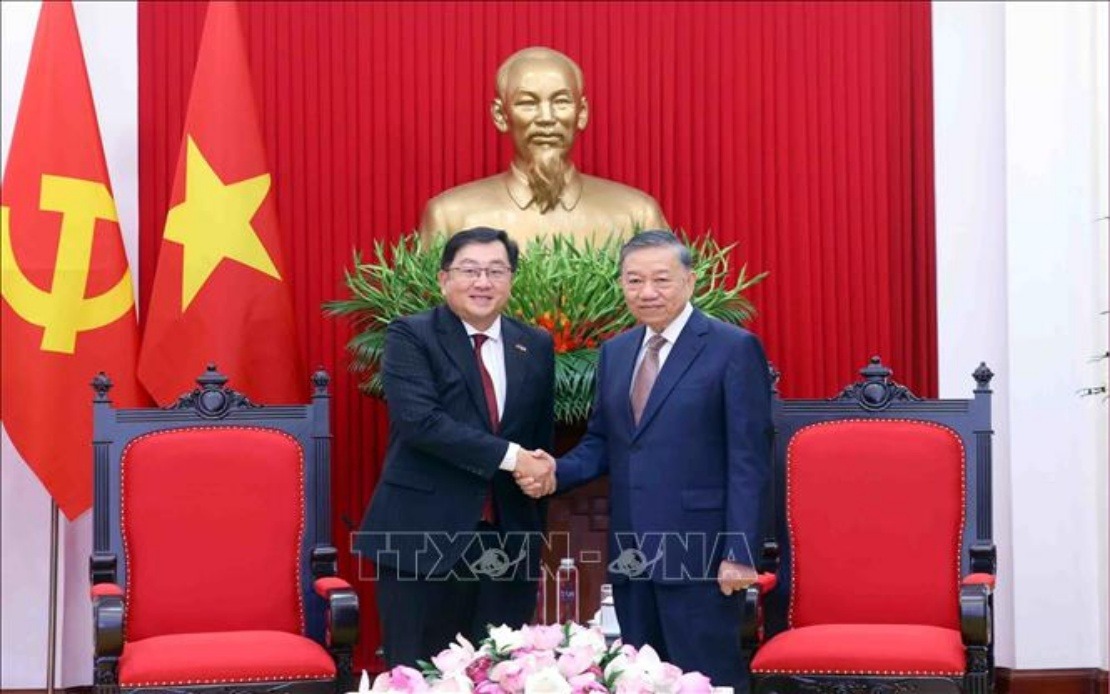
Vietnam and Malaysia are entering a more dynamic phase of bilateral engagement, Vietnamese President To Lam said this week, signalling deepened ties between the two Southeast Asian neighbours. During a meeting with outgoing Malaysian Ambassador to Vietnam Datuk Tan Yang Thai, the Vietnamese leader characterised the relationship as increasingly robust, built on foundations of mutual trust and expanding economic collaboration. This assessment reflects a broader shift in regional diplomacy, where Vietnam and Malaysia are positioning themselves as strategic anchors within ASEAN's evolving geopolitical landscape.
The timing of this diplomatic exchange carries significance for both nations. Ambassador Tan's departure marks the end of his tenure in Hanoi, a position that has witnessed substantial growth in bilateral engagement. In acknowledging the ambassador's contributions, President Lam extended warm regards to His Majesty Sultan Ibrahim, King of Malaysia, and Prime Minister Datuk Seri Anwar Ibrahim, while simultaneously extending invitations for high-level visits to Vietnam. Such gestures underscore the premium both governments place on sustained political contact and the cultivation of personal relationships among senior leaders—a hallmark of effective regional diplomacy.
Economic data provides concrete evidence of the partnership's momentum. Trade between the two countries reached US$10.8 billion during the first six months of 2026, representing a striking 40 per cent increase compared to the same period the previous year. This acceleration reflects not merely cyclical improvements but structural changes in how Vietnamese and Malaysian businesses interact. Malaysia's position as Vietnam's third-largest investor among ASEAN nations, and the tenth-largest globally among 154 countries investing in Vietnam, demonstrates the substantial capital flows underpinning this relationship. For Malaysian enterprises seeking growth opportunities, Vietnam's expanding middle class and manufacturing base continue to present compelling prospects.
Beyond raw trade statistics, both governments are identifying convergence in strategic priorities that promise to anchor cooperation for the medium term. Digital economy development, green energy transition, and enhanced electricity connectivity have emerged as shared objectives, reflecting how regional powers are responding to global economic shifts and climate imperatives. Energy security particularly resonates with Malaysia, a nation vulnerable to supply chain disruptions and carbon transition pressures. Vietnam's hydroelectric potential and emerging renewable energy sector align closely with Kuala Lumpur's own ambitious climate commitments, creating natural partnership opportunities.
Maraitime cooperation represents another critical dimension where Vietnam and Malaysia find common cause. Both nations possess significant coastlines and stakes in regional sea lanes; they confront similar challenges regarding maritime security, fisheries management, and infrastructure development. President Lam's emphasis on strengthening cooperation in maritime affairs suggests recognition that traditional security concerns—piracy, unauthorised fishing, and territorial disputes—remain active considerations even as the relationship flourishes. Enhanced defence and security exchanges, as proposed by the Vietnamese leader, would institutionalise cooperation mechanisms and reduce misunderstandings in this sensitive domain.
The Comprehensive Strategic Partnership framework referenced by President Lam provides the institutional architecture for deeper engagement. This formulation, adopted by many ASEAN pairs, signals commitment beyond routine diplomatic courtesies; it implies coordinated action across multiple governmental sectors and agencies. For Malaysian policymakers, the opportunity to intensify exchanges and implement high-level agreements offers tangible avenues for advancing national interests—from securing investment commitments to coordinating on regional stability initiatives.
Ambassador Tan's closing remarks encapsulated Malaysia's perspective on the bilateral relationship. His acknowledgment of Vietnam's development trajectory and expression of confidence in ASEAN's collective resilience reflect how individual nation-states are situating themselves within broader regional frameworks. The ambassador's emphasis on Malaysia's commitment to strengthening ties in the digital economy, green economy, and renewable energy mirrors President Lam's own priorities, indicating genuine alignment rather than merely polite diplomatic formulations. This convergence of stated objectives across both sides suggests substantive negotiations and project collaborations are likely to materialise.
The mutual invitations extended by both presidents—Lam inviting Malaysian leadership to Hanoi, and Tan conveying an invitation from the Malaysian King for Lam to visit Kuala Lumpur—carry practical significance beyond ceremonial value. Such visits typically occasion announcement of new bilateral agreements, investment pledges, and institutional arrangements. The scheduling of high-level visits often signals readiness to escalate the relationship to a new plateau, suggesting that both capitals view further deepening as strategically prudent.
For regional observers and Malaysian business interests, these developments carry several implications. First, Vietnam's political stability and continued economic reform create a stable environment for Malaysian investment and trade expansion. Second, the explicit emphasis on digital and green economy cooperation opens sectors where Malaysian expertise in financial services, sustainable technology, and digital infrastructure can command premium positioning. Third, deepening Vietnam-Malaysia relations contribute to ASEAN cohesion, which Malaysian policymakers consider essential for regional prosperity and security.
The relationship's trajectory also reflects subtle shifts in regional power dynamics. As China's economic dominance continues reshaping Southeast Asian calculations, Vietnam and Malaysia are reinforcing bilateral ties as a means of preserving agency and diversifying partnerships. Stronger Vietnam-Malaysia cooperation, particularly in areas touching on economic autonomy and energy security, represents a form of strategic hedging—maintaining partnerships that ensure neither nation becomes excessively dependent on any single external power.
Looking forward, the success of this deepening partnership will depend on translating rhetorical commitments into concrete outcomes. Doubling down on people-to-people exchanges, as both leaders emphasised, requires investment in visa facilitation, educational scholarships, and cultural programming. Meanwhile, the ambitious targets for trade, investment, and sectoral cooperation will demand follow-through from both governments' agencies and the private sector. Ambassador Tan's pledge to continue promoting bilateral ties from his next posting suggests Vietnam-Malaysia cooperation remains a priority for Malaysia's diplomatic establishment.
The increasingly dynamic character of Vietnam-Malaysia relations should be understood within ASEAN's broader context. As regional integration deepens and external pressures mount, bilateral relationships between member states serve as critical stabilising forces. Vietnam and Malaysia, positioned respectively as a rising manufacturing hub and a developed regional economy, bring complementary capacities to the partnership. Their success in deepening ties offers a constructive model for how ASEAN members can pursue individual national interests whilst reinforcing collective regional stability and prosperity.

