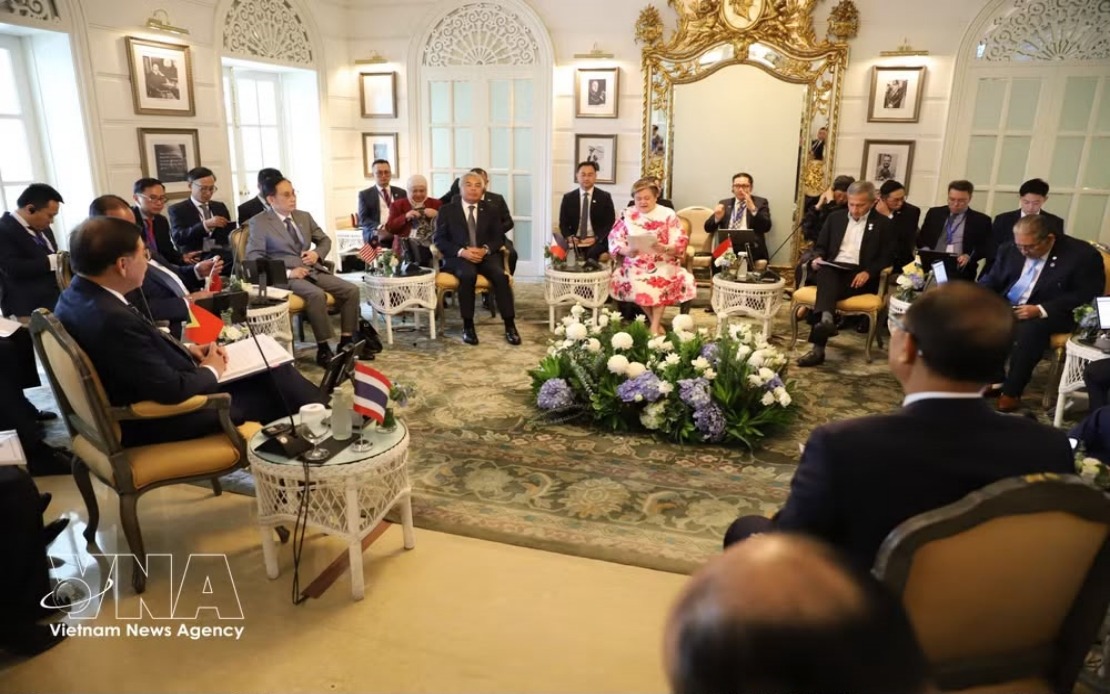
Vietnam's foreign minister has reaffirmed his country's dedication to coordinating with ASEAN member states to help Myanmar navigate its ongoing transition, signalling the bloc's determination to remain engaged with the junta-ruled nation through a structured diplomatic framework. Le Hoai Trung made the commitment at a high-level informal gathering of ASEAN foreign ministers and their Myanmar counterpart held in Bangkok on July 12, where representatives discussed concrete mechanisms to strengthen support for Naypyidaw as it works towards political stabilisation and economic revival.
The meeting represented a significant shift in ASEAN's engagement strategy, marking the highest-level direct interaction between the bloc's diplomatic corps and Myanmar's administration since the 2021 military coup. This development underscores the organisation's central role as a diplomatic conduit, particularly as it seeks to balance its principle of non-interference with growing pressure to exert constructive influence on a member state whose instability threatens regional security. The gathering was chaired by Maria Theresa P. Lazaro, the Philippine Secretary of Foreign Affairs, reflecting Manila's broader diplomatic leadership as it prepares to assume the ASEAN Chairmanship in 2026.
Trung's statement acknowledged the incremental progress Myanmar has recorded in recent months, citing improvements in political stability, economic recovery initiatives, governance reforms, and counter-transnational crime operations including drug enforcement and cybercrime prevention. These concrete steps, he suggested, demonstrate that Myanmar's authorities are responding to international concerns, even as the country remains under military rule. By publicly recognising these efforts, Vietnam has signalled that ASEAN members remain willing to engage constructively with Myanmar's current administration rather than adopt punitive isolation—a stance that reflects the bloc's pragmatic approach to regional crisis management.
Central to ASEAN's strategy is the Five-Point Consensus, a framework adopted by the bloc in 2021 to guide its response to Myanmar's political upheaval. Vietnam, as an emerging middle power within Southeast Asia, has positioned itself as a champion of this framework, viewing it as the most practical tool available to the region for maintaining dialogue without compromising ASEAN's stated commitment to democratic principles. Trung indicated that simply reaffirming the consensus is insufficient; instead, ASEAN must translate it into tangible actions, beginning with sustained direct engagement between bloc members and Myanmar officials to monitor developments and identify opportunities for meaningful progress.
The Vietnamese foreign minister outlined his country's specific priorities, emphasising support for Myanmar's economic recovery and social development while simultaneously addressing the transnational challenges—particularly drug trafficking and cybercrime—that destabilise both Myanmar and its neighbours. This dual approach reflects the interconnected nature of Myanmar's domestic crisis and its regional implications. Drug production, trafficking routes through the Golden Triangle, and cyber operations originating from ungoverned spaces in Myanmar pose direct threats to Malaysian, Thai, and Lao security. By supporting Myanmar's institutional capacity in these areas, Vietnam and other ASEAN members are indirectly addressing their own national security concerns.
Myanmars's Foreign Minister Tin Maung Swe presented a 100-day action plan aimed at promoting peace and reconciliation, signalling that the military administration is attempting to demonstrate commitment to long-term political transition. While scepticism remains justified given Myanmar's track record, the fact that ASEAN foreign ministers collectively took note of this initiative suggests the bloc is willing to engage with incremental progress rather than demand immediate, wholesale transformation. This calculated patience reflects the reality that pushing too hard risks pushing Myanmar—and its military leadership—further away from the negotiating table.
For Malaysia and other Southeast Asian nations, the outcome of ASEAN's engagement with Myanmar carries direct implications. Malaysia shares a land border with Myanmar and hosts a significant population of Myanmar migrants and refugees. Myanmar's instability has already contributed to refugee crises, irregular migration flows, and cross-border security challenges that directly affect Malaysian authorities. A successful ASEAN strategy that helps stabilise Myanmar and support inclusive political dialogue could alleviate some of these pressures. Conversely, if ASEAN's diplomatic efforts stall, Malaysia may face sustained irregular migration and heightened security vulnerabilities.
The meeting framework reflects ASEAN's adherence to its founding principle of non-interference, even as member states privately acknowledge the limits of strict neutrality when confronted with regional crises. By channelling support through the Five-Point Consensus and emphasising Myanmar-led solutions, ASEAN maintains its diplomatic credibility while creating space for constructive engagement. This balancing act is particularly delicate because Myanmar's military rulers are sensitive to perceptions of foreign pressure, yet neighbouring states increasingly view Myanmar's internal trajectory as a matter of regional concern.
Vietnam's proposal for expanded coordination among ASEAN members also reflects broader patterns of intra-bloc cooperation on challenging issues. Rather than allowing individual countries to pursue bilateral relationships with Myanmar, a coordinated approach through ASEAN's institutional machinery preserves unity and prevents member states from being played against one another. This collective approach also strengthens ASEAN's voice when engaging with major powers—China, India, and others—that maintain their own strategic interests in Myanmar.
The timing of this Bangkok meeting, aligned with directions from the 48th ASEAN Summit held earlier in Cebu, signals that ASEAN leadership remains committed to the Myanmar question despite competing regional challenges. Thailand's border stability, Cambodia's economic ties with Myanmar, Indonesia's broader strategic interests, and Vietnam's own concerns about China's influence in Myanmar all converge on the need for sustained ASEAN engagement. By maintaining dialogue and working toward concrete outcomes, the bloc hopes to prevent Myanmar from becoming a destabilising vacuum that external powers can exploit.
Looking ahead, Vietnam's pledge to work with ASEAN and the incoming Philippine Chair suggests that diplomatic momentum will continue through 2026 and beyond. However, the real test lies in translating rhetorical commitment into measurable progress on the ground in Myanmar—whether that means credible steps toward civilian governance, reconciliation with armed resistance groups, or improvements in humanitarian access and human rights. ASEAN's ability to help Myanmar navigate these challenges will determine not only the country's future but also the bloc's relevance as a mechanism for regional conflict resolution.

