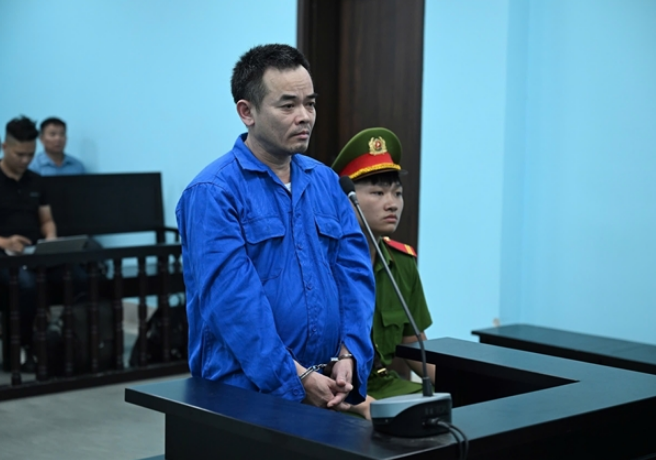
A court in Hanoi has handed down a 20-year prison sentence to a truck driver who deliberately drove over and dragged a teenage girl to her death, a verdict that highlights the tragic consequences of split-second decisions made in traffic emergencies across Southeast Asia. The Hanoi People's Court delivered its judgment on Tuesday, June 30, finding 52-year-old Dinh Van Long from Phu Tho province guilty of murder in the death of Nguyen Dao Ha A., a girl born in 2010 who lived in Phu Xuyen Commune. The case represents one of the region's most disturbing examples of how fear of financial ruin can lead drivers to compound initial accidents into fatal crimes.
The sequence of events began innocuously enough on a September morning when Long, employed since January 2024 by a construction materials company, was piloting a concrete mixer truck laden with approximately 14 tonnes of ready-mix concrete toward National Highway 1A. As his vehicle approached the Van Diem underpass in Phu Xuyen Commune around 9 a.m. on September 13, 2025, another truck appeared alongside his left flank whilst the teenager on an electric motorbike attempted to overtake from the right. The converging vehicles created a dangerous situation that spiralled into tragedy when the girl lost command of her motorcycle and tumbled directly into the path of Long's truck.
The initial impact was severe. The front right wheel of the concrete mixer ran over the girl's abdomen, creating the kind of catastrophic injury that would ordinarily demand immediate medical intervention to preserve life. Long reported hearing a loud sound and sensing the steering wheel shake beneath his hands. He applied the brakes, bringing his vehicle to rest several metres further along the road. At this juncture, he conducted a cursory check of his mirrors but failed to spot the victim beneath his truck. What happened next distinguished this case from a tragic accident and transformed it into an act of deliberate homicide.
Instead of immediately securing help or investigating the impact, Long made a calculated decision to continue driving. Prosecutors alleged that he consciously weighed his options in those terrible moments and concluded that allowing the girl to die would serve his financial interests better than leaving her alive. This reasoning was not speculation but rather statements Long made directly to investigators, revealing the callous logic that motivated his subsequent actions. The truck was still carrying its massive load, and as Long drove forward another 10 metres, he felt resistance and heard the grinding sound of tyres against something lodged beneath the vehicle. He pressed on regardless.
It took the intervention of bystanders to stop the nightmare. People nearby ran toward the truck, shouting warnings and gesturing frantically that an accident had occurred and that something was trapped underneath. Only then did Long halt his vehicle. When rescuers extracted the girl from beneath the concrete mixer, she was still breathing but had sustained catastrophic abdominal injuries that had accumulated during the 10-metre drag. She succumbed to her wounds while being transported to Bach Mai Hospital, one of Vietnam's premier medical facilities. Long subsequently abandoned the scene and presented himself to police later that evening, a decision that likely influenced judicial consideration of his culpability.
The financial dimensions of the case add another troubling layer to understanding driver behaviour in the region. During the investigation phase, Long's daughter voluntarily contributed VND 80 million in compensation to the victim's family, while his employer added a further VND 100 million. Despite these payments, the trial panel imposed an additional VND 182 million compensation order as part of Long's sentence. These figures underscore what Long may have been calculating in those fatal seconds, though the total compensation ultimately extracted far exceeded what might have been demanded had he simply reported the initial accident and cooperated with authorities.
The court's characterisation of Long's conduct as "particularly dangerous" reflected judicial understanding of the premeditated nature of his continued driving. Unlike an accident victim who panics or flees out of fear, Long had consciously chosen to prolong the victim's suffering to alter the legal and financial consequences for himself. The trial panel found that his actions demonstrated "direct intent" and a "violent nature" that had sparked widespread public revulsion across Vietnam. This framing positioned the case not merely as vehicular negligence but as a conscious choice to elevate an accident into murder through deliberate continuation of harmful conduct.
The verdict carries implications beyond Vietnam's borders, resonating across Southeast Asia where rapid motorisation and congested urban traffic create frequent opportunities for accidents. The case illustrates how financial anxieties about compensation claims and legal consequences can corrupt judgment in crisis moments, leading drivers to make catastrophic decisions. Malaysian roads, similarly congested and accident-prone, host thousands of drivers who face similar pressures and temptations when accidents occur. The severity of Long's sentence—two decades of imprisonment plus substantial financial restitution—serves as a cautionary benchmark for how regional courts treat deliberate perpetuation of fatal accidents.
The victim's family's pursuit of severe punishment reflected not merely grief but a determination that justice should encompass both criminal accountability and financial restoration for their losses. Beyond compensation for emergency treatment and funeral expenses, they sought recognition of the emotional devastation that ripples through families when children are killed through others' wilful conduct. This approach to justice, combining criminal and civil remedies, represents a common framework across Southeast Asian legal systems, though the intensity and duration of punishment varies significantly between jurisdictions.
The case also exposes vulnerabilities in traffic safety enforcement and driver behaviour across the region. Long's relatively recent employment—only eight months before the fatal incident—raises questions about whether adequate driver screening, training, and monitoring systems exist to identify individuals who pose risks under stress. The incident occurred in daylight hours on a major route, suggesting that neither traffic congestion nor weather provided cover for reckless driving. The straightforward facts of the case, combined with Long's own admissions to investigators, left little room for legal defence or mitigation.
For Malaysian readers, the Hanoi verdict underscores the importance of remaining calm and transparent during traffic incidents. The instinct to minimise consequences through flight or concealment, which apparently gripped Long following the initial impact, consistently produces worse outcomes than prompt disclosure and cooperation. Insurance systems, legal frameworks, and medical response protocols all depend on rapid, honest reporting of accidents. Drivers across Southeast Asia would benefit from understanding that the mathematical calculation Long attempted—trading the victim's life against personal financial liability—inevitably fails in court, where such conduct attracts penalties far exceeding those that would have applied to the original accident.
Looking forward, the case may influence how Vietnamese courts and other Southeast Asian judicial systems evaluate driver culpability in fatal traffic incidents. The explicit finding that Long deliberately chose to kill rather than accept compensation liability establishes precedent for treating continued driving over a known victim as distinct from negligent homicide. This distinction matters profoundly for sentencing, as it permits courts to impose lengthier terms reflecting the driver's conscious choice to cause death. As road traffic fatalities continue rising across the region, courts may increasingly apply similar reasoning to other cases where drivers flee scenes, fail to render aid, or deliberately drive further after realising they have struck someone.

