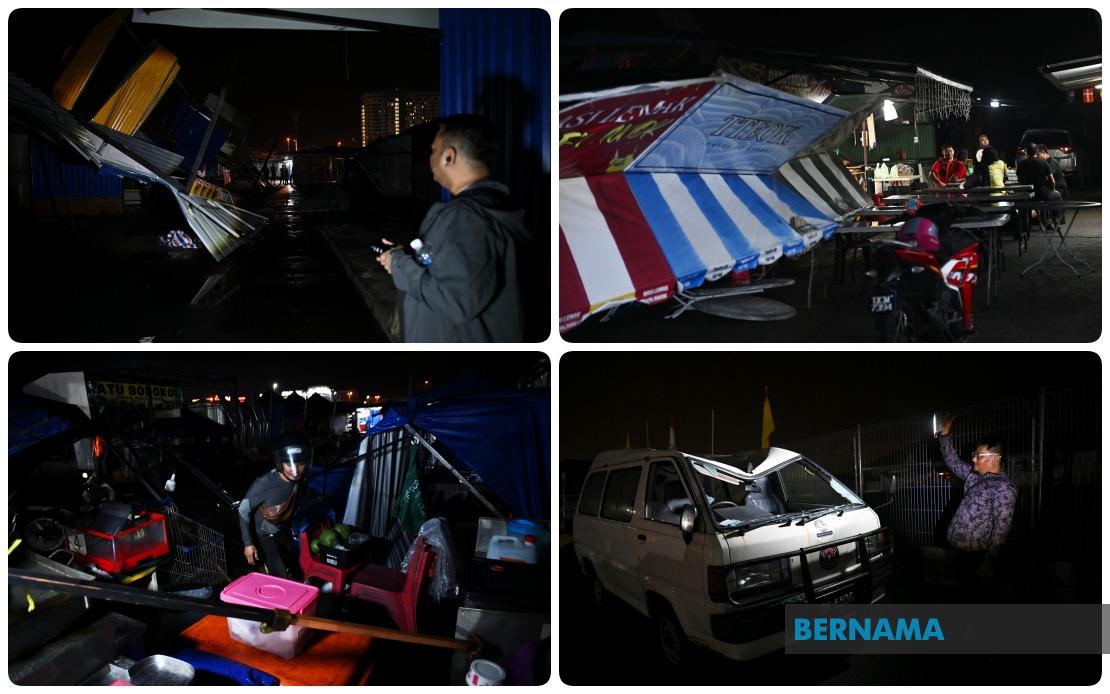
A powerful storm that swept through Kuching on the weekend caused significant damage to the N6 Metrocity 2 Youth Night Market, prompting authorities to shut down the popular trading venue. The tempest struck during peak business hours, catching hundreds of vendors and their customers off guard as heavy rain and violent winds tore through the site, destroying makeshift structures and forcing an emergency evacuation.
The incident stands as one of the most destructive weather events to hit the night market in its decade of operation. According to Hamzah Hassan, deputy chairman of the market's management, more than 40 of the approximately 300 active trader lots sustained severe damage to their canopies and equipment. The destruction extended beyond individual vendor stalls to critical shared infrastructure, including the main stage, management offices, and electrical supply systems that power the entire operation.
Tradition-building in Malaysia's informal hawker economy rests heavily on overnight markets like N6 Metrocity 2, which have become cultural and economic anchors in urban and periurban communities. The Kuching venue has supported hundreds of small-scale entrepreneurs over a decade, making it a significant economic node for the district. The sudden closure disrupts both vendor livelihoods and the regular patronage patterns of local consumers accustomed to weekend shopping at the site.
Vendor Mohamad Faisal, 42, painted a harrowing picture of the chaos as the storm intensified. He described arriving at his stall only to witness canopy structures becoming lethal projectiles, lifted by the violent wind and hurled through the air with such force that they posed direct threats to human safety. The terrifying spectacle forced traders to prioritize personal safety over property protection, abandoning merchandise and equipment as the structural integrity of the market collapsed around them.
Financial losses for affected traders are substantial and will have cascading effects throughout the informal sector. Individual vendors estimate personal losses hovering near RM2,000 from this single incident alone, accounting for damaged merchandise, broken equipment such as cooking stoves and water containers, and destroyed or severely damaged canopy structures. Market leadership projects significantly higher figures of RM2,000 to RM5,000 per affected trader when accounting for variance in stall size and infrastructure complexity.
For small-scale traders operating with limited capital reserves and minimal insurance coverage, such losses represent existential threats to their livelihoods. The informal hawker sector in Malaysia typically operates on thin profit margins, particularly in competitive markets where pricing pressure from larger commercial establishments continues mounting. A single catastrophic event can wipe out months of accumulated savings and damage essential business assets that require significant capital to replace.
The Malaysian Meteorological Department issued thunderstorm warnings across multiple Sarawak districts including Kuching, Serian, Siburan, Samarahan, Simunjan, Kapit and Song from 5 pm to 9 pm on the day of the incident. The timing coincided directly with the night market's busiest operational period, when both vendor activity and customer foot traffic peak. While weather warnings enable some precautionary measures, the velocity and ferocity of the storm apparently overwhelmed standard safety preparations.
Market management has appealed to government ministries, elected representatives, and cooperative organizations for financial assistance and recovery support. Such appeals reflect the vulnerability of informal sector enterprises when facing natural disasters, as these businesses typically lack the insurance mechanisms and institutional support structures available to formal commercial operations. The precedent set by official response to this incident could influence how authorities approach future disaster assistance for hawker communities across Southeast Asia.
The closure of N6 Metrocity 2 also highlights infrastructure vulnerabilities affecting informal trading sites throughout Malaysian urban areas. Most night markets rely on temporary or semi-permanent structures designed for cost efficiency rather than meteorological resilience. As climate patterns potentially intensify severe weather events, questions arise about whether current regulatory frameworks adequately mandate structural standards that can withstand extreme conditions while remaining economically viable for small-scale operators.
Recovery timelines remain uncertain as market authorities assess damage and coordinate repair efforts. The extended closure will deprive hundreds of traders of weekly income during the critical assessment and reconstruction period. For communities reliant on night market commerce as both shopping destination and cultural gathering space, the disruption carries implications extending beyond immediate economic loss to social disruption and altered consumer behavior patterns.

