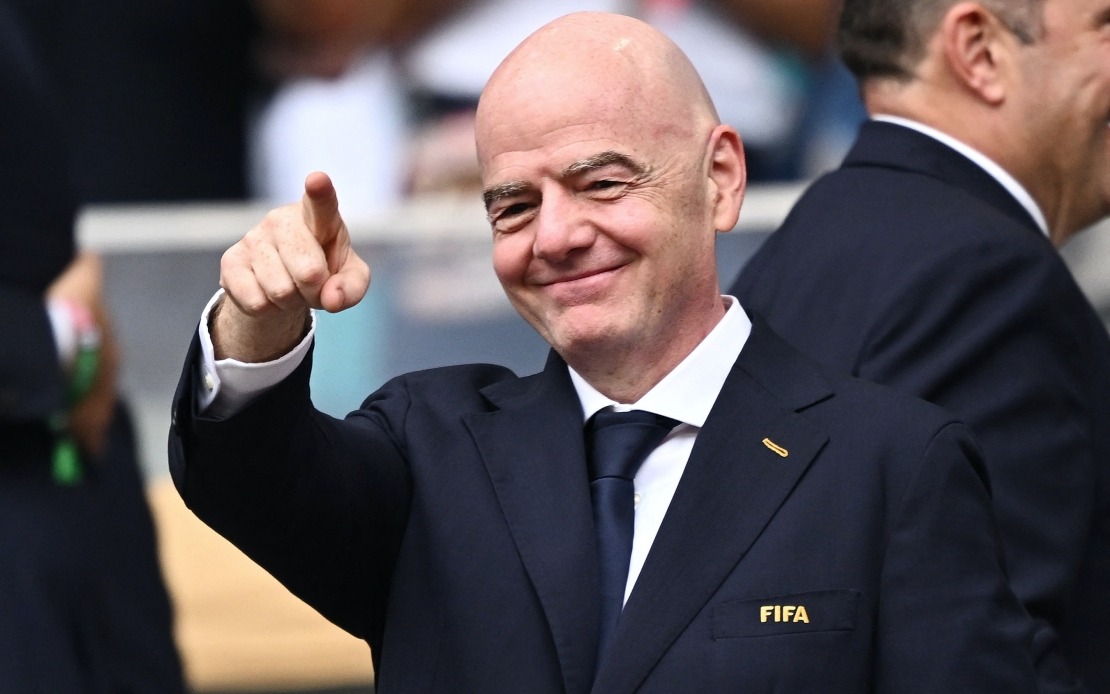
Global football's governing structure faces unprecedented turbulence as the Football Association of Wales formally withdrew its endorsement of FIFA president Gianni Infantino, marking a significant crack in his political foundation heading into the contested leadership elections. The Welsh body's reversal, announced through a formal statement, directly responds to Infantino's bungled attempt to privatise World Cup revenue streams through a controversial investment vehicle, a scheme that drew scathing criticism before being abandoned just days earlier.
Infantino's FIFA Forward Enterprise proposal sought to sell stakes in the tournament to external investors, a move that three regional confederations rejected outright before he shelved the initiative under mounting pressure. Yet the damage to his credibility extends far beyond the single failed venture. The FAW statement specifically condemned what it characterised as systemic failures spanning governance standards, decision-making processes, leadership capability, adherence to stated values, and communication with member associations. The Welsh association determined that these accumulated missteps have fundamentally eroded Infantino's mandate to oversee international football.
The momentum against Infantino extends well beyond Wales. England's Football Association, though less publicly combative, has privately signalled its withdrawal of support through direct correspondence with FIFA headquarters. The English governing body issued a public statement affirming alignment with UEFA's assessment that confidence in Infantino has evaporated following the FFE controversy, effectively distancing itself from the embattled administrator while stopping short of calling for his removal.
Europe's continental federation has taken a notably careful stance, refusing to foreclose any procedural options while simultaneously indicating that member associations should consider their options freely. UEFA's statement about keeping "no option off the table" carries particular weight given that just 43 member associations among FIFA's 211-strong membership could trigger an Extraordinary Congress designed specifically to call a vote of no confidence. Convening such a body represents a rare and extreme measure, yet UEFA's language suggests European confederations view it as potentially necessary should sentiment continue deteriorating.
North America's football confederations have also formally distanced themselves from Infantino, with CONCACAF calling for a comprehensive review of his stewardship. The confederation and its sibling body collectively represent 96 associations, giving them substantial collective leverage. Reporting indicates that CONCACAF's president Victor Montagliani, who holds the position of FIFA vice-president, has expressed openness to challenging Infantino directly in electoral competition, though any actual candidacy would represent a dramatic escalation.
Meanwhile, the international political establishment has begun weighing in on what traditionally constitutes an internal sports administration matter. Manchester's Prime Minister Andy Burnham characterised Infantino as unsuitable for his role, injecting governmental pressure into football governance debates. Such intervention from state-level actors underscores how thoroughly Infantino's position has deteriorated and how the legitimacy of FIFA leadership has become a matter of public policy concern across democracies.
Despite this formidable opposition coalescing across Europe and North America, Infantino retains meaningful support from African and Asian associations. Recent statements from Morocco, Egypt and Qatar affirmed confidence in his leadership, indicating that regional divisions may complicate any formal removal proceedings. These geographic fault lines in FIFA membership reflect broader tensions between established football powers and emerging confederations with different institutional interests and relationships to FIFA's hierarchical structure.
The practical calculus for any no-confidence manoeuvre remains daunting. Triggering an Extraordinary Congress requires only 43 signatures, but successfully unseating Infantino would require mobilising a clear majority among all 211 member associations. The gap between triggering such a process and achieving actual removal explains why major confederations have demonstrated strategic caution despite their public criticism. UEFA's hedging language reflects recognition that calling for extraordinary measures carries reputational consequences if the effort fails to gain sufficient momentum.
Infantino's decade commanding FIFA has seen multiple controversies, yet none had previously dislodged his political coalition quite as effectively as the privatisation proposal appeared to do. The scheme's particular toxicity derived from several factors: it represented a fundamental departure from FIFA's nonprofit structure, it threatened to subordinate sporting considerations to investor returns, and it proceeded without adequate consultation or transparent deliberation with member associations. The reversal came only when confederation-level resistance became undeniable, suggesting internal process failures compounded governance problems.
For Southeast Asian football associations, this crisis carries implications extending beyond institutional spectacle. FIFA's internal politics determine resource allocation, tournament structures, and strategic priorities that directly affect regional confederations and their member nations. Malaysian and regional football administrators watch carefully as the balance of power within global football governance shifts, cognisant that any major institutional change could reshape everything from qualification pathways to development funding available to emerging nations.

