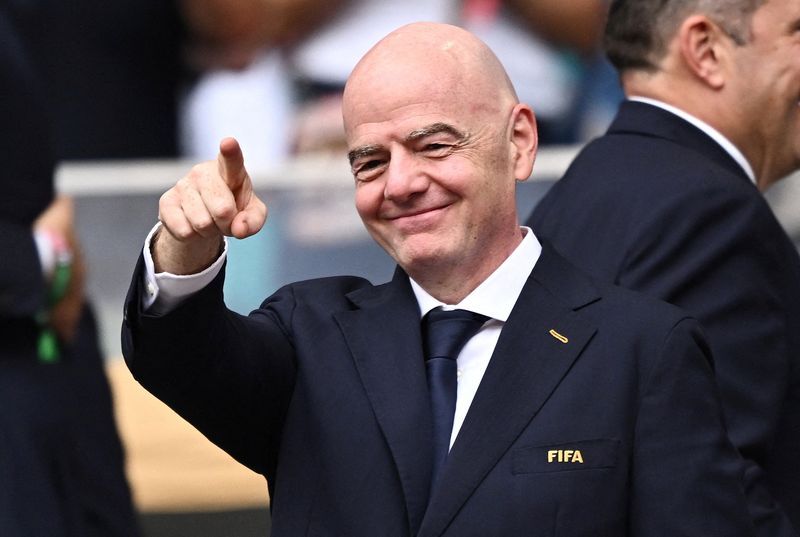
Wales has become the first national football federation to formally withdraw its backing for FIFA President Gianni Infantino's candidacy in the 2027-2031 election, marking a dramatic turn in the political landscape of world football. The Football Association of Wales announced the decision following the spectacular failure of Infantino's plan to generate up to $4.2 billion by selling approximately a 20% stake in a newly created entity that would oversee major competitions including the FIFA World Cup. This withdrawal represents a significant blow to Infantino's previously assumed path to re-election, signalling deeper fractures within the global football governance system that extend far beyond the technical details of the failed commercial proposal.
The ambitious privatisation scheme, which Infantino had championed as a transformative initiative for FIFA's financial structure, faced unexpectedly fierce resistance from multiple stakeholders within the football ecosystem. The plan's collapse on Friday came after sustained pushback from confederations, national associations, and other vested interests who questioned both the governance implications and the wisdom of allowing private equity involvement in World Cup administration. For Infantino, whose previous two re-elections since taking the FIFA presidency in 2016 had proceeded without serious opposition, the reversal highlighted the fragility of consensus within international football's decision-making apparatus.
In its formal statement, the Welsh FA articulated a comprehensive critique that extends well beyond objections to the specific commercial proposal. The organisation cited systemic failures encompassing governance standards, procedural integrity, leadership judgment, and stakeholder engagement as the underlying reasons for withdrawing confidence in Infantino's continued stewardship. The language employed—particularly the assertion that failing to prioritise football's interests represents an unacceptable failure—suggests the Welsh body views the episode as emblematic of broader concerns about direction and priorities under Infantino's administration. This framing positions the World Cup stake controversy not as an isolated misstep but as symptomatic of deeper dysfunction within FIFA's institutional culture.
Infantino now faces mounting pressure from multiple quarters of world football's power structure. UEFA, the European confederation that had spearheaded opposition to the privatisation plan and publicly welcomed its abandonment, followed up by issuing a formal statement indicating that it too had lost confidence in his leadership. CONCACAF, representing North and Central American and Caribbean nations, similarly indicated a loss of confidence. These expressions of withdrawal are particularly significant given that UEFA and CONCACAF represent geographically and economically powerful blocs within FIFA's membership, whose collective voice carries considerable weight in any presidential election process.
The seriousness with which European football authorities view the matter became evident when UEFA dispatched a document preservation order—a legal mechanism that prevents the destruction of communications, records, and digital files in anticipation of formal investigation or potential litigation. While the body stopped short of publicly confirming reports that it was preparing legal action against FIFA over the stakes proposal, this procedural step signals UEFA's intention to build a comprehensive evidentiary record. For Malaysian observers and other associations in Southeast Asia watching FIFA dynamics, such escalatory measures underscore how the dispute has transcended normal disagreements to enter territory where formal legal remedies may be pursued.
Infantino's trajectory at FIFA has been remarkable by historical standards. When he assumed the presidency in February 2016, following Sepp Blatter's downfall amid corruption scandals, he inherited an organisation under significant reputational pressure. Over the subsequent eight years, Infantino consolidated control, securing re-election unopposed in 2019 and again in 2023. His administration achieved notable milestones, including expansion of the World Cup to 48 teams and significant increases in FIFA's commercial revenue. These accomplishments had created an impression of political stability and renewed organisational effectiveness, making many observers view his 2027 re-election as virtually assured.
The World Cup stake proposal represented an attempt to push FIFA's financial innovation even further. By bringing in private capital and introducing private equity partners into the governance structure of competitions, Infantino evidently believed he could demonstrate boldness and fiscal sophistication. However, the plan instead triggered a coalition of opposition that proved far more cohesive than anticipated. The proposal's failure reveals that despite Infantino's previous electoral successes, substantial portions of FIFA's membership harbour reservations about his leadership approach, strategic judgment, and willingness to implement decisions without achieving broader consensus.
For Southeast Asian football associations and confederations like the Asian Football Confederation, the unfolding situation presents both challenges and opportunities. The ASEAN region's voices have traditionally carried less weight in FIFA politics compared to UEFA or CONCACAF, yet the emerging fracture at FIFA's highest levels may create space for smaller confederations to exercise more meaningful influence. The presidential succession contest scheduled to culminate at the FIFA Congress in Morocco in March 2026 now appears genuinely contested rather than formalistic. This shift potentially creates openings for alternative candidates or pressure for commitments and concessions from Infantino should he choose to continue his candidacy.
The governance questions raised by the Welsh FA and other opponents address matters relevant to all of FIFA's member associations regardless of geography. The issues of procedural transparency, stakeholder consultation, leadership accountability, and prioritisation of football's interests versus commercial considerations affect every national federation. Malaysia and other ASEAN nations participating in FIFA structures therefore have legitimate stakes in how these governance questions are resolved and what standards are established for FIFA's future leadership.
Infantino's path forward remains uncertain. He has not publicly responded to the withdrawals of support, and FIFA declined to comment when approached by media outlets. He may attempt to shore up support by undertaking governance reforms, creating greater stakeholder involvement in major decisions, or modifying elements of his administration's approach. Alternatively, he might press forward with his re-election candidacy while attempting to rebuild fractured relationships. The March 2026 Congress in Morocco will provide the formal venue for determining whether Welsh defection and UEFA's loss of confidence represent the beginning of a broader rejection of Infantino's continued leadership or whether he can successfully navigate this turbulent period and secure a third consecutive term.
The collapse of the World Cup stakes proposal and the subsequent withdrawal of support from Wales represents a watershed moment for FIFA governance. It demonstrates that even leaders who have previously appeared politically secure face real constraints when pursuing initiatives that trigger significant opposition among major stakeholders. For Malaysian readers and Southeast Asian football communities, the unfolding drama underscores the contested nature of global football governance and the reality that substantial reforms and leadership questions remain unresolved within FIFA's structures.

