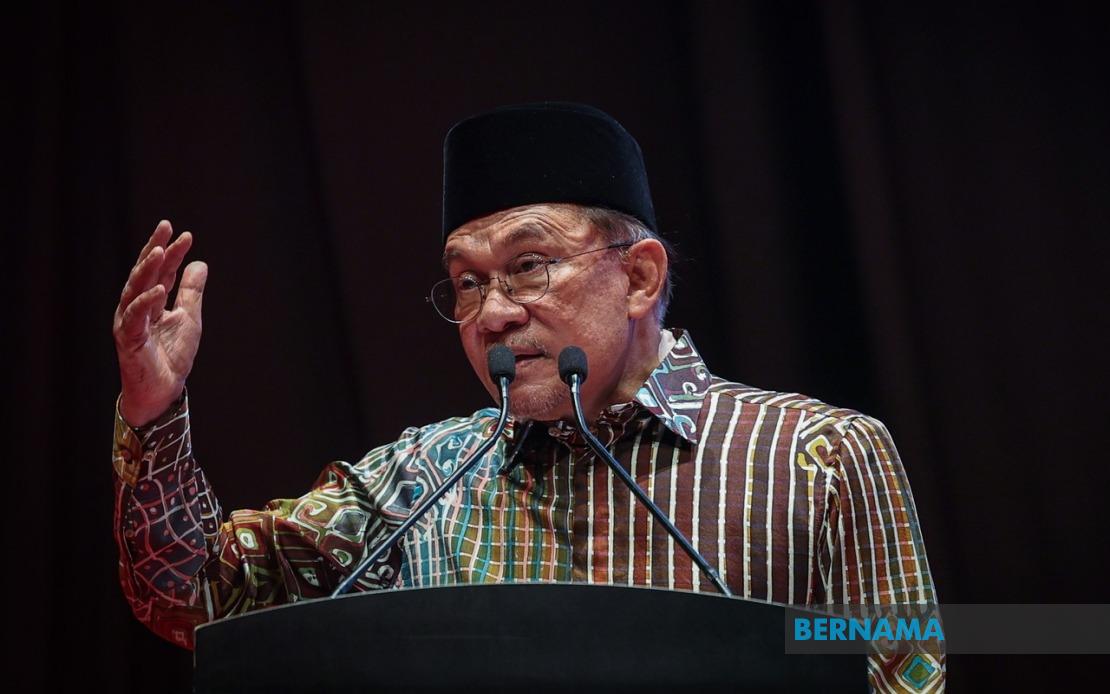
Prime Minister Datuk Seri Anwar Ibrahim has urged Malaysia's waqf institutions and Islamic dakwah movements to adopt advanced technologies including artificial intelligence and digitalisation to maintain their relevance in an increasingly digital world, while simultaneously safeguarding the moral and spiritual foundations that define Islamic practice and Malaysian society.
Addressing delegates at the closing ceremony of the 2026 International Waqf Dakwah Convention at the Kuala Lumpur Convention Centre, Anwar articulated a vision of technological progress tempered by unwavering commitment to religious conviction and ethical conduct. His remarks reflected growing recognition among Malaysian policymakers that religious and charitable organisations cannot afford to lag behind in the digital transformation sweeping across sectors globally, yet must do so without compromising the principles that give these institutions their legitimacy and social purpose.
The Prime Minister highlighted a fundamental tension in contemporary society: the capacity of emerging technologies to enhance efficiency and reach can simultaneously pose threats to human dignity if deployed without moral guardrails. He cautioned that artificial intelligence, quantum computing, and information technology systems divorced from ethical frameworks and values-based governance risk corroding the very humanity and ethical principles they might otherwise serve to strengthen. This concern resonates particularly in Southeast Asia, where rapid digital adoption across government, commerce and civil society has sometimes outpaced the development of corresponding ethical and regulatory frameworks.
Anwar's framing of this challenge employed a striking metaphor: reaching for the skies while remaining firmly rooted to the ground. This dual imperative requires institutions to simultaneously advance technologically and deepen their commitment to foundational principles. In practical terms, this means strengthening faith and spiritual conviction, cultivating moral character and virtue, preserving cultural identity, maintaining linguistic proficiency in heritage languages, and sustaining historical consciousness at both national and community levels. The formulation suggests that modernisation need not entail the abandonment of tradition, and that technological sophistication can coexist with spiritual depth.
Recognising progressive efforts within Malaysia's Islamic establishment, Anwar commended the Malaysian Islamic Welfare Organisation (PERKIM) and the Regional Islamic Da'wah Council of Southeast Asia and the Pacific (RISEAP), which operates under the leadership of Sarawak Premier Tan Sri Abang Johari Tun Openg. These organisations have demonstrated the capacity to pursue modernised, pragmatic approaches to dakwah—Islamic outreach and teaching—while strengthening communal unity and actively countering Islamophobia, a persistent challenge throughout the region that often stems from misconceptions and information gaps that digital literacy and strategic communication could help address.
The convention concluded by endorsing three substantive resolutions that translate these principles into actionable initiatives. The first calls for establishment of a working consortium dedicated to reinforcing waqf institutions across the region, recognising that waqf—Islamic endowments that generate ongoing charitable funding—represent significant untapped resources for social development and welfare provision. The second specifically addresses technology adoption, proposing systematic integration of digital tools and automation into waqf administration and management, which could enhance transparency, reduce administrative overhead, and improve beneficiary services. The third resolution emphasises ecosystem development through strengthened governance standards and strategic partnerships among the diverse stakeholders involved in waqf administration, from government bodies to religious authorities to civil society organisations.
Anwar indicated that these resolutions would undergo government evaluation before advancing through formal decision-making channels, including Cabinet consideration and presentation to the Conference of Rulers, Malaysia's highest traditional authority. This multilayered approval process underscores the significance accorded to waqf modernisation within Malaysia's governance structure, reflecting recognition that Islamic endowments touch on matters of both religious authority and state administration. The involvement of the Conference of Rulers particularly signals respect for the constitutional roles of Malaysia's sultans in Islamic affairs within their respective states.
The government's receptiveness to waqf ecosystem modernisation reflects broader regional trends. Across Southeast Asia, waqf assets remain substantially underutilised relative to their potential. In Indonesia, Malaysia, and other Muslim-majority nations, waqf properties often lie idle or generate minimal returns due to outdated management practices, unclear legal frameworks, and insufficient professional administration. Digitalisation could revolutionise this sector—enabling transparent tracking of assets, streamlined beneficiary identification and payment systems, and data-driven investment decisions that enhance returns while maintaining alignment with Islamic principles governing charitable use.
However, the emphasis on preserving values alongside technological advancement addresses legitimate concerns about how digital transformation intersects with religious life and social cohesion. Islamic scholars and civil society organisations throughout Southeast Asia have raised questions about whether algorithmic decision-making in contexts like waqf distribution, Islamic finance, or content curation might inadvertently undermine human judgment, scholarly authority, or communal deliberation that traditionally characterised Islamic institutional governance. Anwar's framing acknowledges these concerns by rejecting any suggestion that efficiency metrics or technological capability should override ethical frameworks or spiritual considerations.
Malaysia's approach to integrating AI and digitalisation within Islamic institutions also carries implications beyond the religious sphere. As a Muslim-majority democracy with significant non-Muslim populations, Malaysia's management of this transition signals commitment to maintaining pluralistic governance while strengthening Islamic institutional capacity. Effective, modernised waqf systems could enhance social welfare provision—benefiting communities regardless of religious affiliation—while demonstrating that Islamic institutions can adapt and innovate without abandoning their foundational principles, potentially countering narratives that present tradition and modernity as irreconcilable.
The 2026 International Waqf Dakwah Convention itself reflects the growing transnational dimension of Islamic institutional development in Southeast Asia. Bringing together waqf administrators, Islamic scholars, dakwah practitioners, and policymakers from across the region, the gathering acknowledges that challenges around technology adoption, institutional modernisation, and preservation of Islamic values transcend national boundaries. Solutions developed collaboratively across Malaysia, Indonesia, Brunei, and other Southeast Asian nations can achieve greater sophistication and applicability than isolated national initiatives.
Moving forward, the success of waqf modernisation efforts will likely depend on how effectively Malaysian and regional institutions balance competing pressures. Technology adoption must genuinely enhance service delivery and asset utilisation rather than becoming performative compliance with digital trends. Equally important will be ensuring that Islamic scholars, community leaders, and beneficiary representatives maintain meaningful influence over how technologies are deployed, preventing the emergence of systems that efficiently distribute resources according to criteria divorced from Islamic jurisprudence or community values. The framework Anwar articulated—rooted to the ground while reaching for the skies—provides useful guidance, though its practical implementation will demand ongoing negotiation between tradition and innovation.

