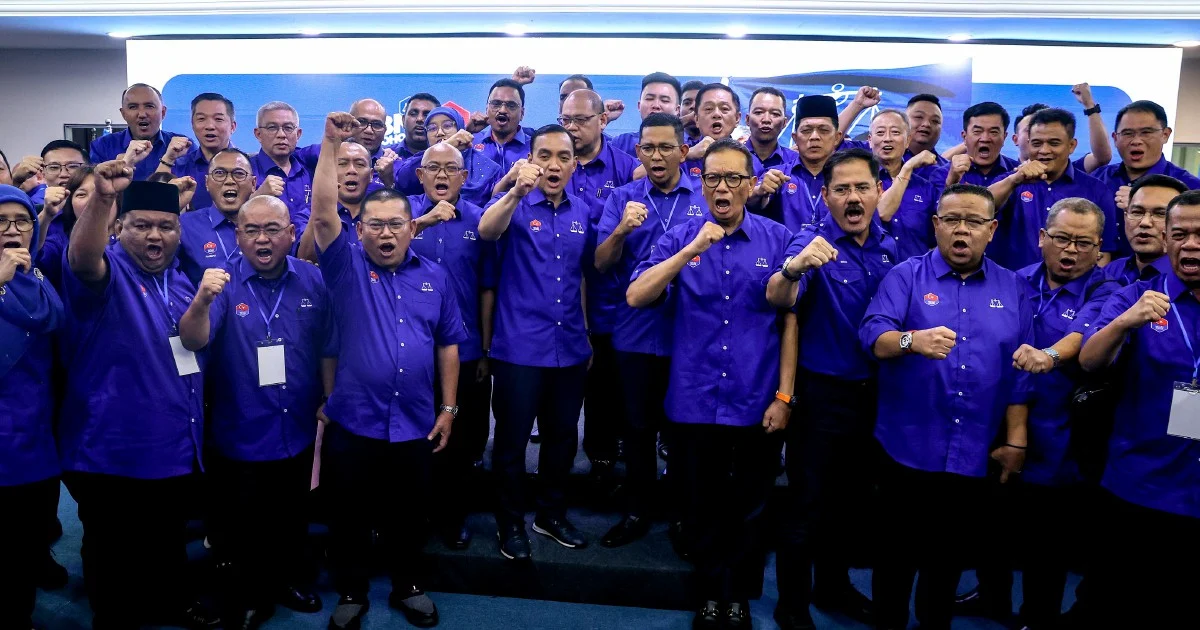
Barisan Nasional's unveiling of its candidate roster for the Johor state election has effectively closed the chapter on months of speculation surrounding a possible tripartite arrangement with PAS and Parti Wawasan Negara. The notable absence of any Wawasan representatives from BN's official line-up signals that negotiations between these political entities have not progressed to a formal electoral pact, at least not in the configuration that observers had anticipated.
The possibility of such a coalition had circulated within political circles, fuelled by discussions about broadening BN's appeal and consolidating opposition to incumbent state governments. Parti Wawasan Negara, which emerged as a notable political force following defections from other parties, had been mentioned as a potential partner in various electoral scenarios. However, the composition of BN's final candidate list suggests that the coalition has instead opted to maintain its traditional structure and rely on its established component parties to contest the election.
This development carries significant implications for Malaysia's fractured political landscape, particularly in Johor where state-level dynamics have undergone considerable shifts in recent years. The decision to proceed without incorporating Wawasan leaders into BN's ticket indicates either that negotiations reached an impasse or that both parties concluded a formal alliance would not serve their strategic interests. For Wawasan, which has sought to establish itself as a credible political force, the exclusion from BN's roster presents both a challenge and an opportunity—forcing the party to decide whether to contest independently, seek alternative coalitional arrangements, or focus on consolidating its existing base.
The timing of BN's announcement also reflects the party's confidence in its established machinery and membership base. Rather than attempting to integrate new political entities with uncertain support networks, BN appears to have concluded that fielding candidates from its traditional component parties—primarily UMNO, MCA, and MIC—presents a more reliable path to securing electoral support across Johor's diverse constituencies. This strategy emphasizes continuity and the party's deep institutional roots in the state, which has historically served as an UMNO stronghold.
For PAS, which had been mentioned alongside Wawasan in speculation about potential cooperation with BN, the situation remains fluid. PAS has maintained an independent political trajectory while occasionally collaborating with BN in certain states and scenarios. The absence of any announced formal arrangement with BN for Johor suggests that PAS will likely contest the election independently or pursue its own coalition strategies, which could position the party to benefit from voters seeking alternatives to both BN and the ruling Pakatan Harapan coalition at the federal level.
The implications for Johor's electoral landscape extend beyond the candidates themselves. A three-way split between BN, PAS, and Wawasan might have fundamentally altered the competitive dynamics across the state's constituencies, potentially fragmenting the vote and creating opportunities for various political actors. The consolidation of BN's approach without such fragmentation suggests a more traditional bifurcated contest, though the broader political environment remains volatile and unpredictable.
From a regional perspective, this development reflects the broader instability within Malaysia's party political system. The emergence of new parties like Wawasan, the fluid nature of coalitional arrangements, and the constant realignment of political forces create uncertainty for voters and analysts alike. For Southeast Asia observers monitoring Malaysian politics, such moments illustrate the region's dynamic but sometimes destabilizing political evolution, where established parties must continually adapt to new competitors and shifting voter preferences.
The absence of Wawasan leaders from BN's candidate list also underscores the challenges facing newer political entities in gaining acceptance from established power structures. Despite Wawasan's attempts to position itself as a meaningful political alternative, the major coalitions remain reluctant to formally incorporate it into their electoral machinery. This pattern reflects both the entrenched nature of Malaysia's two main coalitional blocs—BN and Pakatan Harapan—and the difficulty that new parties face in breaking into existing power arrangements.
Looking ahead, the development creates a particular challenge for Wawasan's political credibility. If the party contests Johor independently without securing significant electoral success, its relevance as a political force will diminish further. Conversely, if Wawasan can demonstrate support through independent candidacies or alternative arrangements, it may strengthen its negotiating position in future electoral contests. For Malaysian voters in Johor, the clearer candidate line-up provides greater clarity about the choices before them, though the absence of new political voices through Wawasan may represent a missed opportunity for those seeking alternatives beyond the established parties.
The situation remains fluid, as state elections in Malaysia often witness last-minute developments, defections, and strategic shifts. However, BN's public announcement of its slate without Wawasan representation represents a significant statement of political intent and suggests that the coalition has made deliberate choices about its electoral strategy for Johor.

