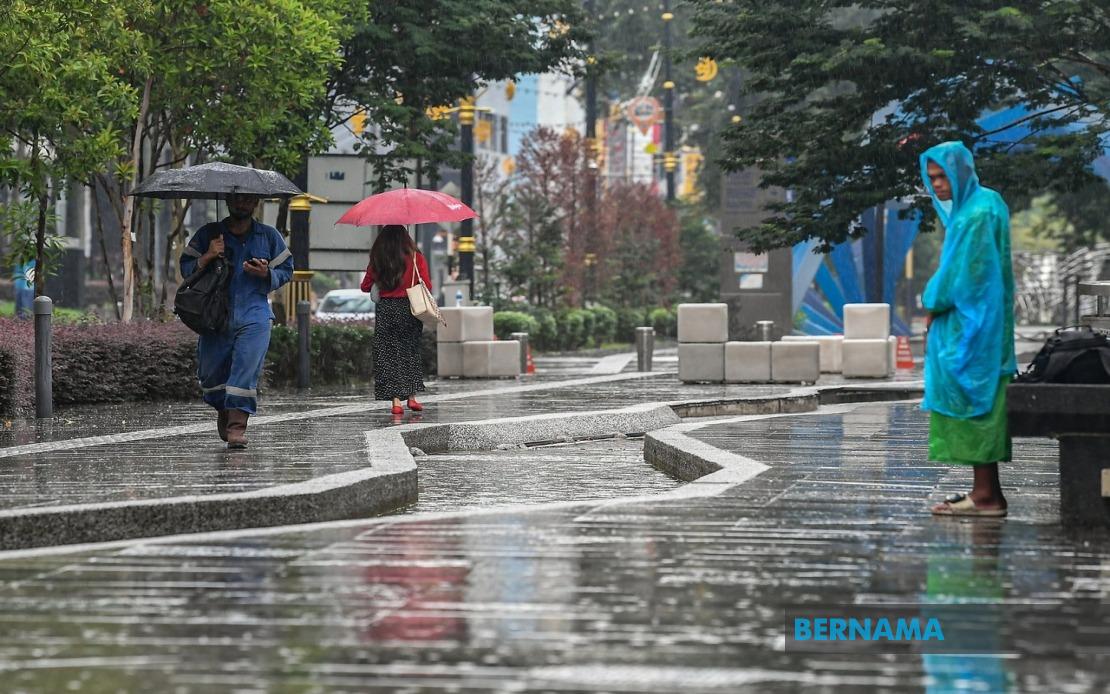
As Johor prepares for the official launch of its state election campaign, meteorological forecasts point to a wet nomination day that could complicate voter engagement and candidate rallies across much of the state. The Malaysian Meteorological Department has warned that rain will sweep across seven of the ten districts tomorrow morning, creating what officials describe as operational challenges for the nomination process scheduled between 9 and 10 am at 56 centres statewide. The weather pattern reflects typical tropical conditions as the state transitions toward the monsoon season, though the timing poses practical difficulties for the thousands of supporters expected to accompany candidates during nomination filing.
Johor MetMalaysia director Azlai Ta'at identified Johor Bahru, Muar, Batu Pahat, Kota Tinggi, Pontian, Tangkak and Kulai as the rainfall-affected zones, while Segamat, Kluang and Mersing are expected to remain largely dry through the morning hours. The temperature profile across the state will range between lows of 24 to 25 degrees Celsius and highs of 31 to 34 degrees Celsius, with Segamat potentially recording the warmest conditions. Forecasters have urged the public, particularly campaign supporters, to monitor weather developments closely as conditions may shift rapidly throughout the day. The advisory reflects concerns that unexpected downpours could disrupt transportation, reduce attendance at nomination centres, and create sanitation challenges in crowded gathering points.
Weather patterns will worsen considerably during the afternoon as thunderstorms materialise across multiple districts coinciding with the official campaign period launch. The meteorological department predicts afternoon thunderstorms in Johor Bahru, Segamat, Kluang, Kota Tinggi, Pontian, Mersing and Kulai, while Batu Pahat and Tangkak face conventional rainfall. Muar alone is forecast to experience relatively clear, hot conditions throughout the day. This afternoon instability will mark an inauspicious beginning to the formal campaigning phase, which commences immediately following the returning officers' announcement of eligible candidates. Campaign organisers will need to rapidly adjust rally schedules, outdoor gathering plans, and voter outreach activities to accommodate the unstable weather environment.
The nomination process itself represents a critical juncture, with 56 seats contested across the state and nomination filings compressed into a single one-hour window. The Election Commission has established a rigorous timeline designed to prevent procedural delays, meaning candidates and their supporters must navigate to designated centres within strict timeframes. Weather complications could exacerbate registration delays, documentation issues, and the verification procedures returning officers must complete before announcing eligible contenders. The concentration of activity across 56 simultaneous nomination points statewide means weather disruptions may have cascading effects on the overall electoral schedule, particularly given the compressed calendar leading toward the July 11 polling date.
The competitive landscape reflects significant restructuring within Johor's opposition and coalition dynamics. Pakatan Harapan is mounting a comprehensive campaign across all 56 seats, deploying candidates from PKR, Amanah and DAP in proportions that reflect negotiated seat-sharing arrangements. Barisan Nasional similarly contests every seat, utilising its traditional component parties UMNO, MCA and MIC in established numerical ratios. This comprehensive two-coalition approach has become standard practice in Malaysian state elections, though the inclusion of multiple smaller parties indicates ongoing fragmentation within the broader political spectrum.
Perikatan Nasional's participation introduces additional complexity to the competitive dynamic, with PAS, Bersatu, the Malaysian Indian People's Party and Pejuang together fielding 33 candidates. The participation levels suggest PN retains meaningful electoral ambitions in Johor despite recent setbacks in national politics. Equally significant is the debut of Parti Bersama Malaysia contesting 15 seats, signalling the emergence of new political vehicles attempting to establish footholds within state politics. The Malaysian United Democratic Alliance's four-seat participation and Parti Sosialis Malaysia's single nomination demonstrate that electoral competition extends well beyond the dominant coalitions, though these minor parties face substantial obstacles in generating meaningful vote shares.
Voter participation will be crucial given the substantial registered electorate of 2,727,926 individuals, comprising 2,703,175 ordinary voters supplemented by 12,041 military personnel and spouses alongside 12,710 police personnel and spouses. The inclusion of security personnel voting blocs reflects established protocols accommodating government employees within electoral processes. The size of the voter roll indicates that Johor remains a high-stakes battleground, with outcomes potentially influencing broader regional political trajectories within Peninsular Malaysia. Turnout patterns during early voting on July 7 will provide early indicators of voter enthusiasm and engagement levels across different demographic and geographic segments.
The compressed electoral calendar demands efficient operational execution despite weather complications. The one-day nomination process must accommodate candidate registrations, document verification, and returning officer announcements before campaign activities formally commence. Early voting concentrated on a single day seven days before polling requires voters to navigate ballot stations, potentially during weather conditions that may persist throughout the campaign period. The July 11 polling date itself follows international best practice by providing a defined window for voter participation, though the two-week campaign interval represents a relatively brief period for candidates to conduct comprehensive voter outreach and persuasion activities.
For Malaysian electoral observers and Southeast Asian political analysts, the Johor election carries significance extending beyond state-level governance questions. The results will indicate whether Pakatan Harapan can consolidate gains achieved in the 2022 federal election and maintain momentum at subnational levels, or whether Barisan Nasional can execute effective recovery strategies within its traditional stronghold. The performance of Perikatan Nasional provides additional data regarding the political trajectory of PAS and Bersatu, whose federal partnership with UMNO remains formally intact despite ongoing tensions. Weather complications may influence participation patterns and voter convenience calculations, particularly among less politically engaged segments whose turnout depends partly on accessibility and convenience factors. The wet forecast thus introduces not merely logistical complications but also potential variables affecting the ultimate electoral outcome and the political realignments they may trigger across Malaysia's complex multiparty landscape.

