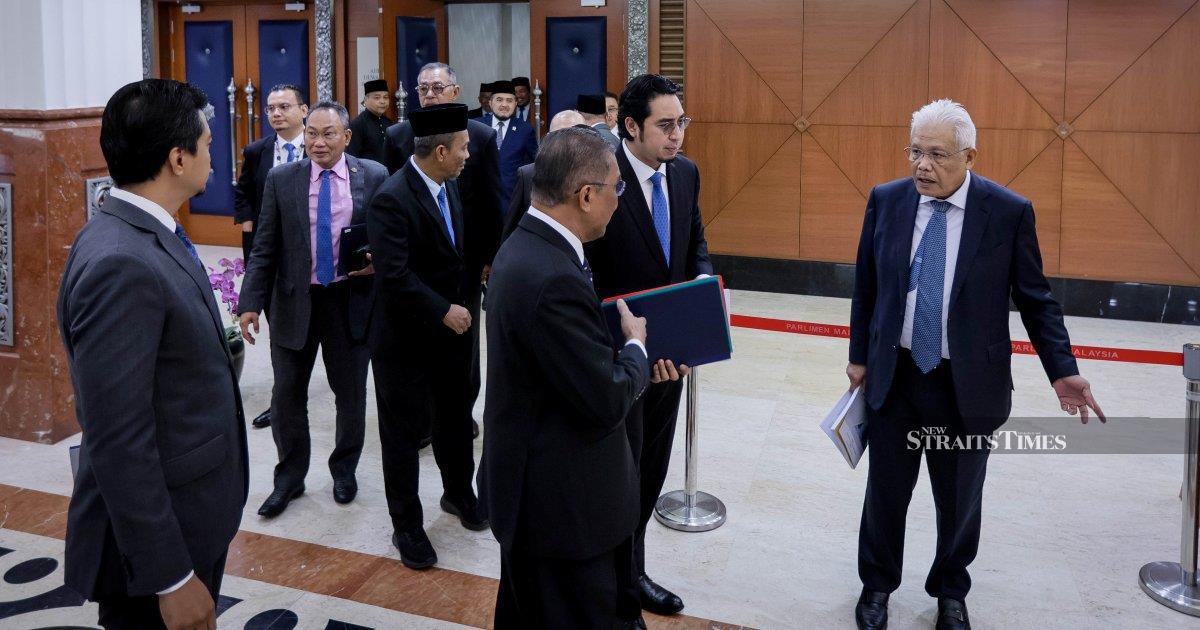
The opposition's departure from Parliament in protest against the Royal Commission of Inquiry report on Tabung Haji has thrust a fundamental question back into the Malaysian political spotlight: at what point does legitimate parliamentary protest collapse into mere political grandstanding? The walkout, ostensibly triggered by objections to the commission's findings and their treatment in the chamber, exemplifies a tension that has long characterised Malaysian parliamentary democracy—one where the same tactical manoeuvre is simultaneously framed as righteous dissent by supporters and condemned as theatrical distraction by detractors.
The Tabung Haji report itself carries substantial weight within Malaysia's political economy. The pilgrimage fund, which manages the savings and investments of millions of Muslim Malaysians preparing for the hajj journey, has been a persistent focal point for scrutiny regarding governance and financial stewardship. When a Royal Commission examines its operations, the resulting report becomes far more than an administrative document—it carries implications for public trust, religious institution credibility, and accountability mechanisms that affect ordinary Malaysians directly. The opposition's objection to how this report was being presented or received suggests they viewed the parliamentary moment as one requiring emphatic intervention rather than procedural acceptance.
Yet this particular incident encapsulates a paradox that has become increasingly visible in Malaysian parliamentary proceedings. Opposition members who stage walkouts typically justify their action as a principled refusal to participate in what they characterise as an unfair or inadequate process. They argue that dramatic departure signals moral disapproval that conventional speech and voting cannot adequately convey. Their supporters often view such exits as necessary provocations that pierce through parliamentary routine and force media attention onto neglected issues. For them, walkouts represent a legitimate tool available to parliamentary minorities who lack the numbers to stop proceedings through conventional means.
Conversely, government supporters and their media allies frequently interpret the same tactic as performative—a cynical bid for camera time and headlines rather than a genuine attempt to influence policy. They contend that walkouts disrupt parliamentary business without achieving substantive change, serving primarily to amplify opposition visibility without matching substance. From this perspective, parliamentary protest ought to operate within established channels: speeches, motions, voting records, and formal dissent mechanisms. Departing the chamber comes across as abandoning the democratic arena itself rather than contesting within it.
The difficulty lies in determining which interpretation holds greater validity, particularly when both framings appeal to legitimate parliamentary principles. Democracy theoretically guarantees minorities the right to voice dissent, yet it also requires functioning institutions that operate according to established procedures. A parliament where opposition members regularly abandon proceedings becomes dysfunctional; one where minorities are systematically overridden without dramatic recourse becomes unresponsive. Malaysian parliamentarians navigate this tension without clear resolution mechanisms.
International parliamentary practice offers limited guidance. Westminster traditions, from which Malaysia inherited much of its system, acknowledge protest walkouts as occasional extraordinary measures, yet their frequent deployment risks normalising them into routine political theatre. Parliaments in Singapore, Australia, and India have all witnessed escalating walkouts, each struggling with similar questions about whether such tactics strengthen or weaken democratic institutions. The answer invariably depends on context, proportionality, and whether walkouts accompany substantive parliamentary work or substitute for it.
For Malaysian readers and observers, the Tabung Haji walkout specifically merits close examination because the underlying issue—institutional accountability and public fund stewardship—transcends partisan lines. If opposition members walked out because they believed the commission's process or findings were fundamentally flawed, that objection deserves scrutiny independent of the theatrical medium through which it was expressed. Conversely, if the walkout represented frustration at being outvoted on procedural matters, it raises questions about whether the tactic's dramatic impact matched its actual purpose.
The broader consequence of recurring walkouts extends beyond immediate parliamentary optics. Each successive departure incrementally normalises the tactic, potentially lowering the threshold for future walkouts and gradually eroding the distinction between extraordinary protest and routine political behaviour. Malaysian parliamentary culture may eventually face a situation where walkouts occur so frequently that they lose communicative power entirely, having become simply another procedural variation rather than a meaningful signal of serious disagreement.
Moreover, the walkout-versus-debate dichotomy obscures the possibility that both could operate in tandem. Opposition members might simultaneously deliver forceful parliamentary speeches articulating their objections while also staging a walkout to emphasise their seriousness. The choice need not be binary. Yet in practice, the walkout often supersedes other forms of protest, becoming the story itself rather than an accompaniment to substantive parliamentary arguments. Media coverage focuses on the dramatic departure rather than the underlying policy disputes, effectively replacing detailed policy discussion with spectacle analysis.
For Malaysians concerned with parliamentary effectiveness, the crucial question becomes whether walkouts ultimately serve democratic accountability or undermine it. Do they compel governments to reconsider their positions, or do they simply provide opposition members with symbolic victories that substitute for legislative influence? The Tabung Haji incident offers an opportunity to examine this question seriously, moving beyond the reflexive defence or dismissal based on partisan affiliation.
Resolving this dilemma may require Malaysian parliamentarians to establish clearer norms around protest tactics—explicit understandings about which circumstances justify walkouts and which do not, communicated across party lines. Without such framework, the current pattern will likely persist: each side defending identical tactics when used by their allies while condemning them when deployed by opponents. Until Malaysian democracy develops more sophisticated methods for distinguishing between legitimate protest and performative disruption, walkouts will continue generating the same debate cycle, with the substance of underlying issues increasingly lost to procedural argument.

