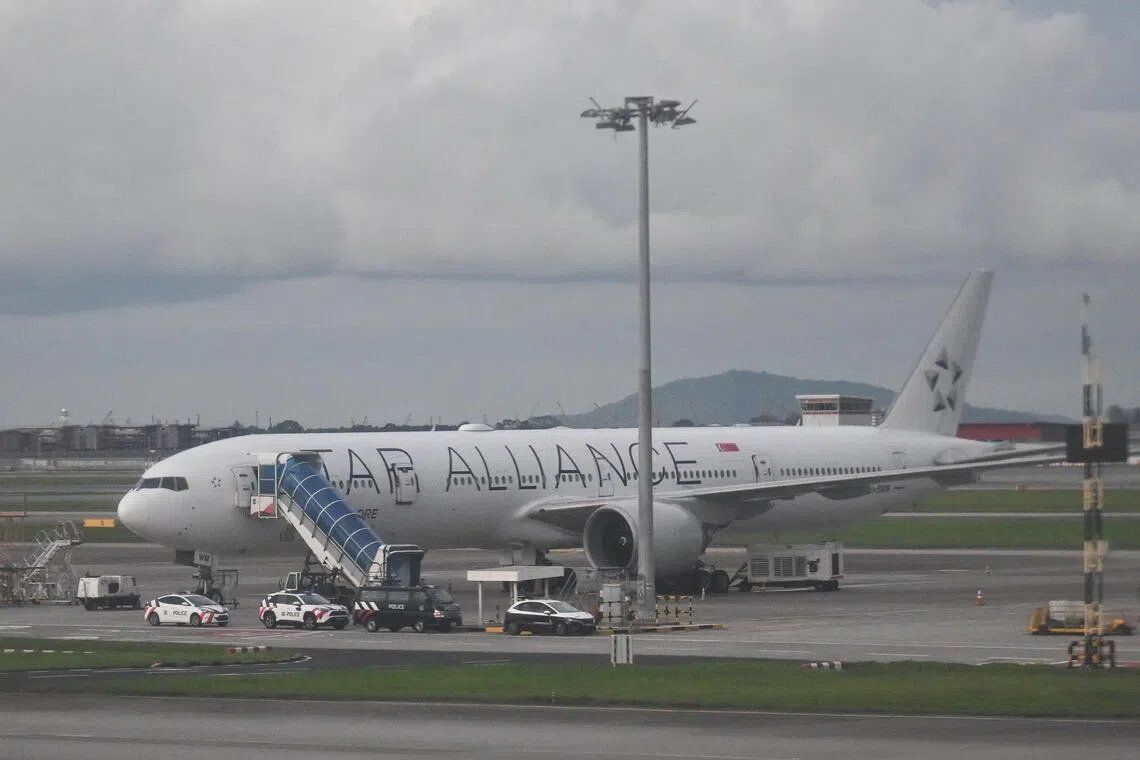
Linda Kitchen, a 74-year-old British widow, has filed proceedings at Britain's High Court against Singapore Airlines following the death of her husband and the severe injuries she sustained during a catastrophic turbulence event aboard Flight SQ321 in May 2024. The legal action marks a significant escalation in the aftermath of an incident that claimed one life and left dozens requiring ongoing medical treatment, underscoring the lasting trauma and physical consequences that passengers and crew members continue to endure more than two years after the event.
The ill-fated flight was en route from London to Singapore when it encountered severe turbulence over Myanmar on May 21, 2024. In a terrifying sequence lasting merely five seconds, the aircraft plummeted over 54 metres, creating conditions of extreme chaos throughout the cabin. Geoffrey Kitchen, a theatre director and Linda's spouse of 52 years, suffered a fatal heart attack during this ordeal. The couple had been embarking on a leisurely six-week holiday that would have taken them through Singapore, Indonesia, and Australia—a journey that ended in tragedy for one and profound suffering for the other.
During the violent descent, Geoffrey fell upon Linda with considerable force, crushing her against an armrest and causing severe spinal damage that would require extended hospitalisation and ongoing specialist care. Passengers nearby assisted in repositioning Geoffrey as a physician travelling on the flight began performing cardiopulmonary resuscitation, but his condition proved beyond recovery. The aircraft, carrying 211 passengers and 18 crew members, was immediately diverted to Suvarnabhumi Airport in Bangkok for an emergency landing. In total, 79 individuals sustained injuries of varying severity, making this one of the most serious aviation incidents in recent regional history.
Linda's ordeal extended far beyond the flight itself. She was hospitalised for ten days in Bangkok before being airlifted back to Bristol in the United Kingdom, where she spent a further week receiving treatment. The physical pain of her fractured spine was compounded by the psychological shock of separation from her husband and the devastating news delivered two days after the incident that Geoffrey had not survived. In remarks to British media outlets, she described the profound devastation of losing her partner of over five decades, compounded by the severity of injuries that left her requiring substantial assistance with daily living even after returning home.
The legal proceedings initiated by Kitchen represent more than a simple compensation claim. Through her legal representative, aviation specialist Anthe Korelidou, Kitchen's family has signalled their intention to pursue comprehensive investigations into precisely what occurred and whether preventative measures could have mitigated the tragedy. Korelidou emphasised that over two years on, the family remains burdened by unanswered questions and concerns about the incident and its handling. The filing of High Court proceedings, she stated, represents a crucial step toward providing Geoffrey's loved ones with the accountability and answers they deserve regarding his death and the injuries sustained by his wife.
Kitchen's case is not isolated within the broader legal landscape surrounding Flight SQ321. Court records indicate that multiple other passengers have similarly initiated legal action against Singapore Airlines, including Bradley Richards, Jack Jenkins, Hannah Fullerton, Andrew Dawood, Bryan Matthews, and the couple Pauline and Michael Rainey. This wave of litigation reflects widespread concern among affected parties regarding the circumstances of the incident and the adequacy of the airline's response.
Singapore Airlines has responded to the incident through both financial compensation and formal apology. In 2024, the carrier offered payments to affected passengers: those with minor injuries received US$10,000, while those suffering serious injuries requiring long-term medical intervention and requesting financial assistance were advanced US$25,000. The airline also committed to full refunds of airfare for all passengers aboard the flight. Despite these measures, the airline declined to comment on the pending litigation, citing the ongoing court proceedings.
The root cause of the turbulence remains partly shrouded in technical uncertainty. An investigation conducted by Singapore's Transport Safety Investigation Bureau discovered that storm clouds likely responsible for the severe turbulence were not detected by the aircraft's onboard weather radar system, catching the captain entirely off guard. The TSIB, operating under the Ministry of Transport, has been unable to conclusively determine whether the weather radar itself experienced technical malfunction or whether the storm system simply existed outside the radar's effective detection range. This ambiguity forms a central concern for affected passengers and their families, who question whether better radar technology or operational procedures might have prevented the disaster.
For Malaysian and Southeast Asian aviation stakeholders, the SQ321 incident and its ongoing legal aftermath carry significant implications. The case highlights vulnerabilities in weather detection systems aboard modern aircraft operating across the region's tropical environment, where severe storm systems can develop with limited warning. The incident also raises questions about compensation frameworks and airline liability standards within the region, particularly as regional carriers increasingly face litigation from international passengers accustomed to robust legal protections in their home jurisdictions. The legal precedent established through Kitchen's case may influence how subsequent aviation incidents are handled and what levels of compensation passengers come to expect.
Beyond the immediate parties involved, the turbulence incident serves as a sobering reminder of aviation's inherent risks despite extraordinary safety advances. Geoffrey Kitchen's death was not the result of mechanical failure or pilot error, but rather an act of nature that overwhelmed the aircraft's detection systems. For Linda Kitchen, pursuing this legal action represents not merely a quest for financial recompense, but an effort to honour her husband's memory by ensuring that systemic vulnerabilities are identified and addressed. Her determination to obtain answers reflects a broader principle increasingly common in aviation law: that transparency and accountability, combined with thorough investigation and preventative action, serve the interests of all aviation users across the region and beyond.

