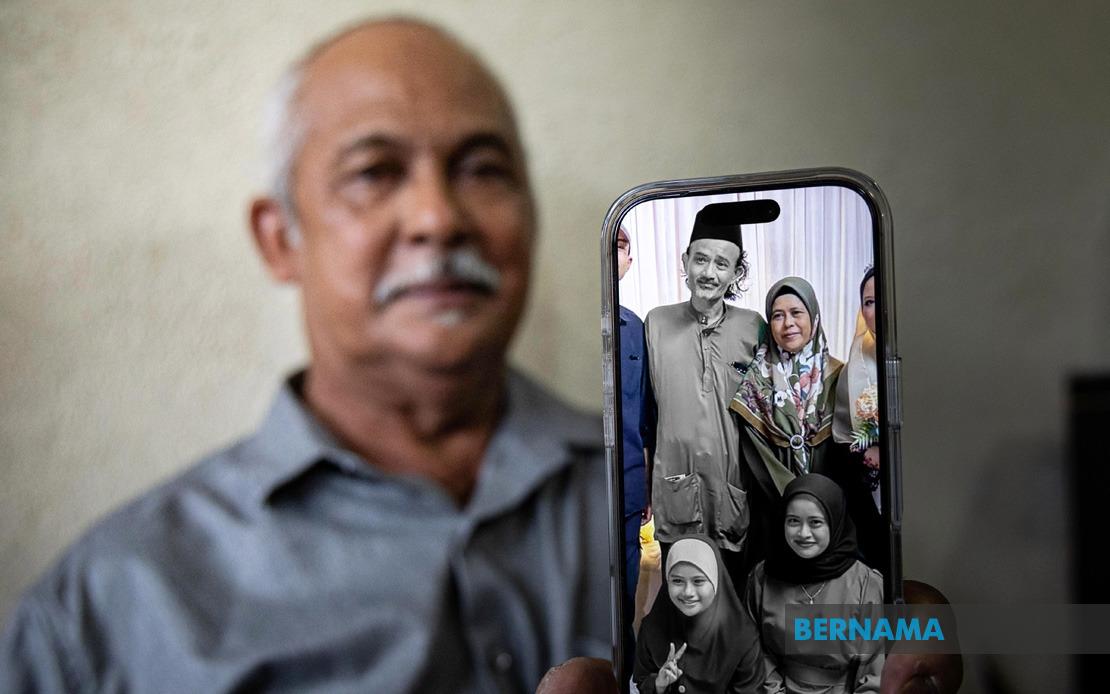
A 55-year-old woman who survived a catastrophic collision involving a Malaysian Immigration Department truck in Kuala Lumpur last Wednesday remains in a state of cognitive confusion as she battles the psychological trauma of losing her husband and two children in the same incident. Norhayati Razali has shown gradual physical improvement since her transfer from the Intensive Care Unit at Kuala Lumpur Hospital to a regular ward, where medical staff report she can now consume food and liquids independently without the assistance of feeding tubes. However, her brother Mohd Nadzri Razali revealed that significant memory impairment continues to plague the survivor, complicating both her medical recovery and her family's ability to help her process the devastating loss.
The extent of Norhayati's cognitive challenges became apparent shortly after her family informed her of the deaths of her loved ones. According to Mohd Nadzri, family members showed her the bodies of the deceased and explained what had transpired during the accident, to which she responded only with silent acknowledgment. Yet the following day, when asked about the whereabouts of her husband and children, Norhayati inquired anew where they were, suggesting the traumatic information had not taken hold in her memory. This pattern of memory loss cycles poses significant concerns not only for her physical healing but also for her eventual psychological adjustment to a life fundamentally altered by tragedy.
Beyond the cognitive difficulties, Norhayati sustained multiple injuries across her body from the violent impact of the collision. Her injuries span her hands, waist, knees, legs, and crucially her head, each of which demanded hospitalisation and ongoing treatment. The head trauma specifically appears responsible for her memory dysfunction and confusion, a common complication of serious brain injury. Medical professionals at Kuala Lumpur Hospital have not yet determined the full timeline of her required treatment or whether her condition will stabilise sufficiently to permit transfer to a facility closer to her home, potentially in Ipoh or Teluk Intan, which would considerably ease the logistical burden on her family during what promises to be an extended recovery period.
Mohd Nadzri expressed frustration about the practical challenges facing the family as they attempt to provide support during this crisis. He acknowledged his inability to visit his sister with regularity, citing lack of personal transportation to the capital and unfamiliarity with Kuala Lumpur's road networks. Only through the assistance of others is he able to plan occasional visits, with the next opportunity expected this coming weekend. This distance and logistical difficulty amplify the stress on an already traumatised family unit attempting to coordinate care, make medical decisions, and provide emotional support during a period of collective grief.
The tragic incident unfolded on August 19 when a Malaysian Immigration Department Black Maria truck, operating as an official duty vehicle bound for Chow Kit to conduct immigration enforcement operations, proceeded through a red traffic signal while its beacon and siren were activated. The truck, travelling empty at the time, entered the intersection in violation of traffic rules and collided with a Proton Saga sedan that was lawfully proceeding through a green light. The violent impact caused the heavier truck to lose directional control, veer across the roadway, and subsequently strike multiple pedestrians before ultimately striking an Inokom Matrix vehicle. The cascade of collisions claimed three lives from a single family while leaving another person critically injured.
The specific circumstances of the accident have raised serious questions about operational protocols and emergency vehicle conduct. The fact that an empty immigration enforcement truck was operating with emergency lighting activated while travelling to an immigration operation has prompted scrutiny regarding the necessity of such measures and the appropriate balance between operational urgency and public safety. These details carry particular significance in Malaysia, where traffic safety remains a persistent public health concern and where incidents involving government vehicles are subject to heightened public and legal scrutiny.
Mohd Nadzri articulated the family's position regarding investigation and accountability with remarkable clarity given his personal circumstances. He emphasised the family's desire for a transparent and thoroughly conducted investigation that would serve justice for all victims of the collision. He specifically referenced the potential existence of traffic camera footage at the intersection and urged authorities to utilise such evidence to establish the factual sequence of events. His appeal underscores a broader public expectation that official investigations involving deaths should be conducted with integrity and that evidence should be fully examined rather than selectively presented.
The broader implications of this incident extend beyond the immediate tragedy affecting one family. The collision raises questions about standard operating procedures for Malaysian Immigration Department vehicles, the training and supervision of drivers operating emergency vehicles, and the enforcement of traffic regulations that apply universally regardless of a vehicle's official designation. These procedural questions carry relevance not only for immigration authorities but for all government agencies operating vehicles with emergency lights and sirens across Malaysia.
For Norhayati's family, the path forward remains uncertain both medically and emotionally. Her recovery will require extended hospitalisation and ongoing rehabilitation, with the timeline and ultimate extent of her functional recovery still undetermined. Simultaneously, the family must navigate the bureaucratic and legal processes attendant to the deaths of three family members and the investigation into the circumstances of their deaths. The psychological burden of processing this loss will likely be compounded by Norhayati's memory difficulties, potentially extending her own trauma recovery timeline considerably.
The case exemplifies the cascading consequences of traffic incidents involving official vehicles and raises systemic questions about how Malaysia manages the intersection of operational necessity, emergency protocols, and public safety. As the investigation proceeds, the family's call for transparency and evidence-based findings will likely resonate with a broader Malaysian public increasingly aware of road safety vulnerabilities and the accountability mechanisms available to bereaved families seeking answers and justice for preventable tragedies.

