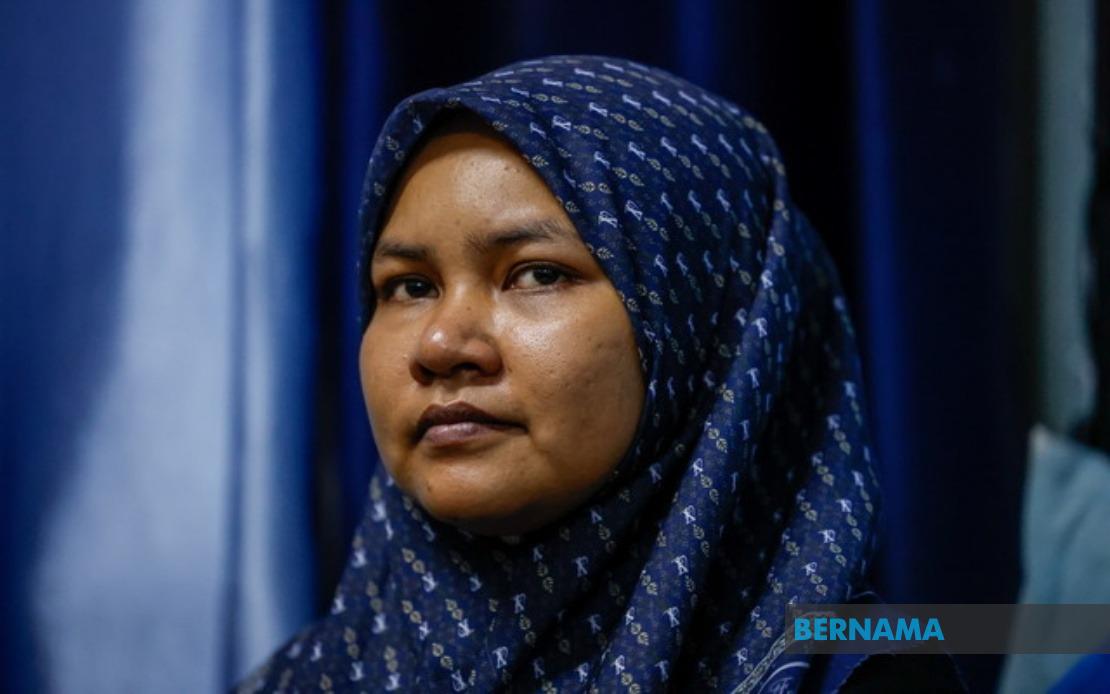
The widow of 33-year-old delivery rider Amirul Hafiz Omar, who died following a vehicle collision in Klang, is preparing to pursue a RM1 million civil claim against the driver accused in connection with the March 2024 incident. Legal proceedings are expected to commence in August once essential administrative requirements are fulfilled, according to her legal representative.
Lawyer Nur Iffah Hizwani Omar explained that preparatory documents, including a writ of summons and statement of claim on behalf of widow Nor Nadia Abdul Majid, 32, have been finalised but remain unfiled pending the issuance of a Letter of Administration. This administrative certificate, which grants legal authority to manage the deceased's estate and financial affairs, is a standard requirement in Malaysian civil litigation involving fatalities.
The application for the Letter of Administration was submitted to the Kuala Lumpur High Court and a decision is anticipated by July 28. Once obtained, the legal team plans to acquire supplementary income documentation from the e-hailing platform through which Amirul Hafiz generated additional earnings. These financial records are essential for substantiating the quantum of the claim and establishing the precise economic loss suffered by the family unit.
The RM1 million figure represents the current instruction from the widow's legal team, though this assessment remains preliminary pending receipt of comprehensive income documentation. In Malaysian civil negligence cases involving fatal occupational injuries, compensation calculations typically account for lost earning potential, including primary employment and supplementary income sources, alongside damages for loss of consortium and bereavement. The case will be filed at the Shah Alam High Court once all procedural prerequisites are satisfied.
The tragic incident occurred on March 29 on Jalan Raya Barat in Klang when Amirul Hafiz was struck by a vehicle. Accusations centre on the driver, identified as R. Saktygaanapathy, 28, who allegedly operated the vehicle under the influence of controlled substances. Saktygaanapathy initially faced murder charges under Section 302 of the Penal Code when arraigned on April 1 but subsequently pleaded not guilty on June 3 to a reduced charge under Section 15(1)(a) of the Dangerous Drugs Act 1952 relating to self-administration of tetrahydrocannabinol (THC).
The transition from serious criminal charges to drug-related offences reflects the complex evidentiary landscape in such cases, where causation between impairment and fatal outcomes must be rigorously established. The parallel civil action pursued by Amirul Hafiz's family operates under a lower standard of proof than criminal prosecution, requiring merely a balance of probabilities rather than proof beyond reasonable doubt, potentially offering a more accessible avenue for financial redress regardless of the criminal trial's outcome.
Nor Nadia, now the sole income earner and principal caregiver for their children, has described the gradual emergence of grief following months of emotional numbness. She recounted how the initial shock created a psychological disconnection, with her husband's absence initially registering as temporary rather than permanent. Only after three months did the emotional reality crystallise, manifesting intensely when confronted with daily reminders of his absence and the routines they previously shared.
The widow emphasised how specific family patterns—the morning school runs, midday reunions for lunch, and afternoon pickups—epitomised Amirul Hafiz's devotion to their children. These consistent acts of parental presence, maintained regardless of weather or circumstance, anchored the family's daily rhythm and now starkly illuminate the void created by his death. Assuming full responsibility for household management, childcare coordination, and income generation has placed substantial strain on a widow navigating grief whilst maintaining stability for dependent children.
This case exemplifies broader issues affecting Malaysia's gig economy workforce, where delivery and e-hailing workers often operate with minimal employment protections, accident insurance, or comprehensive benefit schemes. Amirul Hafiz's reliance on supplementary e-hailing income to sustain his family reflects the economic realities facing many Malaysian households dependent on platform-based work. The civil litigation will establish important precedent regarding compensation calculations for gig workers in fatal accident scenarios, potentially influencing future claims and industry accountability standards.
The criminal case against Saktygaanapathy remains pending determination by the High Court, which retains jurisdiction over the drug-related charge. Meanwhile, the civil proceedings will progress independently according to standard litigation timelines. For Nor Nadia and her children, the civil claim represents not merely financial recovery but official acknowledgement of responsibility and a mechanism for pursuing justice through civil remedies when criminal outcomes remain uncertain.
This situation underscores the vulnerability of families dependent on informal or gig-economy income sources when fatal accidents occur. Unlike conventional employees with employer liability insurance and structured benefits, platform-based workers and their dependents must pursue individual civil claims to recover losses. The outcome of this case may influence how Malaysian courts calculate damages for platform workers and prompt discussion regarding industry safeguards, insurance requirements, and statutory protections for gig economy participants and their families.

